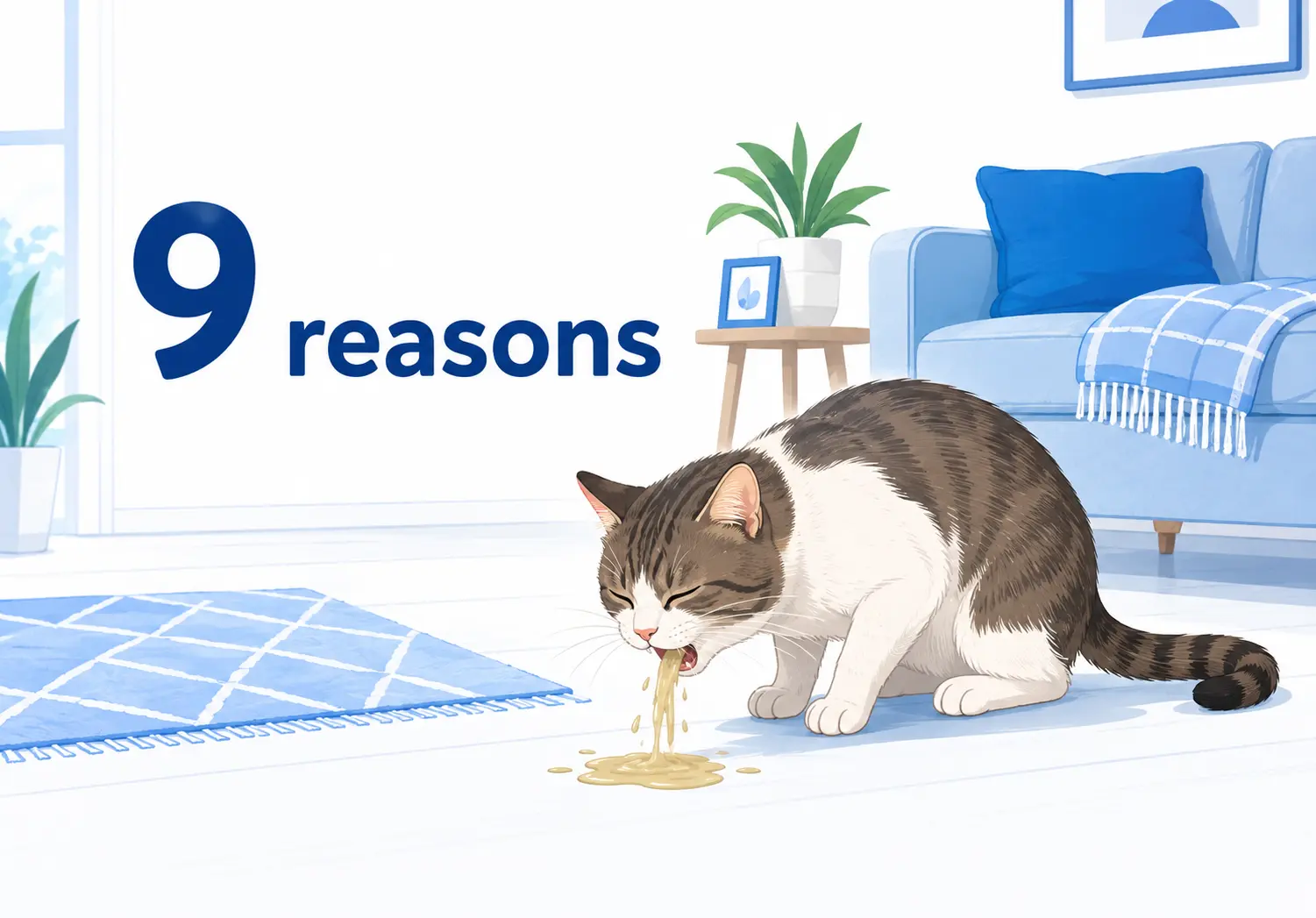
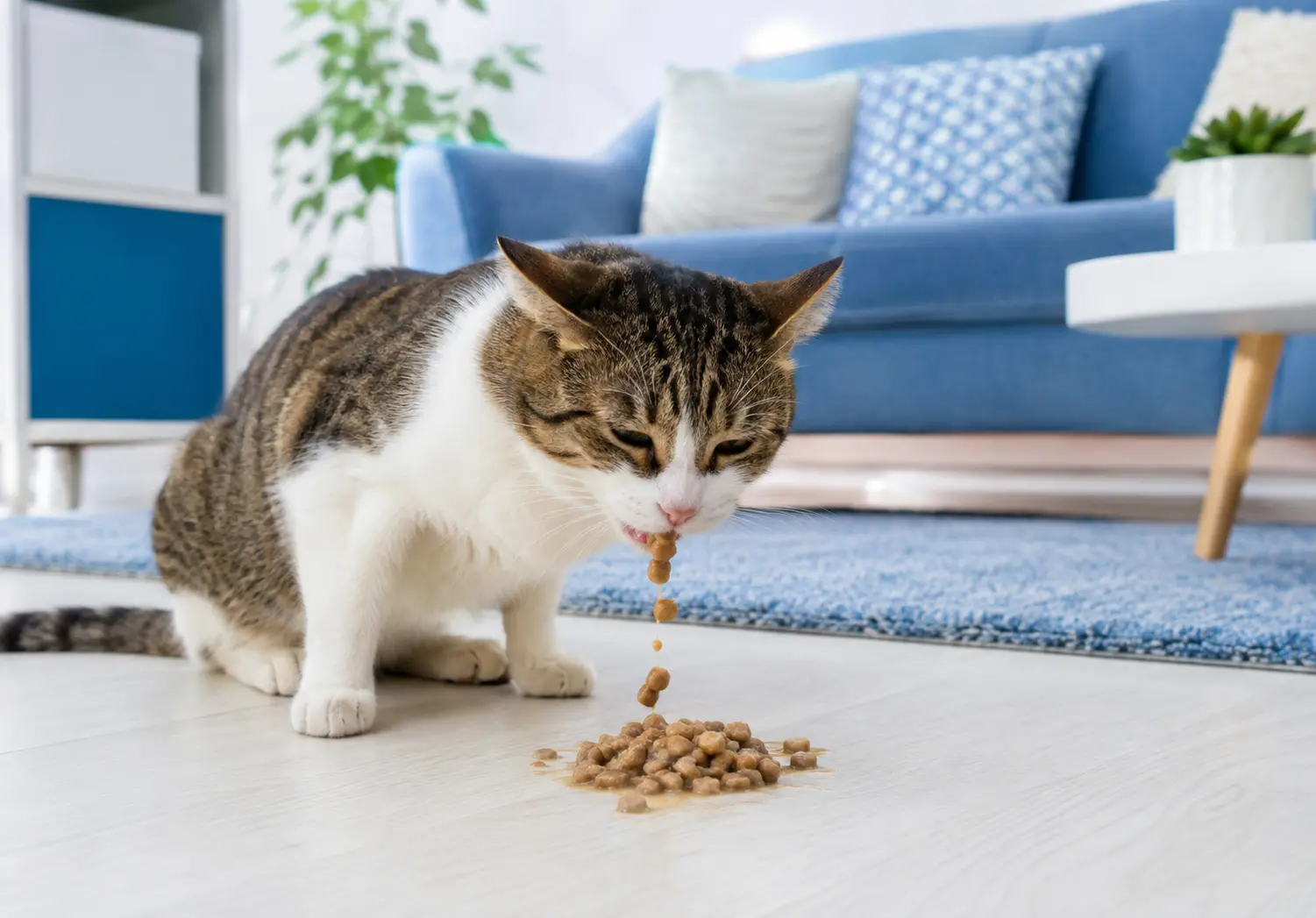
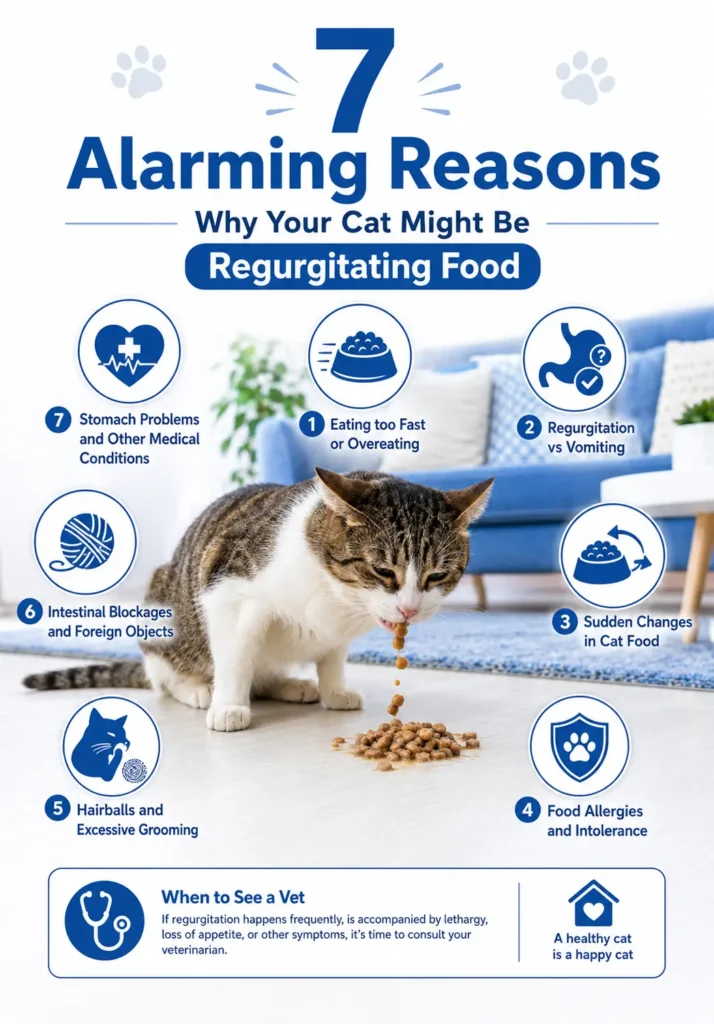
Seeing a pile of whole cat food on the floor can be confusing. Your cat ate a short time ago. Now the food seems to be back out without being digested.
This can happen for a simple reason. Your cat may have eaten too fast or swallowed too much food at once. It can also happen because of hairballs, food intolerance or a problem inside the stomach or intestines.
The timing matters. Food that comes back up within a few minutes may be regurgitated. Food that comes up later with retching and belly movement is more likely to be vomited.
One episode may not be an emergency when your cat acts normal afterward. Repeated episodes need attention. Your cat may lose water and nutrients even when it keeps returning to the food bowl.
Watch your cat closely. Notice when the food comes up and what it looks like. Also check for weight loss, diarrhea , pain, tiredness or changes in thirst. These details can help a veterinarian understand what is happening.
| Possible cause | What may happen | Other clues | Level of concern |
| Eating too fast | Whole food comes back up soon after eating | Cat wants food again | Often manageable |
| Regurgitation | Food leaves the esophagus with little effort | No strong belly movement | Needs investigation if frequent |
| Sudden diet change | New food upsets digestion | Gas diarrhea or poor appetite | Usually mild |
| Food allergy or intolerance | An ingredient causes digestive trouble | Itching diarrhea or hair loss | Needs a diet plan |
| Hairballs | Swallowed fur irritates the stomach | Gagging overgrooming or hair in vomit | Depends on frequency |
| Intestinal blockage | Food cannot move through the digestive tract | Pain repeated vomiting or little stool | Emergency |
| Medical condition | Disease affects digestion or creates nausea | Weight loss thirst or behavior changes | Needs veterinary care |
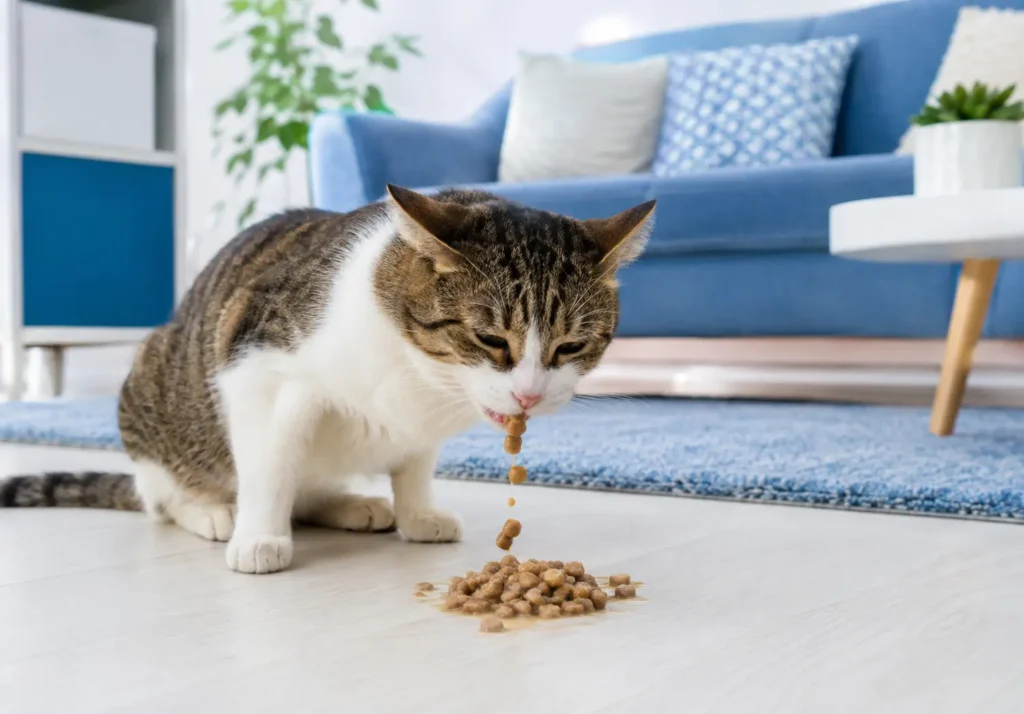
Some cats eat an entire meal in less than a minute. They take large bites and swallow air with their food. The stomach fills very quickly.
The food may come back up before the body has time to digest it. You may see whole pieces of dry food or a soft tube of wet food on the floor.
The cat may look normal right after the episode. It may even walk back to the bowl and ask for another meal.
Food competition is a common reason. A cat living with other animals may worry that another pet will steal its meal. The pets do not need to fight for this stress to happen.
One cat may stare at another from across the room. It may stand near the bowl or block the path to the feeding area. The nervous cat learns to finish food before the other animal comes closer.
Cats that once lived outdoors may also eat fast. Food was not always available to them. They learned to eat as much as possible whenever they found a meal.
Some cats simply love food. They do not slow down even when they feel full.
A large meal stretches the stomach. This can create pressure and discomfort.
Dry food may expand after it mixes with water inside the stomach. A cat that eats a large amount and then drinks quickly may bring the food back up.
Treats also add to the meal size. A cat may receive the correct amount of regular food but still overeat because several family members give extra treats.
Ask everyone in the home to follow the same feeding plan.
Use smaller meals throughout the day. Four small meals are often easier on the stomach than one or two large meals.
A slow-feeder bowl has raised parts that stop the cat from taking huge mouthfuls. The cat must eat around the shapes.
You can spread wet food across a wide flat plate. A thin layer takes longer to lick than a pile of food inside a deep bowl.
Puzzle feeders also work well. They release only a few pieces of dry food at a time. This slows eating and gives the cat something interesting to do.
Try these simple steps:
An automatic feeder can release small portions when no one is home. This can help cats that become too hungry between meals.
People often use the word vomiting for anything that comes out of a cat’s mouth. Vomiting and regurgitation are different actions.
Knowing the difference can give useful clues about where the problem begins.
Regurgitation usually happens without much warning. The cat may lower its head and food suddenly comes out.
There may be no drooling or repeated swallowing. The belly does not usually move strongly.
Regurgitated food often looks whole. It may have a tube shape because it was sitting inside the esophagus. The esophagus is the passage that carries food from the mouth to the stomach.
Regurgitation often happens soon after eating. Sometimes it occurs before the food even reaches the stomach.
Vomiting is more active. The cat may become restless or hide before it happens.
You may see lip licking, drooling or repeated swallowing. The cat may crouch and make strong movements with its belly. Retching often happens before the stomach contents come out.
Vomited material may include partly digested food. It can also contain foam yellow fluid hair or mucus.
The food may still look whole when vomiting happens soon after a meal. This is why watching the cat’s body movement is useful.
Frequent regurgitation may point to a problem in the esophagus. The passage may be irritated, narrowed or unable to move food normally.
Vomiting is more often linked to the stomach intestines or diseases in other parts of the body.
A video can help your veterinarian see the difference. Record an episode only when you can do it without delaying urgent care.
Take note of how long after eating it happens. Also record whether your cat coughs, gags drools or uses strong belly movements.
One episode after fast eating may improve with smaller meals. Repeated regurgitation should not be ignored.
Your cat may fail to receive enough calories. It may also breathe food or liquid into the lungs. This can lead to a serious lung infection.
Contact a veterinarian if food comes up after several meals or your cat starts losing weight.
Breathing trouble, coughing fever or unusual weakness needs quick medical care.
Cats can have sensitive digestive systems. A food that seems healthy may still cause trouble when it is introduced too quickly.
The new food may contain a different protein. It may have more fat or a new type of fiber. Even a change in texture can affect some cats.
A sudden switch may cause vomiting gas loose stool diarrhea or poor appetite.
Changing from dry food to wet food overnight may upset the stomach. Moving from one brand to another can do the same.
New treats can also cause symptoms. Some treats are rich and contain more fat than regular cat food.
Table scraps are another common problem. Fatty meat dairy products sauces and seasoned foods may be difficult for a cat to digest.
A cat may also reach another pet’s bowl. Dog food is not made to meet a cat’s full nutritional needs. Eating a small amount once may not cause harm but it can still upset a sensitive stomach.
Spoiled food and garbage may lead to more serious illness.
Most food changes should happen over about seven to ten days. Some sensitive cats may need more time.
Start with a small amount of new food mixed into the usual meal. Increase the new food every few days while reducing the old food.
A simple plan may look like this:
| Days | Old food | New food |
| Days 1 to 2 | 75 percent | 25 percent |
| Days 3 to 4 | 50 percent | 50 percent |
| Days 5 to 6 | 25 percent | 75 percent |
| Day 7 onward | 0 percent | 100 percent |
This is a general guide. Follow your veterinarian’s instructions when switching to a medical diet.
Slow the change if your cat develops mild stomach trouble. Contact a veterinarian if vomiting continues or becomes severe.
A cat should not be forced to accept a new food by being left hungry.
Cats can develop a serious liver problem when they stop eating for too long. Overweight cats face a higher risk.
Offer the previous safe food and call your veterinarian if your cat refuses meals. A kitten senior cat or cat with an illness may need help sooner.
Food allergy and food intolerance can both cause vomiting. They do not happen for the same reason.
A food allergy involves the immune system. The body reacts to an ingredient as if it were harmful.
Food intolerance does not involve the same immune reaction. The digestive system may simply struggle with a certain ingredient.
Vomiting may not be the only sign. Some cats also develop diarrhea gas or belly discomfort.
Skin problems can occur with a food allergy. The cat may scratch its face neck or ears. It may lick its belly and legs until the hair becomes thin.
Ear irritation and repeated skin infections can also appear.
A cat can react to an ingredient it has eaten for a long time. Food reactions do not always begin when a new brand is introduced.
The immune system usually reacts to proteins. This means the ingredient list matters more than the brand name.
Chicken, beef, fish and dairy are found in many cat foods. A cat may have eaten the same protein in dry food, wet food and treats.
Milk can also cause digestive upset because many adult cats cannot digest much lactose. A bowl of cow’s milk may lead to gas diarrhea or vomiting.
A strict elimination diet trial is often the most useful method.
The veterinarian may choose a food made with a new protein. This is a protein the cat has not eaten before.
Another choice is a hydrolyzed diet. The proteins in this food are broken into very small pieces. The immune system is less likely to recognize and react to them.
The trial usually lasts several weeks. During this time the cat must eat only the chosen food.
Treats table scraps flavored medicines and another pet’s food can spoil the test. Even a few bites may make the results unclear.
If the cat improves the veterinarian may later bring back the old food. A return of symptoms helps confirm the problem.
Moving from one food to another every few days can make the stomach more upset. It also makes the true trigger harder to identify.
Do not depend on the front label alone. Foods with names such as salmon dinner may still contain chicken or another protein.
Read the complete ingredient list and follow a clear plan.
Homemade diets should be designed by a veterinary nutrition expert. Cats need the right balance of taurine protein, vitamins, minerals and fats.
Cats swallow loose fur while cleaning themselves. Their rough tongues pull hair from the coat and move it toward the throat.
Most swallowed fur passes through the stomach and intestines. It leaves the body in the stool.
Some hair stays inside the stomach and forms a wet clump. This is called a hairball or trichobezoar.
A hairball can irritate the stomach. The cat may vomit food before the hairball appears.
You may find undigested food in one spot and a clump of hair in another. Sometimes food and hair come up together.
A hairball often looks long rather than round. It takes this shape while moving through the narrow esophagus.
Occasional hairballs can happen in healthy cats. Frequent hairballs may point to another problem.
Long-haired cats have more fur to swallow. Heavy shedding also raises the risk.
Fleas and skin allergies can make a cat groom constantly. Look for red skin scabs, bald patches or broken hair.
Stress and boredom can lead to overgrooming. Some cats repeatedly lick one part of the body when they feel anxious.
Pain can also cause licking. A cat with joint or bladder pain may focus on the painful area.
Digestive disease may slow the movement of hair through the intestines. This gives the fur more time to form a clump.
Brush your cat regularly. Daily brushing may help a long-haired cat. A short-haired cat may need brushing once or twice each week.
Treat fleas with a product made for cats. Some dog flea treatments are dangerous for cats.
Offer fresh water and a complete diet. A veterinarian may recommend a food with added fiber or a hairball-control product.
Do not give butter cooking oil mineral oil or human laxatives without professional advice.
A large hairball can block the digestive tract. This stops food and water from moving normally.
Warning signs include repeated vomiting, belly pain, food refusal and little or no stool.
A cat that keeps retching but cannot bring anything up also needs attention.
Contact a veterinarian quickly when your cat cannot keep food or water down.
Cats play with many small household items. Some cats chew or swallow them.
Common objects include string ribbon yarn thread dental floss rubber bands hair ties foam plastic and small toy pieces.
These objects may become stuck inside the stomach or intestines. A blockage is a medical emergency.
String and thread are known as linear foreign objects.
One end may become trapped under the tongue or inside the stomach. The intestines keep moving and pulling the other end forward.
This can gather the intestines into tight folds. The string may cut through the intestinal wall.
Never pull a string that is hanging from your cat’s mouth or anus. Pulling it can cause serious internal damage.
Stop the cat from chewing the visible part and go to an emergency veterinarian.
A blocked cat may vomit soon after eating or drinking. The food may look undigested because it cannot move through the digestive system.
Other warning signs include:
A partial blockage may cause signs that come and go. The cat may seem better for a short time before vomiting again.
Do not wait for the problem to become constant.
The veterinarian may examine the mouth and feel the abdomen. Blood tests can show dehydration and changes caused by illness.
X-rays may reveal the object or unusual gas patterns. Some materials do not show clearly on an X-ray. An ultrasound can provide a closer look.
An object inside the stomach may sometimes be removed with an endoscope. The cat receives anesthesia while a flexible instrument enters through the mouth.
Objects in the intestines often require surgery.
Fast care can prevent tissue death infection and a tear in the intestines.
Keep sewing supplies and craft materials inside closed containers.
Put ribbons away after opening gifts. Store dental floss in a covered trash can.
Count your cat’s toys and inspect them often. Throw away toys with loose strings broken pieces or exposed stuffing.
Wand toys should only be used during supervised play. Place them inside a closet when playtime ends.
Hair ties and rubber bands may look harmless. Keep them inside a drawer because many cats enjoy chewing them.
Undigested food does not always mean your cat simply ate too fast. A disease may affect the stomach intestines or another part of the body.
Frequent vomiting deserves a veterinary examination. This is especially true when your cat loses weight or acts differently.
Gastritis means inflammation of the stomach lining.
It may happen after a cat eats spoiled food, garbage , plants, chemicals or other irritating material.
Certain medicines can also upset the stomach. Never give human medicine to your cat unless a veterinarian has prescribed it.
A cat with gastritis may vomit food foam, yellow fluid or blood. It may refuse meals and become tired.
Inflammatory bowel disease affects the digestive tract. The intestinal walls become irritated and cannot work normally.
The cat may vomit often and lose weight. Diarrhea and appetite changes can also occur.
Some cats continue eating well even while losing body weight. Others become picky and eat less.
Diagnosis may involve blood tests stool tests, ultrasound and sometimes a tissue sample.
Treatment can include diet changes, medicine and vitamin support. The plan depends on the cat and the part of the digestive tract involved.
The pancreas helps with digestion and blood sugar control. Inflammation of this organ is called pancreatitis.
Cats with pancreatitis may vomit but some do not. Poor appetite, tiredness, dehydration and belly pain may be more noticeable.
The signs can be quiet. A cat may only hide and stop eating.
Pancreatitis may occur with liver or intestinal disease. Veterinarians sometimes call this combination triaditis.
Healthy kidneys remove waste from the blood and help control water balance.
When kidney function declines, waste products build up. This can make a cat feel sick and cause vomiting.
Kidney disease is more common in older cats. Other signs include increased thirst, increased urination, weight loss, dehydration and bad breath.
The changes may happen slowly. Owners may think the cat is simply aging.
Blood and urine tests help check kidney function.
Hyperthyroidism happens when the thyroid gland makes too much thyroid hormone. It mostly affects middle-aged and older cats.
The cat may eat a lot but still lose weight. It may drink more water and urinate more often.
Vomiting diarrhea restlessness and a messy coat can also occur.
A blood test can measure thyroid hormone. Treatment options may include medicine a special diet radioactive iodine or surgery.
Diabetes affects the way the body uses sugar. A diabetic cat may drink and urinate more than usual. Weight loss can happen even with a strong appetite.
Vomiting may appear when the condition becomes severe or poorly controlled.
Liver disease can also cause nausea and poor appetite. Yellow gums eyes or skin may appear in some cases.
Both conditions need veterinary testing and a specific treatment plan.
One mild episode may be watched at home when your adult cat acts normal and has no other symptoms.
Contact a veterinarian when undigested food comes up after several meals. Also call when the problem returns over several days.
Seek urgent care when your cat:
Kittens senior cats and cats with existing medical conditions can become sick more quickly.
A cat that stops eating may need help even when it is not vomiting.
Write down when each episode happens. Note how long it occurs after eating.
Take a photo of the material before cleaning it up. Look for whole food hair foam yellow fluid blood worms grass string or plastic.
Watch the cat during the episode. Try to see whether the belly moves strongly or food simply falls out.
Tell the veterinarian about recent diet changes and new treats. Mention any medicines supplements plants chemicals or pest-control products in the home.
Report changes in appetite weight thirst urination stool grooming and activity.
A clear history can help the veterinarian choose the right tests.
Do not give human anti-nausea medicine or stomach medicine. Some products can be dangerous for cats.
Keep fresh water available unless a veterinarian gives different instructions. Do not force water into your cat’s mouth because it could enter the lungs.
For a cat that eats too fast you can try small measured meals and a slow feeder. Make only one change at a time so you can see whether it helps.
Keep the cat indoors and away from string plants chemicals and garbage.
Clean up the vomit and check the area for any missing object. Look under furniture for chewed toys ribbon or food packages.
Home care is not enough when vomiting continues or other warning signs appear.
Undigested food may come back up because a cat ate too fast or swallowed too much at once. It may also happen because of regurgitation a sudden diet change food intolerance or a hairball.
More serious causes include intestinal blockages and diseases that affect the stomach kidneys thyroid gland pancreas or liver.
Pay attention to the pattern. Notice when the food comes up and how your cat behaves before and after it happens.
Small feeding changes may solve a simple fast-eating problem. Repeated vomiting needs proper medical attention. A veterinarian can find the cause and help your cat eat safely again.
The article keeps the research references outside the content itself as requested.