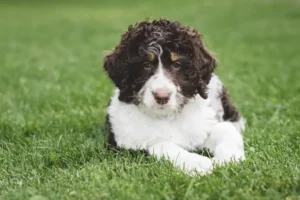
Choosing between a Toy Aussiedoodle and a Mini Aussiedoodle may look easy at first. One is smaller. The other is a little bigger. That sounds like the whole story.
It is not.
Size affects how easily you can carry the dog. It can change exercise plans and feeding costs and injury risks. It may even affect how well the dog fits around young children.
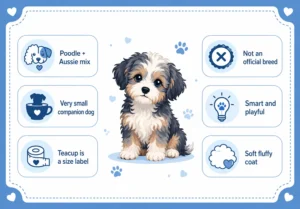
Both dogs usually come from a small Poodle and an Australian Shepherd-type dog. Some breeders use a Miniature American Shepherd in the mix. Others use a smaller Australian Shepherd line. This means the names “Toy” and “Mini” do not follow one official size chart.
Aussiedoodles are mixed-breed dogs. Mixed breeds do not have a fixed breed standard. Breeders may therefore use the same size label for dogs with different expected adult weights. Always check the actual parents instead of trusting the word “Toy” or “Mini” by itself.
The Poodle parent also makes a difference. A Toy Poodle stands under 10 inches. It commonly weighs around 4 to 6 pounds. A Miniature Poodle stands from 10 to 15 inches and often weighs around 10 to 15 pounds. The Australian Shepherd side is usually much larger and can add more height and body weight to the puppies.
Here is a quick comparison before we look at each difference.
| Feature | Toy Aussiedoodle | Mini Aussiedoodle |
| Common breeder size label | Usually the smallest Aussiedoodle group | Usually one step above Toy size |
| Expected adult weight | Often below about 20 pounds | Often around 15 to 40 pounds or more |
| Body build | Lighter and easier to carry | Stronger and more solid |
| Exercise style | Shorter active sessions may work well | Often handles longer walks and games |
| Training | Smart but may need gentle handling | Smart and often a little more physically confident |
| Grooming | Small body makes brushing faster | Larger coat takes more time |
| Injury risk | More fragile around rough play | Usually less delicate but still needs care |
| Food cost | Usually lower | Usually higher |
| Family fit | Better for calm homes | Often easier around active families |
These are practical ranges rather than official rules. Some Toy Aussiedoodles grow larger than expected. Some Mini Aussiedoodles stay quite small. One published Mini Aussiedoodle guide gives a broad adult range of 15 to 45 pounds. That large range shows why parent size matters so much.
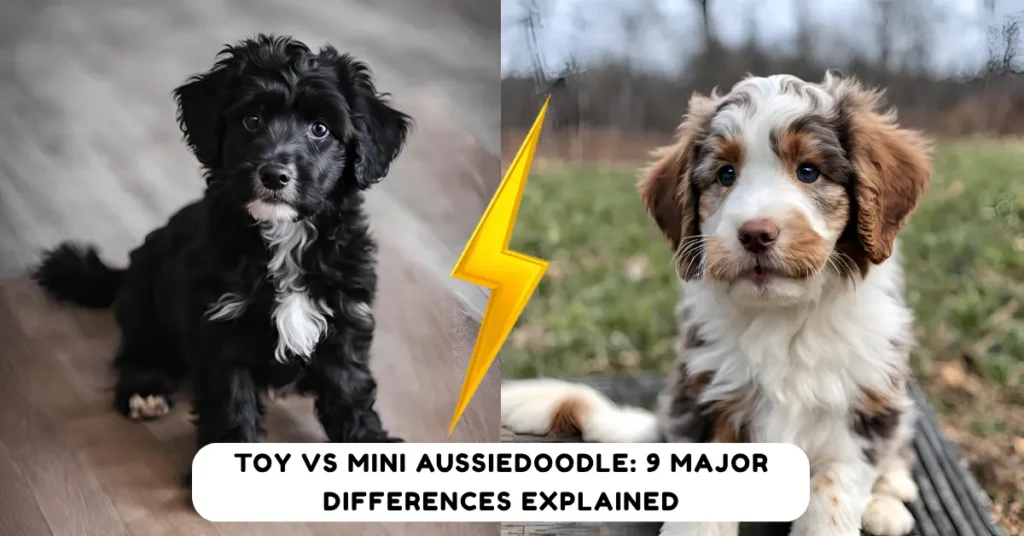
A Toy Aussiedoodle is usually bred with a Toy Poodle or a very small Miniature Poodle.
Many breeders use the Toy label for dogs expected to stay below about 20 pounds. Some may finish closer to 10 pounds. Others may reach the high teens or even grow beyond the breeder’s estimate.
A small puppy does not always become a tiny adult.
The Australian Shepherd-type parent may add more height and bone than the Poodle parent. Genes also do not split into a perfect half. One puppy may take strongly after the small Poodle. A littermate may grow closer to the larger parent.
Toy Aussiedoodles often feel light in the arms. They fit more easily into travel carriers. They also take up less room on a couch or car seat.
That small frame can be delicate. A hard jump from a tall bed may cause injury. Rough children or large dogs can also hurt a tiny dog without meaning to.
A Mini Aussiedoodle is usually larger and more strongly built.
Many fall somewhere between 15 and 40 pounds. Some breeders produce dogs outside that range. The result depends on whether the herding parent is a Miniature American Shepherd or a small Australian Shepherd and whether the Poodle parent is Toy or Miniature size.
The Miniature American Shepherd itself commonly weighs 20 to 40 pounds. Males stand around 14 to 18 inches. Females stand around 13 to 17 inches.
A Mini Aussiedoodle may therefore feel like a small or medium dog rather than a toy-sized pet.
This dog is often easier to see around your feet. It may also handle normal family movement better than a tiny dog.
Still “Mini” does not always mean easy to carry. A 35-pound dog becomes heavy when you need to lift it into a car after surgery.
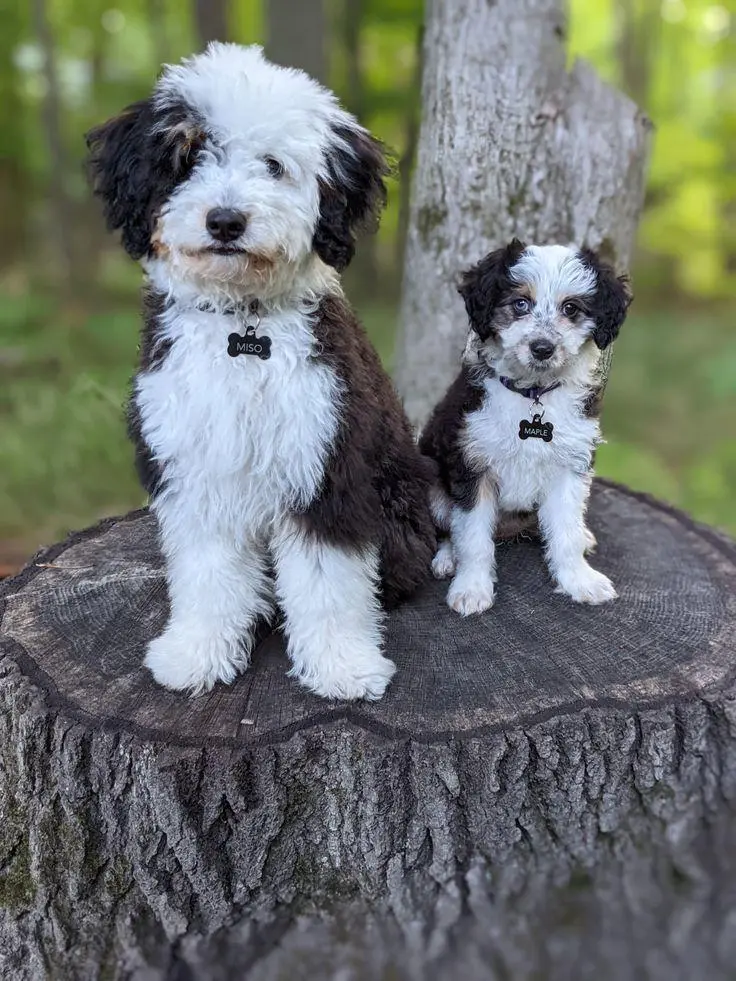
Toy Aussiedoodles are often described as cuddly and people focused. Many like sitting on laps and staying close to their owners.
Small size does not always mean low energy.
Toy Poodles are active and intelligent dogs. They can be alert and confident. The Australian Shepherd side may add a strong interest in movement and household activity. A Toy Aussiedoodle may follow you through every room. It may bark when someone reaches the front door. It may also become nervous when large dogs rush toward it.
Owners sometimes pick up a Toy dog whenever it feels worried. That may protect it in a dangerous moment. Yet constant carrying can prevent the dog from building confidence on the ground.
Give the dog safe chances to explore. Let it walk on different surfaces and meet calm people without forcing contact.
Mini Aussiedoodles often feel more solid during play and outdoor activity.
The Miniature American Shepherd is a lively and self-motivated working dog. It is small but still athletic. A Mini Aussiedoodle may inherit that confidence and desire to stay busy.
That does not mean every Mini is bold.
Some are sensitive. Some dislike strangers. Others become overexcited around children or moving bikes.
In my view the better question is not “Which size has the best personality?” Ask whether the puppy can recover after a surprise. Watch whether it accepts gentle handling. Check whether it can calm down after playing.
Parent temperament often tells you more than the size label. A stable Toy can feel easier than a nervous Mini. A calm Mini can feel easier than a Toy that barks at every sound.
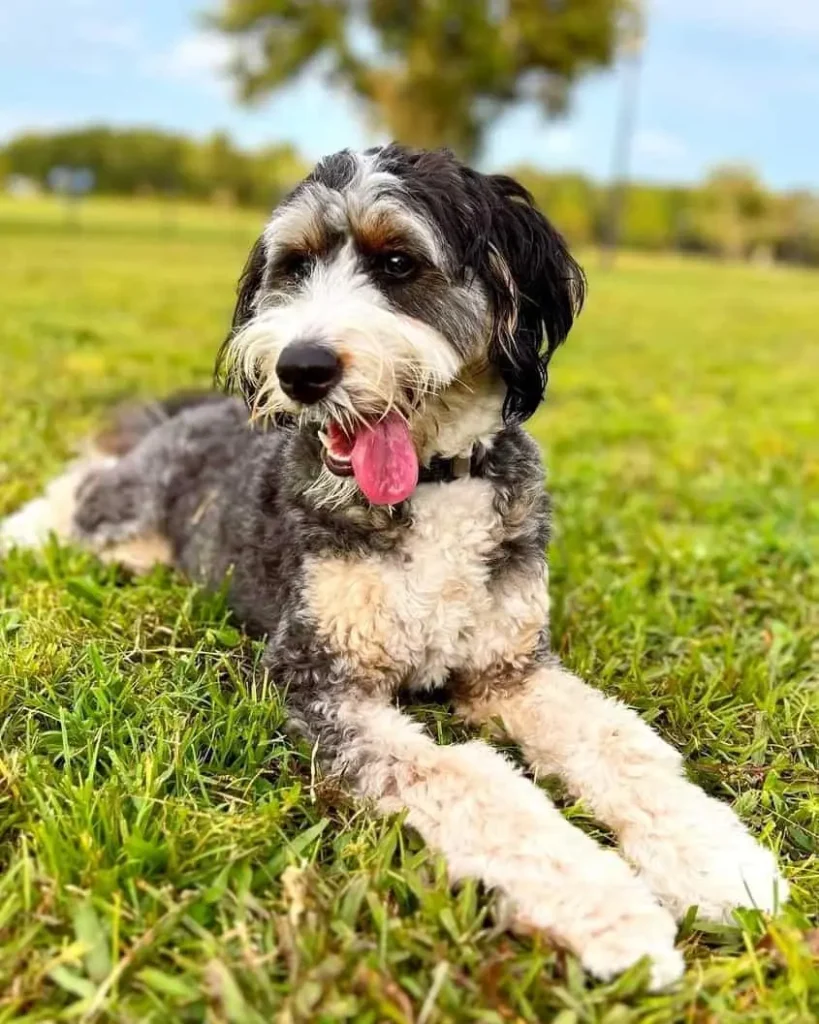
A Toy Aussiedoodle needs daily exercise even though it has short legs and a light body.
A few quick toilet trips will not always satisfy it.
Toy Poodles remain active dogs. Australian Shepherds have a strong work drive and need useful activity. Their mixed puppies may inherit a busy mind in a small body. A healthy Toy Aussiedoodle may enjoy short walks and indoor fetch and sniffing games. Several smaller activity periods often work better than one hard workout.
Avoid asking a young puppy to run beside a bike. Repeated high jumping can also place too much pressure on a growing body.
Watch the dog rather than chasing a fixed number of minutes. The right session should leave the dog pleasantly tired. It should not cause limping or heavy exhaustion.
A Mini Aussiedoodle usually handles longer walks and more active games.
Many enjoy hiking and swimming and fetch. Some do well in agility or rally or scent work after proper training. The herding side may create a strong need for movement. Poodles are also athletic dogs that require regular exercise. A Mini may still become wild when you only provide physical exercise.
Smart dogs need brain work too.
Use food searches and puzzle toys and short obedience games. Let the dog sniff during walks instead of rushing every mile. Do not try to create calm behavior by running the dog until it drops. You may simply build a fitter athlete.
Mix active exercise with slow thinking tasks and quiet rest.
Toy Aussiedoodles often learn new cues quickly.
Their small size makes mistakes easy to ignore. A Toy puppy jumping on your leg may seem cute. The same habit can become annoying when the dog jumps on visitors for years.
Begin training on the first day.
Teach name response and recall and leave it. Practice waiting before food and walking calmly through doors.
Use tiny treats. A small dog can gain weight when every reward is large.
Handle the dog gently. Avoid pulling it around by the collar. Small dogs still need rules but they do not need rough corrections.
Reward-based methods teach the dog what to do without relying on fear or pain. The American Veterinary Society of Animal Behavior recommends reward-based training for everyday skills and behavior problems.
Mini Aussiedoodles also learn fast. Their larger body can make poor manners more noticeable. A Mini that jumps can knock into a child. A dog pulling on the leash may become hard to control.
Teach calm greetings early. The Australian Shepherd side may make the dog very aware of movement. Some puppies chase running feet or grab loose clothes. Redirect this behavior toward toys and training games.
Keep lessons short and clear.
A smart dog may become bored when you repeat the same exercise twenty times. Practice three good repetitions and move on. Mini Aussiedoodles often enjoy advanced tricks once they understand basic manners.
The main training difference is not intelligence. Both sizes can be very clever. The Mini simply has more physical power behind its choices.

A Toy Aussiedoodle has less total body area to brush.
That can make one grooming session shorter. The coat itself may still be difficult.
A curly coat can trap dead hair close to the skin. A thick wavy coat may form knots behind the ears and under the legs. Poodles shed only a small amount but need an intensive grooming routine. Long coats may need daily brushing to prevent matting. Many Poodle owners use a professional groomer every four to six weeks.
Use a slicker brush and a metal comb. The comb should pass through the coat near the skin.
A Toy dog may need extra patience around its thin legs and small paws.
A Mini Aussiedoodle may have the same difficult coat across a larger body.
That means more brushing time and often a higher grooming bill.
Some Minis inherit a thicker undercoat from the herding side. They may shed more during seasonal coat changes. Others have tight Poodle curls and leave little visible hair around the home.
Mixed-breed coats remain hard to predict.
No dog is completely hypoallergenic. People can react to proteins in dander and saliva. A Poodle-style coat may work better for some allergy sufferers but the Aussiedoodle label cannot promise a reaction-free dog.
A practical short haircut can make either size easier to maintain.
Toy and Mini Aussiedoodles can inherit health issues from both parent lines.
Toy and Miniature Poodles have a higher chance of kneecap problems known as patellar luxation. Legg-Calvé-Perthes disease is another orthopedic concern seen more often in smaller Poodle varieties.
The Poodle Club of America recommends eye testing and a DNA test for progressive retinal atrophy for both Toy and Miniature Poodles. It also recommends patella evaluation. Miniature Poodles should receive hip evaluation as well.
Very small Toy Aussiedoodles may also be easier to injure through falls or rough handling.
Do not choose the smallest puppy only because it looks cute.
The Australian Shepherd or Miniature American Shepherd side also needs serious health testing.
Recommended screening for Miniature American Shepherds includes hips and yearly eye examinations. The breed club also recommends DNA tests for progressive retinal atrophy and MDR1 drug sensitivity and hereditary cataracts.
Ask for written test results from both parents. A basic health check from a local vet is not the same as full breeding screening.
Poodles have an official life expectancy of about 10 to 18 years. Miniature American Shepherds commonly live around 12 to 13 years. Australian Shepherds are listed around 12 to 15 years. A mixed dog may fall somewhere near the parent ranges but no exact lifespan can be promised.
The puppy price may not show a clear pattern.
Some breeders charge more for Toy Aussiedoodles because buyers want very small dogs. Other breeders charge the same price for every size.
Do not assume a higher price means better health.
Look for parent testing and clean living conditions and stable temperament. Ask how puppies are raised. Check whether the breeder will take the dog back when the owner cannot keep it. Grooming may cost less for a Toy because the dog is smaller. The coat type still matters. A tiny dog with tight mats can take more work than a larger dog with a short loose coat.
Both sizes may need professional grooming every few weeks when the coat grows like a Poodle coat.
Toy Aussiedoodles usually eat less food. Their beds and crates and parasite medicines may also cost less.
Mini Aussiedoodles eat more. Larger crates and grooming appointments can raise the regular budget.
Medical costs do not always follow body size.
A Toy dog may need expensive treatment for a broken leg. A Mini may need joint care or surgery. Emergency tests often cost a similar amount for either dog. Set money aside for routine exams and dental care and vaccines. Also keep an emergency fund.
The cheaper dog to feed is not always the cheaper dog to own.
A Toy Aussiedoodle usually fits more easily into a small apartment. It can use a smaller crate and travel carrier. Owners may find it easier to carry on stairs or public transport.
Size does not remove exercise needs.
A bored Toy can bark in an apartment. It may react to hallway sounds or people passing the door. Training and daily walks matter more than floor space. A Mini Aussiedoodle can also live in an apartment when it receives enough activity. The owner must plan toilet trips and quiet indoor enrichment.
A yard helps both sizes but does not replace walks.
Toy Aussiedoodles may fit calm homes with older children.
Very young children can accidentally drop or step on a tiny dog. A scared small dog may also snap when it feels trapped. Mini Aussiedoodles often handle family play better because they have a stronger frame. They can still become overexcited and knock over a toddler.
Adults should supervise every young child and dog interaction.
Both sizes may live with cats or other dogs after slow introductions. The herding side can cause chasing when another animal runs.
Teach calm behavior and give each pet a safe area.
The Toy may not suit a loud home with rough young children. It may also feel like a poor match when large dogs visit often.
The Mini may not suit someone who wants a quiet lapdog with very low activity needs.
The size name should not make the final choice for you.
Ask for the exact height and weight of both parents. Ask about earlier adult puppies from the same pairing. Look at health testing and temperament.
Then think about your own daily life.
Can you safely handle a fragile dog? Would you rather have a stronger walking partner? How much grooming can you manage?
A good match comes from honest answers rather than the smallest puppy or the prettiest coat.
The biggest difference between a Toy and Mini Aussiedoodle is body size. Yet size affects much more than weight.
A toy is easier to carry and may cost less to feed. It may also need more protection from falls and rough play.
A Mini often feels sturdier. It may handle longer walks and active family life more easily. It also needs more space in the car and a little more food and grooming time.
Both dogs can be smart and active and loving. Both may inherit a strong working mind from the Australian Shepherd side and a curly high-care coat from the Poodle side.
Do not trust size labels alone.
Aussiedoodles have no official breed standard. Check the real parents and past litters. Ask for proper health test results.
Choose the dog whose body and energy and care needs match your real home.
That choice matters much more than whether the breeder calls the puppy Toy or Mini.