
Yes. Aussiedoodles can be good for first-time owners who have enough time for training and exercise and coat care. They are smart and loving dogs. Many enjoy staying close to their families. They can also learn household rules quickly.
Still an Aussiedoodle is not an easy or low maintenance choice for every beginner.
This dog comes from an Australian Shepherd and a Poodle. Australian Shepherds are intelligent dogs with high energy and a strong working drive. Poodles are also active and very smart. They usually respond well to positive and consistent training. An Aussiedoodle may inherit a different mix of these qualities from each parent.
A first-time owner may enjoy how quickly this dog learns. The same intelligence can create trouble when the dog feels bored. A clever puppy may learn how to open cabinets or steal shoes or get attention through barking.
The coat type is also not fully predictable. One Aussiedoodle may have loose waves. Another may develop a thick curly coat that mats easily. Aussiedoodles are mixed-breed dogs and do not have one official breed standard. Size and coat and behavior can therefore vary between puppies.
A practical way to judge the match is to imagine an ordinary rainy Tuesday. Can you still walk the dog and train it and brush its coat? Can you manage a puppy while working or studying? The answer matters more than how cute the puppy looks in a photo.

An Aussiedoodle may suit you when:
| Care Area | Good News for a Beginner | Possible Difficulty |
| Temperament | Often affectionate and people focused | May become overexcited or clingy |
| Training | Usually learns new skills quickly | Also learns unwanted habits quickly |
| Exercise | Enjoys walks and games with the owner | Needs more than a quick toilet break |
| Mental work | Responds well to puzzles and training | Boredom may lead to barking or chewing |
| Grooming | Coat may shed less than some breeds | Curly coats can mat without regular care |
| Time alone | Independence can be taught gradually | Some dogs develop separation distress |
| Cost | Preventive care supports long-term health | Grooming and emergencies can raise expenses |
The typical Aussiedoodle temperament for new owners may feel both exciting and demanding.
Many Aussiedoodles are affectionate. They enjoy being near their people and taking part in household activities. A puppy may follow you from the kitchen to the bedroom and then sit outside the bathroom door.
This strong connection can make training easier. A dog that values human attention often wants to work with its owner.
The Poodle side may bring fast learning and an eager attitude. The Australian Shepherd side may bring alertness and a desire to stay busy. Both parent breeds are active and intelligent.
The problem appears when a new owner expects a calm teddy-bear dog. An Aussiedoodle may look soft and cuddly but behave like a small athlete.
Some puppies jump when they feel excited. Others nip at moving pants or chase children through the house. These actions do not always mean aggression. They can come from puppy play or poor impulse control or inherited sensitivity to movement.
Australian Shepherds were developed as working dogs. Herding-type behavior can appear as chasing or trying to control the movement of people and animals. An Aussiedoodle may inherit some of this behavior even when it has never visited a farm. Temperament also depends on more than breed mix. Early handling and social experiences and health and the home environment all matter.

A shy puppy may need gentle exposure to new sounds and people. A bold puppy may need help learning polite greetings and personal space.
Good socialization does not mean forcing the dog to meet everyone. Positive experiences should happen at the puppy’s own pace. A puppy that feels overwhelmed may develop more fear rather than more confidence.
First-time owners should choose the individual puppy carefully. Ask how the puppy reacts to handling and unfamiliar sounds. Watch how quickly it recovers after a mild surprise.
A good family puppy does not need to be the boldest animal in the litter. It should show curiosity and reasonable recovery. It should also accept calm human contact.
Aussiedoodle training difficulty is usually not about a lack of intelligence. The dog may understand a lesson very quickly.
The real challenge is keeping the training clear and consistent.
Aussiedoodles may notice every small pattern. A puppy can learn that sitting opens a door. It can also learn that stealing a sock starts a fun chase.
Training begins on the first day. House training and greetings and chewing habits and social experiences are all forms of learning. A puppy is always watching what leads to food or play or attention.
Use reward-based methods. Give the dog something it values after the behavior you want. The reward may be a small treat or a toy or access to a sniffing area.
The American Veterinary Society of Animal Behavior recommends reward-based methods for training and behavior problems. It advises against electronic collars and prong collars and choke chains and physical or psychological punishment.
A new owner should begin with simple daily skills. Teach the puppy to respond to its name and come when called. Practice sitting before food and waiting briefly at doors. Teach it to release objects rather than starting a chase.
Keep lessons short. Three to five focused minutes often work better than one long session.
Train inside the home before practicing around major distractions. A puppy may respond perfectly in the kitchen and appear to forget everything outside. It has not necessarily been forgotten. The environment may simply feel too exciting.
VCA advises beginning in easy places with few distractions. Owners can then practice in other rooms and the yard and quiet outdoor areas before adding people or dogs. The dog also needs household consistency. One family member should not reward jumping while another person tries to stop it.
Decide on the rules early. Choose whether the dog may sit on furniture. Decide where it will sleep and how greetings will work. Puppy classes can help a first-time owner learn timing and body language. VCA notes that well-managed socialization classes can be valuable from about eight weeks of age when puppies meet health and vaccination requirements. Ask your veterinarian about safe local options.
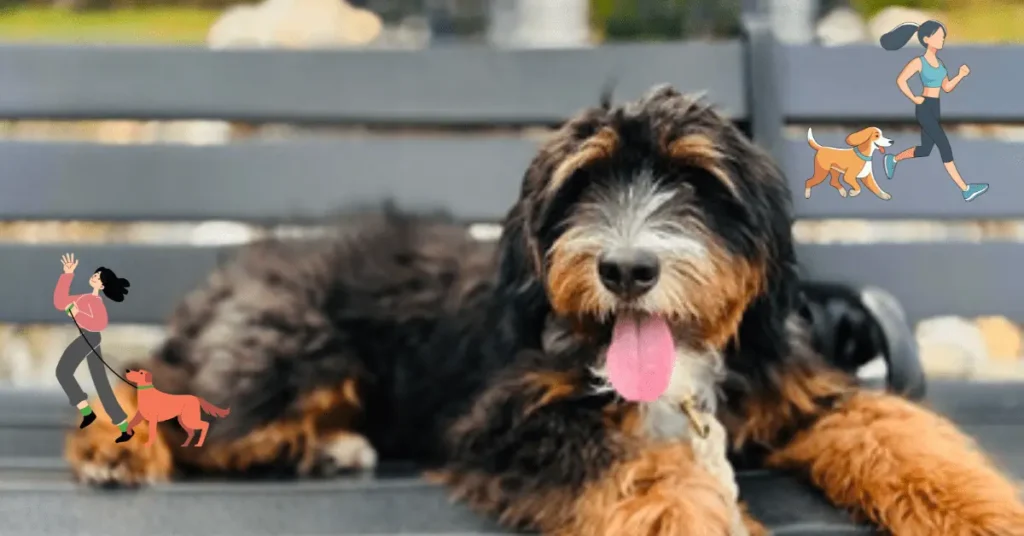
Daily exercise and mental stimulation needs can make the biggest difference between a relaxed Aussiedoodle and a difficult one. An Aussiedoodle may not feel satisfied after a five-minute toilet walk. Its Australian Shepherd parent is a high-energy athlete. Poodles are also active dogs that need regular stimulation.
There is no single exercise amount that fits every Aussiedoodle. Age and health and body size and fitness all change the right plan. Dogs with joint or heart or breathing problems need veterinary guidance before beginning a harder routine.
A healthy adult may enjoy brisk walks and hiking and fetch and swimming. It may also like scent games or beginner dog sports. Puppies need gentler activity. Their growing bodies are not ready for long forced runs or repeated hard jumping. Increase exercise gradually and allow the puppy to stop when it becomes tired.
Physical activity alone may not create calm behavior. Some owners try to run the dog until it becomes tired. This can produce a fitter dog that needs even more movement.
Use part of the dog’s meal in a food puzzle. Hide a few pieces of food around one room. Teach the names of toys or practice a short recall game.
Sniffing also uses the brain. A slow walk with time to smell can feel more satisfying than rushing around the same block. A balanced day includes active movement and brain work and rest. The dog should learn that every quiet moment does not require entertainment.
A healthy routine may include a morning walk and a short training session. The dog can rest afterward. Later it may receive a toilet break and a food search or toy game. An evening walk can finish the active part of the day.
Watch behavior after exercise. A suitable session should help the dog settle. A dog that returns home more frantic may feel overstimulated. Repeated ball chasing or a crowded dog park can keep some dogs in a high state.

Aussiedoodle grooming and coat care can surprise first-time owners.
The puppy coat may feel soft and easy at first. The adult coat may become thicker and harder to maintain. An Aussiedoodle can inherit curly Poodle-type hair or a looser coat. It may also develop an undercoat or more shedding from the Australian Shepherd side. Mixed-breed coat results are not guaranteed.
Poodles shed minimally but need an intensive grooming routine. AKC guidance says a longer Poodle coat may need daily brushing to prevent matting.
Veterinary grooming guidance also says that long or curly coats may require daily brushing. Common matting areas include behind the ears and under the front legs and along the back legs. A quick brush over the back is not enough. The brush must reach through the coat toward the skin without scratching it.
A metal comb helps check the work. When the comb cannot pass through a section then a knot may still be present. The most common problem areas include the ears and collar line and armpits and tail and legs. Moisture from rain or swimming can make tangles tighter.
Professional grooming may be needed every four to eight weeks for a Poodle-like coat. The exact schedule depends on coat length and condition and the owner’s home care. Start grooming practice while the dog is young. Touch the paws and ears gently. Reward the puppy for standing still during a short brush.
Do not wait until the first full haircut. A dog that has never heard clippers or stood on a grooming table may feel frightened. Coat care also includes nail trimming and ear checks and dental care. The owner must budget time and money for all of it.
Matting is not only an appearance problem. Tight mats can pull on the skin and hide irritation. Severe matting may need to be shaved rather than painfully brushed out. A short coat is often easier for a busy first-time owner. A fancy long coat requires much more work.
Barking and separation anxiety do not affect every Aussiedoodle. New owners should still prepare for both.
Poodles can be alert and may bark when they notice something unusual. An Aussiedoodle may react to doorbells or hallway sounds or people outside a window. Barking can also come from boredom. A dog that has spent the day without exercise or mental work may create its own activity.
Do not shout over the dog. Loud reactions may increase excitement or sound like you are joining in. Manage the trigger and teach another response. Move the bed away from a busy window. Use curtains when outside movement causes barking. Reward the dog for looking at a sound and then returning attention to you.
Attention barking needs careful timing. Do not begin a game while the dog barks. Wait for a short quiet moment and then offer attention.
Aussiedoodles often enjoy being close to people. A puppy that follows its owner all day may struggle when suddenly left for several hours. Begin with very short separations. Ask the puppy to rest behind a gate while you stay nearby. Step out of sight for a few seconds and return before panic starts.
Slowly increase the time. Leaving for a full workday without preparation is not independence training.
Separation distress can include clinginess and pacing and panting and barking or howling. Other signs include waiting near doors and house-soiling. Severe cases may involve destruction or escape attempts and self-injury.
A food toy may help a dog with mild boredom. A severely anxious dog may refuse food after the owner leaves. Use a camera when possible. It helps you see whether the dog sleeps or paces or barks during your absence.
Contact a veterinarian when the dog shows strong distress. Serious separation anxiety may need a formal behavior plan rather than basic obedience training.
The cost of owning an Aussiedoodle includes much more than the original puppy price. The purchase or adoption cost happens once. Food and preventive care and grooming continue for years.
A first-time owner should plan for routine examinations and vaccinations. Other common health expenses include parasite prevention and dental care and illness testing.
AAHA advises pet owners to budget for both expected care and unexpected needs such as emergency surgery or hospitalization. Preventive care can also help identify problems before they become harder and more expensive to treat.
Professional grooming can become one of the largest regular nonmedical expenses. A curly Aussiedoodle may need appointments every several weeks. Food cost depends on body size and diet. A Standard Aussiedoodle will usually eat more than a Mini Aussiedoodle.
Training classes can also add cost during the first year. Good classes may save money later by preventing behavior problems and household damage. Owners also need basic supplies. These include a bed and crate or pen and leash and harness and bowls and brushes and nail tools and chew toys.
Emergency savings matter. A swallowed sock or broken tooth or sudden illness can create an unexpected bill.
Some owners choose pet insurance. AAHA reported that the 2025 average monthly dog insurance premium was $62.44. Actual prices and coverage vary by location and age and policy. Owners should read exclusions and reimbursement rules carefully.
Another option is a separate pet savings account. A small automatic monthly transfer can create a safety fund over time.
Do not spend the whole budget on buying a puppy. Leave enough money for the animal’s ongoing care.
The common challenges for first-time owners often appear during the first few months.
House training may interrupt sleep. The puppy may need to go outside early in the morning and after meals and play and naps. Puppy biting can feel painful. Chewing may damage shoes or furniture when supervision fails.
The dog may also become wild in the evening. This does not always mean it needs another long walk. An overtired puppy can look more active instead of sleepy.
New owners sometimes expect training to move in a straight line. A puppy may perform well for several weeks and then become distracted during adolescence.
Another challenge is consistency. It is easy to reward cute jumping when the puppy is small. The same behavior becomes harder when the dog grows.
Before bringing an Aussiedoodle home prepare:
Aussiedoodles may not suit people who want a dog that entertains itself all day. They may also feel difficult for owners who dislike grooming or outdoor activity.
The breed mix may work well for a beginner who enjoys learning. The owner must accept that mistakes will happen. A puppy does not need a perfect trainer. It needs a calm person who follows clear rules and keeps practicing.
Are Aussiedoodles good for first-time owners? They can be.
They are often smart and affectionate and fun to train. They can become loyal companions for active people and families. They are not low-maintenance dogs. Exercise and brain work and grooming take real time. Some Aussiedoodles also need help with barking or separation distress.
A first-time owner should choose the individual dog rather than trusting a cute photo or a breeder label. Ask about the parents and early socialization and coat type and daily behavior. Use reward-based training from the beginning. Build a steady routine and teach the puppy how to rest.
Budget for grooming and preventive health care as well as food and toys. An Aussiedoodle can be a wonderful first dog when the owner wants an involved companion and is ready to take part in its daily life.