Petsay
October 18, 2026
By Haseeb Rehman
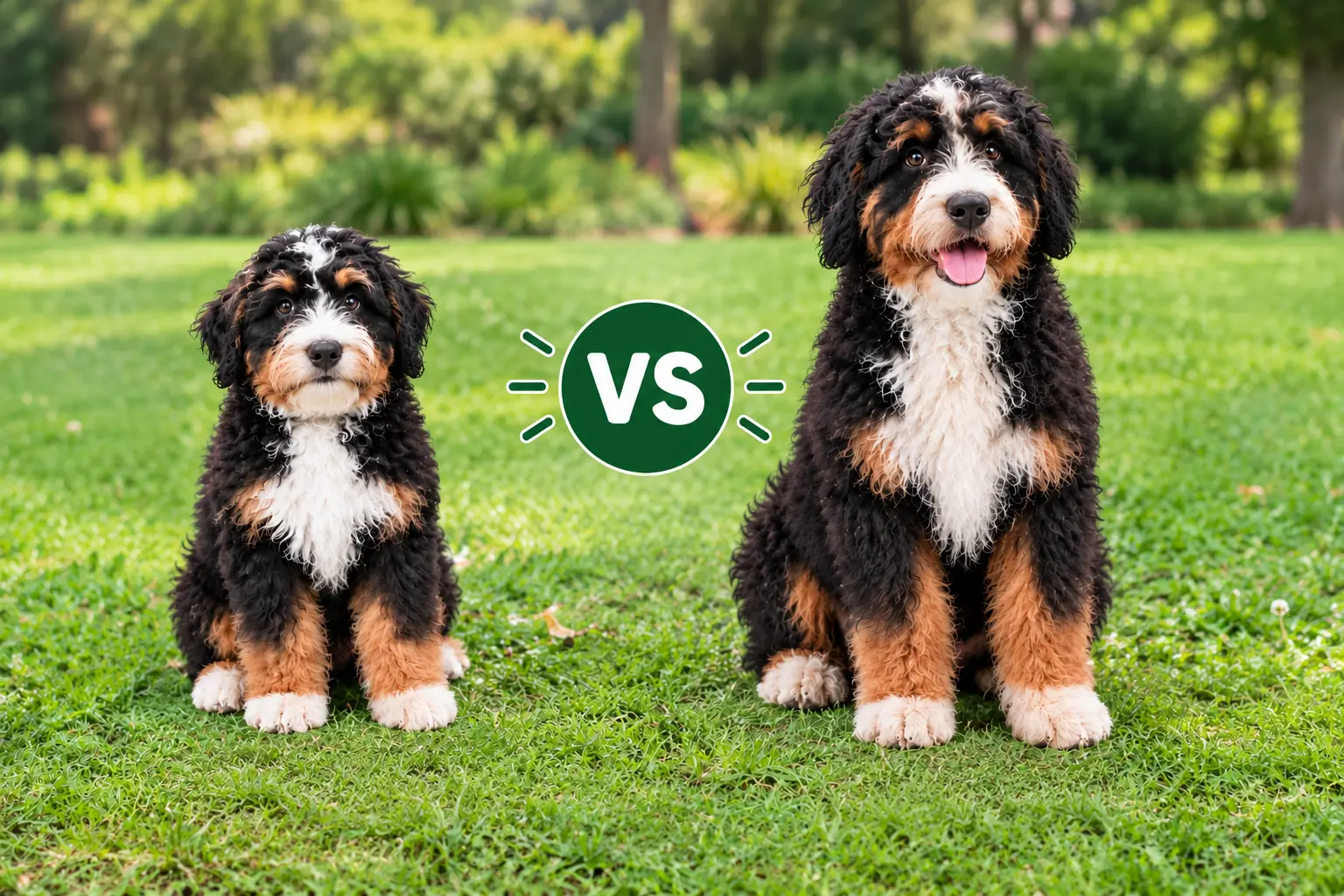
Picture two fluffy Bernedoodle puppies sitting side by side. One fits in your lap and the other already has paws as big as your palm. Both have the same soft coat and the same sweet face. A few months later they grow into very different dogs.
Mini Bernedoodle vs Standard Bernedoodle comes down to size first. Both come from a Bernese Mountain Dog and a Poodle. The Poodle parent sets the size. A Miniature Poodle makes a Mini Bernedoodle and a Standard Poodle makes a Standard Bernedoodle. That one choice changes weight and food bills and exercise time and even how long your dog may live.
The personality stays much the same. Both are loving and loyal and eager to learn. What changes is daily life around them. A bigger dog needs more room and more food and a bigger budget. A smaller dog fits into tight spaces more easily but still needs a good walk every day.
This guide compares the two sizes in plain words. You will see how big they grow and which home suits each one. You will also learn about daily care and health risks and puppy cost. Keep in mind that Bernedoodles are mixed breeds. Size and coat can vary even inside one litter so treat every number here as a general range.
Feature | Mini Bernedoodle | Standard Bernedoodle |
Parent mix | Bernese Mountain Dog and Miniature Poodle | Bernese Mountain Dog and Standard Poodle |
Weight | 25 to 49 pounds | 55 to 90 pounds |
Height | 18 to 22 inches | 23 to 29 inches |
Exercise | 45 to 60 minutes a day | 60 to 90 minutes a day |
Food | About 1 to 2 cups a day | About 3 to 4 cups a day |
Grooming | Groomer every 6 to 8 weeks | Groomer every 6 to 8 weeks with a higher bill |
Lifespan | Often 12 to 17 years | Often 12 to 15 years |
Best home | Apartment or small house | House with a yard |
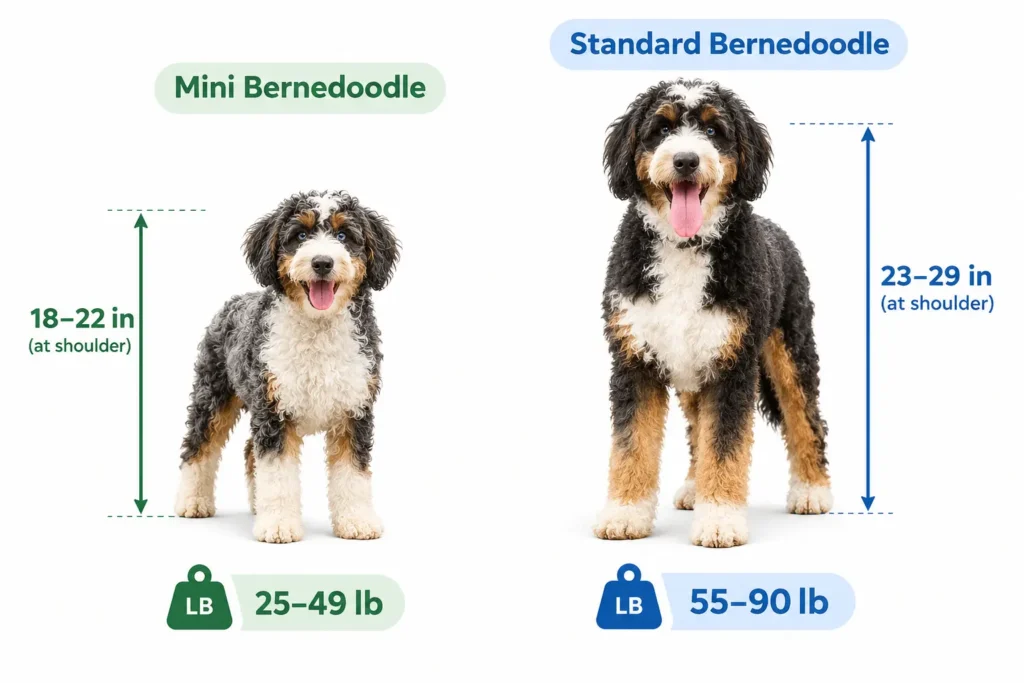
The Poodle parent sets the size range but the Bernese Mountain Dog parent matters too. A Bernese male can weigh 70 to 115 pounds. A puppy that takes after that side may grow heavier than any chart says. Males also tend to run a little larger than females.
Always ask the breeder for the weight of both parents. That tells you more than an online chart. Photos of a puppy at 8 weeks tell you very little because a small puppy can turn into a big adult.
Most Mini Bernedoodles reach full size around 12 months. Standard Bernedoodles often keep filling out until 18 months or a bit longer. Their bones and chest take more time to finish growing.
Watch the waistline and not only the scale. You should feel the ribs under a thin layer of fat. A growing dog that gets too heavy puts extra stress on young joints. Smaller puppies need gentle exercise too since their joints are still growing.
Things To Check Before Picking a Size
Exercise needs
(Daily Walker)
Health Issues
(Joint Watch)
Grooming needs
(Brush Often)
Training needs
(Quick Learner)
Shedding level
(Light Shedder)
Friendliness
(Social Butterfly)
Playfulness
(Silly Goofball)
Energy level
(Active Outside)
Exercise needs
(Long Hike Fan)
Health Issues
(Needs Close Watch)
Grooming needs
(Big Brush Job)
Training needs
(Start Early)
Shedding level
(Light Shedder)
Friendliness
(Gentle Giant)
Playfulness
(Easygoing Player)
Energy level
(Needs Room to Move)
Apartment Living
A Mini Bernedoodle fits apartment life much better. The body is lighter and easier to carry down the stairs or lift into a car. It needs less floor space and takes up less room on the couch. Still it needs 45 to 60 minutes of activity every day. A bored Mini in a small space may bark or chew.
A Standard can live in an apartment too. It just takes more planning. Some rental buildings set weight limits near 50 pounds and a Standard will often go past that. Read your lease before you fall in love with a puppy. Make sure you can give a big dog long walks and plenty of play time outside.
Homes With a Yard
A yard helps a Standard Bernedoodle a lot. It gives a big dog room to trot and sniff and play fetch. A secure fence keeps the dog safe. Still a yard does not replace a walk. Many dogs ignore the grass when nobody goes outside with them.
A Mini enjoys a yard too but it does not need as much space. A small fenced patch and a daily walk can keep a Mini happy. Both sizes want to be near family so do not leave either dog outside alone for long stretches.
Family Houses and Kids
Both sizes get along with kids when trained and socialized. The difference is body size. A Standard is sturdy but one happy jump can knock over a toddler. A Mini is smaller and can get hurt if a child plays too rough or picks it up the wrong way.
Teach kids to be gentle with either dog. Do not let children pull ears or tails. Give your dog a quiet spot to rest. Always watch young kids and dogs when they play together.
Mini Bernedoodle
(1 to 2 Cups a Day)
Standard Bernedoodle
(3 to 4 Cups or More)
Mini Bernedoodle
(45 to 60 Minutes)
Standard Bernedoodle
(60 to 90 Minutes)
Mini Bernedoodle
(Brush 2 to 3 Times a Week)
Standard Bernedoodle
(Longer Brush and Bath Time)
Mini Bernedoodle
(Every 6 to 8 Weeks)
Standard Bernedoodle
(Every 6 to 8 Weeks with a Higher Bill)
Health Problems Both Sizes Can Face
Both sizes can inherit joint problems like hip dysplasia and elbow dysplasia. These problems come from joints that do not form right. They can cause pain and make walking hard. Some dogs also carry von Willebrand disease which is a blood clotting problem. Others can develop progressive retinal atrophy which is an eye problem that can lead to vision loss.
The Bernese Mountain Dog side also carries a higher cancer risk than many breeds. Not every Bernedoodle gets sick but the risk is real. Ask the breeder for health test results on both parents. Look for hip and elbow checks and genetic tests.
Where Size Makes a Difference
Bigger dogs put more stress on their joints. A Standard may feel hip and elbow problems sooner than a Mini. Large and deep chested dogs can also face bloat. Bloat means the stomach fills with gas and may twist. It is an emergency. Feed smaller meals and avoid hard exercise right after eating.
Smaller dogs often live longer. Many Minis live 12 to 17 years while Standards often live about 12 to 15 years. These are general ranges and every dog is different. A healthy weight and regular vet visits help both sizes live longer.
Puppy Price
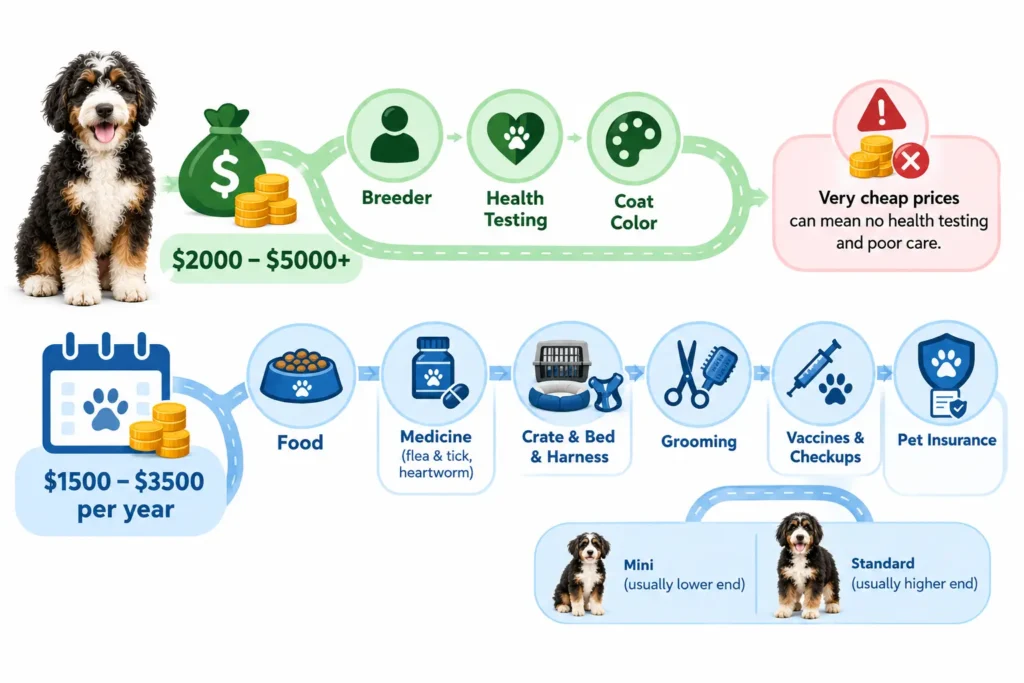
Most Bernedoodle puppies cost about 2000 to 5000 dollars or more. Price depends on the breeder and the health testing and the coat color. Tricolor puppies often cost more. Mini and Tiny puppies often cost the same or a little more than Standard puppies because many families want smaller dogs.
Be careful with very cheap puppies. Low prices can mean no health testing and poor care for the parents. A higher price from a breeder who tests the parents can save you money on vet bills later.
Yearly Costs
Size changes the bill every year. A Standard eats more food. A Standard needs more medicine too since flea and tick and heartworm doses go by weight. Crates and beds and harnesses cost more for a big dog. Groomer visits often cost more as well.
Both sizes need vaccines and checkups and grooming. Many owners spend roughly 1500 to 3500 dollars a year after the puppy stage. A Mini often lands at the lower end and a Standard at the higher end. Treat these as rough estimates since prices change by area. Pet insurance can help with surprise vet bills so look into it early while your dog is young and healthy.
Choose a Mini If
Pick a Mini if you live in an apartment or a smaller house. A Mini also suits people who want a dog that is easier to lift and travel with. Lower food and grooming costs help too. Remember that a Mini still needs daily exercise and brushing.
Choose a Standard If
Pick a Standard if you have a yard and room in the car and a bigger budget. A Standard suits active families who enjoy long walks and hikes. You get a larger and sturdier dog but you pay more and spend more time on care.
Ask yourself these questions
Mini and Standard Bernedoodles share the same loving nature so the right pick comes down to your space and your budget and your time. Match the size to your real life and ask the breeder for health tests on both parents. Do that and either size can be a loyal friend for many years.