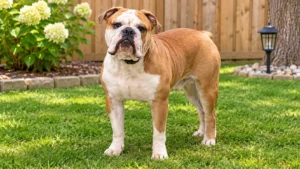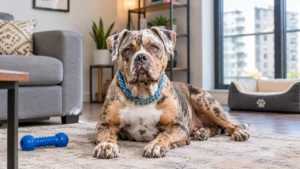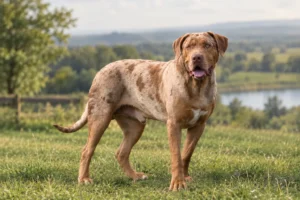
The Victorian Bulldog is a strong dog with a muscular body and a friendly nature. It has the classic bulldog look. Breeders developed this dog to bring back the look of older bulldogs that had longer legs and a more active body. Compared with the modern English Bulldog the Victorian Bulldog usually has a longer muzzle and a body that makes movement easier.
This breed can be a loyal family pet. It enjoys being around people and often stays calm at home. However it still needs daily exercise and regular training. Its short coat is easy to maintain but its skin folds and ears need regular care. Owners should also keep an eye on its weight and breathing.
The Victorian Bulldog may not be the best choice for every owner. It can be stubborn and needs a patient owner who can set clear rules. It also needs care during hot weather because its short muzzle may make it harder to stay cool.
This guide explains the Victorian Bulldog’s history and size along with its personality and care needs. It will help you learn what to expect before bringing one home.
Victorian Bulldog History and Origin: How the Breed Developed
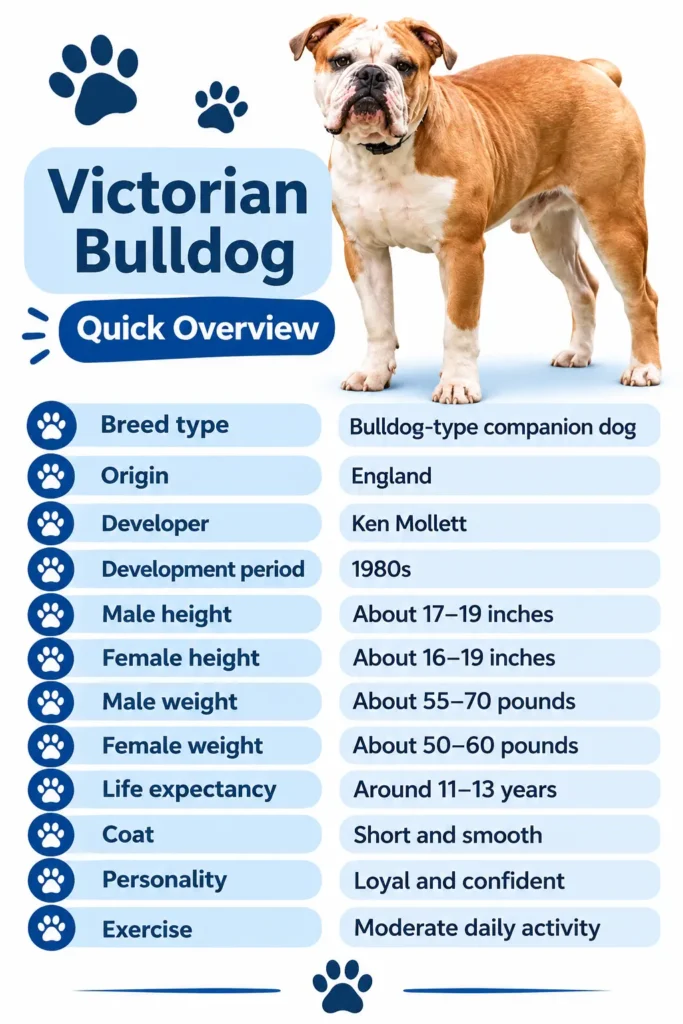
The Victorian Bulldog was developed in England during the 1980s. A breeder named Ken Mollett wanted to bring back the look of old bulldogs from the 1800s. These dogs had longer legs and taller bodies. They also had longer muzzles and could move more easily.
In the past bulldogs had a very different job. People used them in a cruel sport called bull-baiting. In this sport dogs were made to attack and hold bulls. England banned this sport in 1835. After the ban breeders started raising bulldogs as family pets. Over time some bulldogs became shorter and heavier with very flat faces.
Ken Mollett wanted to create a bulldog that looked more like the older type. He used English Bulldogs and crossed them with other strong breeds. These included the Bullmastiff and Staffordshire Bull Terrier. Some breed histories also mention the Bull Terrier and Dogue de Bordeaux. The exact details of the breeding process are not the same in every source.
The main goal was to develop a strong dog with a longer muzzle and a balanced body. The Victorian Bulldog is still rare in many places. Different kennel groups may also have different rules for recognizing this breed. Before buying a puppy check its family history and registration papers.
Victorian Bulldog Appearance, Size, and Weight Chart
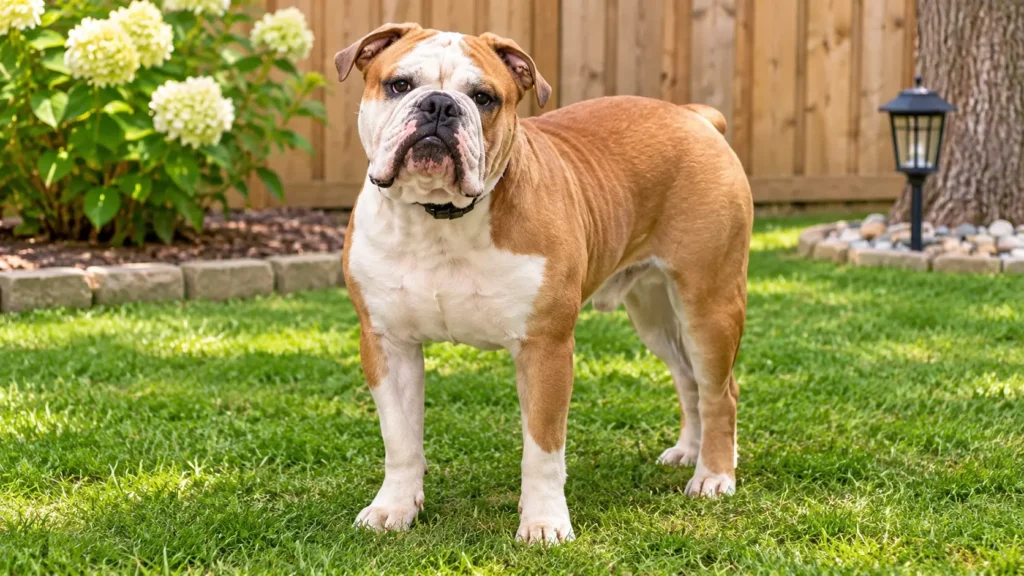
The Victorian Bulldog has a strong body with a wide chest and strong shoulders. Its head is large and fits well with its body. It has a short coat and a longer nose than many flat-faced English Bulldogs.
Its ears are small or medium in size. They may fold down or rest back on the head. Its eyes are usually brown. Common coat colors include red and fawn. Some dogs also have white or brindle coats.
Victorian Bulldog Size Chart
| Measurement | Male | Female |
| Height | 17–19 inches | 16–19 inches |
| Weight | 55–70 pounds | 50–60 pounds |
These are average size ranges. Some Victorian Bulldogs may be smaller or larger. A healthy dog should have a strong body without too much extra weight. You should be able to feel its ribs without pressing hard.
The Victorian Bulldog should look strong but not too heavy. Its legs should support its body and help it walk with ease. When choosing a puppy check that it can breathe easily. Its nostrils should be open and it should move without trouble. Avoid puppies that have noisy breathing or difficulty walking.
Victorian Bulldog Temperament: Personality and Behavior
Victorian Bulldogs are loyal and confident dogs. They love spending time with their families and enjoy staying close to their owners. Many of them stay calm at home when they get enough exercise during the day.
These dogs are also playful and alert. They notice new people and sounds around the house. A well-trained Victorian Bulldog should be friendly and confident. Some dogs may take time to feel comfortable around strangers.
Victorian Bulldogs can sometimes be stubborn. They may know a command but take their time to follow it. This does not mean they are hard to train. They just need patience and regular practice. Never use harsh treatment because it can make your dog afraid and hurt the bond between you.
Early socialization is very important. Let your puppy meet friendly people and calm dogs. Keep these meetings safe and positive. Give your puppy time to feel comfortable and never force it to meet someone when it feels scared.
Are Victorian Bulldogs Good Family Dogs?
A Victorian Bulldog can be a good family dog if it gets proper care and training. It enjoys spending time with people and can become a close friend to adults and children. Its loyal nature makes it a loving part of the family.
Every dog has its own personality. Some are calm and gentle while others are more active or protective. Always watch young children when they are around the dog. Teach children to be gentle and never pull its ears or tail. They should also leave the dog alone when it is eating or sleeping.
A Victorian Bulldog can also live with other pets if you introduce them slowly. Early socialization helps the dog feel comfortable around other animals. Some dogs may not get along with other dogs of the same sex. So take your time with introductions.
Before bringing one home keep these points in mind:
- Give your dog a soft and comfortable place to rest.
- Teach children how to treat dogs gently.
- Take your dog for daily walks and playtime.
- Introduce other pets slowly and calmly.
- Never leave young children alone with the dog.
This breed can be a good fit for families who have enough time to care for it. It may not be the best choice for people who want a dog that needs very little attention.
Victorian Bulldog Feeding Guide: What and How Much to Feed
A good diet helps a Victorian Bulldog stay strong and maintain a healthy weight. Choose dog food that matches its age and activity level. Puppies need food that supports growth while adult dogs need food made for their age.
The right food amount depends on your dog’s age and weight and daily activity. Check the feeding guide on the food package. Adjust the amount based on your dog’s body shape and your veterinarian’s advice.
Most adult Victorian Bulldogs do well with two meals a day. Puppies may need more meals as they grow. Always keep fresh water available.
Here are some simple feeding tips:
- Measure your dog’s food at every meal.
- Choose food with good protein and balanced nutrients.
- Give small treats and avoid too many snacks.
- Do not feed too much human food.
- Check your dog’s weight often.
Victorian Bulldogs can become overweight if they eat too much and get too little exercise. Extra weight can put stress on their joints and make it harder for them to move. If your dog starts gaining weight talk to your veterinarian about changing its food amount.
Victorian Bulldog Exercise Needs and Daily Activity
The Victorian Bulldog needs daily exercise to stay healthy and fit. It is not a dog for long runs but it still needs regular movement. Short walks and gentle play help it burn energy and stay at a healthy weight.
You can take your dog for a walk in the morning and another walk later in the day. You can also let it play for a short time in a safe yard or inside your home. Let your dog move at its own pace and give it time to rest.
The Victorian Bulldog has a shorter muzzle than many other dogs. This can make it harder for the dog to breathe during hot weather or heavy exercise. Avoid long walks on hot days. Take your dog outside when the weather is cool and always provide fresh water. Stop the activity if your dog starts panting too much or looks very tired.
Here are some good activities for your dog:
- Take it for short daily walks.
- Play gentle games with a soft toy.
- Practice simple training commands.
- Give it food puzzles and scent games.
- Let it play in a safe yard.
Never force your dog to exercise if it has trouble breathing or keeping up. Keep its daily activity simple and gentle so it can stay healthy without putting too much stress on its body.
Victorian Bulldog Grooming and Daily Care Requirements
The Victorian Bulldog has a short coat that is easy to care for. Brush it once or twice a week to remove loose hair and keep its coat clean. You can use a soft brush or a grooming glove.
Its skin needs extra care. Check its face and neck for dirt or wet areas. If your dog has skin folds clean them gently with a soft wet cloth. Dry the folds well to stop moisture from building up and causing skin problems.
Follow these simple care steps:
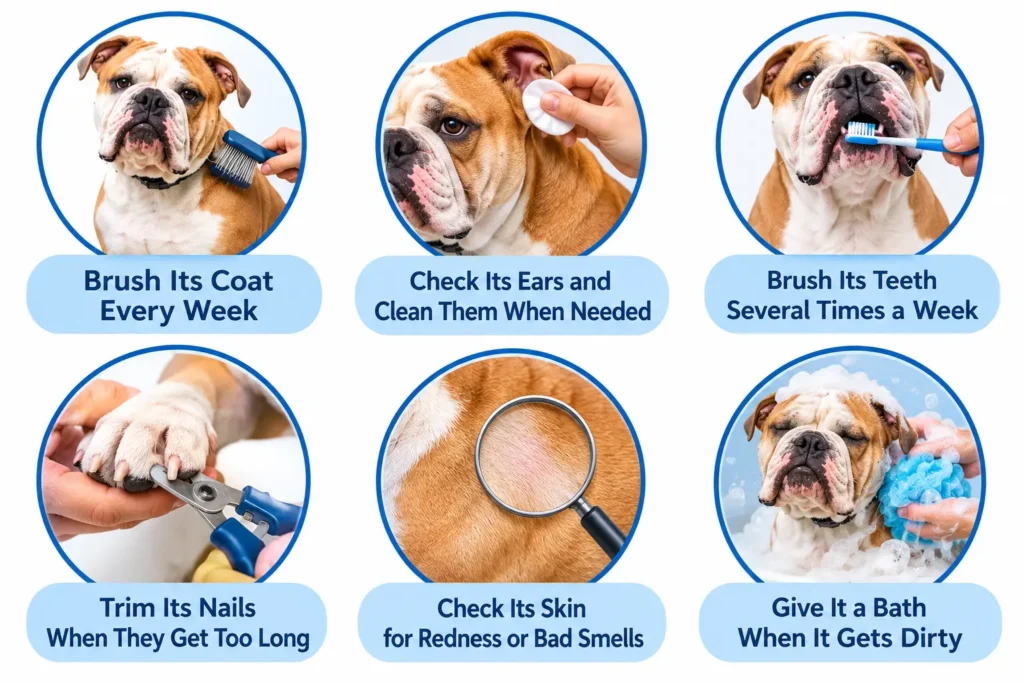
Do not use strong cleaning products on your dog’s skin. Use products made for dogs. Contact your vet if you notice swelling or skin irritation. Regular care helps you find small problems before they get worse.
Common Victorian Bulldog Health Problems and Lifespan
The Victorian Bulldog is usually stronger and more active than some other bulldogs. Its longer nose and better body shape may help lower the risk of some health problems. But it can still have health issues. Some dogs may have breathing or joint problems.
Common health problems include:
- Breathing problems: A short nose can make it hard to breathe. This can get worse in hot weather or during exercise.
- Hip and joint problems: These problems can cause pain and make walking harder.
- Skin problems: Moisture in the skin folds can cause redness and infection.
- Eye problems: Some dogs may have eye irritation or eyelid problems.
- Weight gain: Extra weight can put more pressure on the joints and make breathing harder.
A Victorian Bulldog may live for about 11 to 13 years. This is only an average estimate. Good care and healthy genes can help your dog live a longer life.
Choose a responsible breeder who knows the puppy’s family health history. Ask if the parents have had health checks. Also ask to see the puppy’s vet records. Take your dog for regular checkups and keep its vaccines up to date. Visit a vet if your dog has noisy breathing or skin infections or trouble walking.
Victorian Bulldog Puppy Care: What New Owners Should Know
A Victorian Bulldog puppy needs a safe home and a daily routine. Before bringing it home set up a cozy sleeping area with food and water bowls. Get a collar and leash along with safe toys. Choose strong toys that cannot break into small pieces.
Feed your puppy good quality food that helps it grow. Follow the feeding guide on the food pack and ask your vet how much food your puppy needs. Do not give it too much food. Healthy growth is more important than fast weight gain.
Your puppy also needs regular vet care. Take it for a checkup soon after bringing it home. Your vet will guide you about vaccines and protection from worms and other parasites.
Start house training early. Take your puppy outside after meals and naps and playtime. Praise it when it goes to the bathroom in the right place. Give it enough time to rest because young puppies need plenty of sleep.
Keep exercise light while your puppy grows. Do not make it run for long periods or jump from high places. Give it short play sessions and let it explore safe areas. Good care and patient training will help your puppy grow into a healthy and well-behaved dog.
Final Thought
The Victorian Bulldog is a strong and loyal dog with a classic bulldog look. It can be a great family pet for people who have enough time to care for it. This dog needs good food and daily exercise. It also needs early training and time with people and other pets.
Its short coat is easy to care for. But you still need to clean its skin folds and check its ears. Keep an eye on its weight and do not let it get too hot. Always choose a healthy puppy from a trusted breeder who can show you its health records.
Before getting a Victorian Bulldog make sure you can meet its daily needs. With good care and love it can become a happy and loyal family pet.
Note: The Victorian Bulldog is not as common as some other bulldog breeds. Its size and health can vary from one dog to another. The details in this guide are general estimates and may not apply to every Victorian Bulldog.