

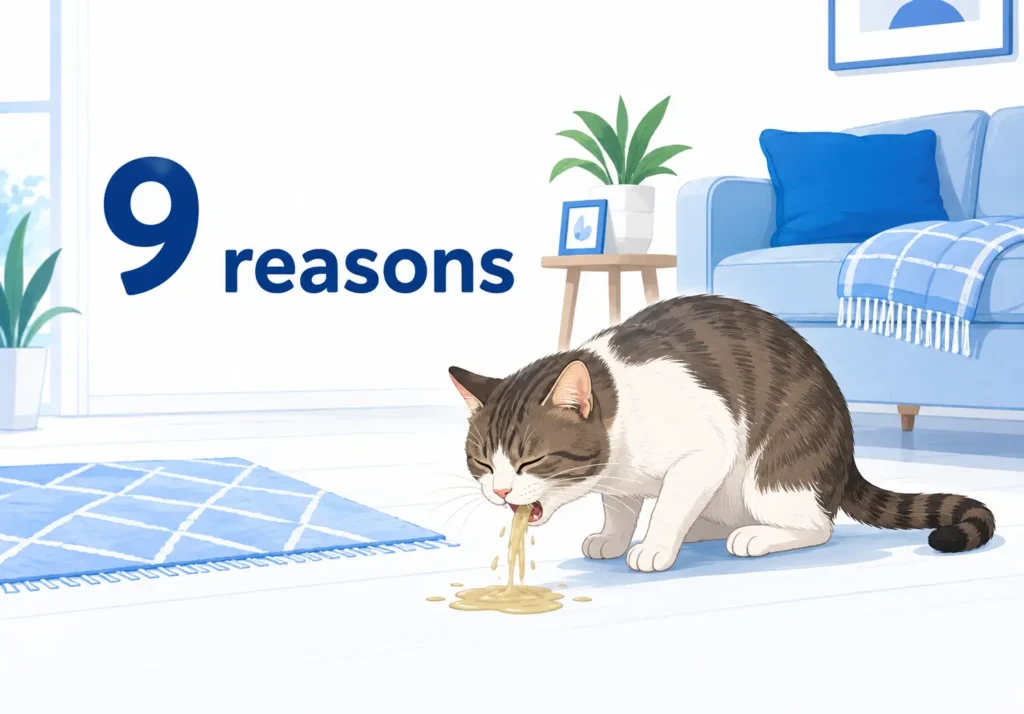
Finding vomit on the floor can make any cat owner worry. You may wonder if your cat ate too quickly or swallowed too much hair. You may also fear that something serious is wrong.
Cats vomit for many reasons. Some causes are mild and easy to manage. Others need fast medical care. One isolated episode may not be an emergency when your cat still eats drinks and behaves normally. Repeated vomiting is different. It can be a sign of parasites poisoning an intestinal blockage or an internal disease.
It also helps to know the difference between vomiting and regurgitation.
Vomiting is an active process. A cat may drool lick its lips, swallow many times and move its belly before bringing something up. Regurgitation often happens with little warning. Undigested food comes back through the mouth soon after eating.
Watch the timing and appearance of each episode. Notice any changes in your cat’s appetite weight, thirst energy stool or litter box habits. These details can help your veterinarian find the real cause.
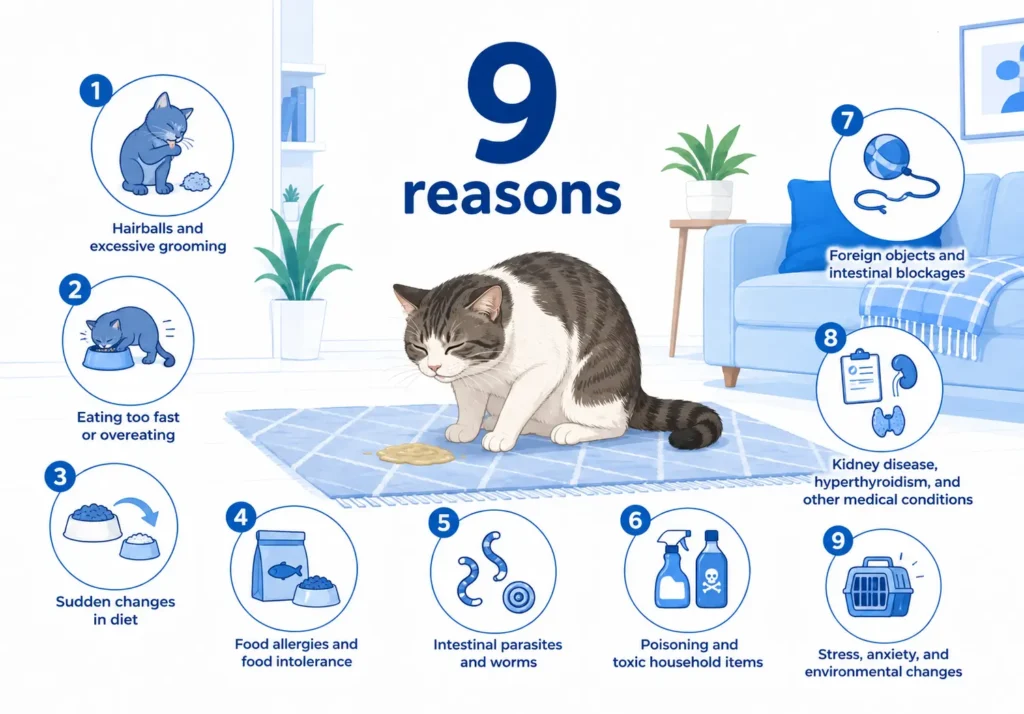
| Cause | What Usually Happens | Other Signs You May Notice | Level of Concern |
| Hairballs | Swallowed hair irritates the stomach | Gagging and a tube-shaped clump of hair | Usually mild |
| Fast eating | Food comes back up soon after a meal | Whole pieces of undigested food | Often manageable |
| Diet changes | New food upsets digestion | Gas loose stool or poor appetite | Usually mild |
| Food allergy or intolerance | An ingredient causes a reaction | Itchy skin diarrhea or repeated vomiting | Needs investigation |
| Intestinal parasites | Worms irritate the digestive tract | Weight loss dull coat or swollen belly | Needs treatment |
| Poisoning | A toxic substance harms the body | Drooling weakness shaking or collapse | Emergency |
| Foreign object | An item blocks the stomach or intestines | Pain food refusal or little stool | Emergency |
| Medical disease | An illness causes nausea | Weight loss thirst or behavior changes | Needs veterinary care |
| Stress | Anxiety affects eating and digestion | Hiding overgrooming or litter box changes | Depends on severity |
Cats use their rough tongues to clean dirt and loose fur from their coats. During grooming they swallow some of that hair. Most of it moves through the digestive system and leaves the body in the stool.
Sometimes the hair stays in the stomach. It collects into a wet clump called a hairball. The medical name is trichobezoar.
A cat may cough, gag or retch before bringing up a hairball. The clump often looks long and narrow. It takes this shape while passing through the esophagus.
Long-haired cats usually swallow more fur than short-haired cats. Heavy shedding can also increase the amount of hair inside the stomach. Cats may shed more during seasonal weather changes.
Fleas can make a cat lick or bite its skin all day. Skin allergies may cause the same behavior. You may notice red areas, scabs, bald spots or broken hair.
Stress also affects grooming. Some anxious cats lick themselves to feel calm. Bored cats may groom because they have nothing else to do.
More grooming means more swallowed hair. This raises the chance of stomach irritation and vomiting.
An occasional hairball may not cause lasting harm. Frequent vomiting should not be blamed on hairballs without checking for other causes.
A large clump of hair may become stuck in the stomach or intestines. A blocked cat may stop eating and become weak. It may vomit many times or pass very little stool.
Call a veterinarian quickly if your cat keeps retching without producing anything. You should also seek help when vomiting comes with a painful belly, poor appetite or unusual tiredness.
Brush your cat often to remove loose fur before it gets swallowed. Short-haired cats may need brushing once or twice a week. Long-haired cats often benefit from daily brushing.
Use regular flea prevention that is made for cats. Never use a dog flea treatment unless a veterinarian says it is safe. Some dog products contain ingredients that can poison cats.
Hairball diets may help some cats. A veterinarian-approved hairball gel may also support the movement of hair through the digestive tract.
Do not give butter mineral oil or human laxatives as home treatments. These products may create new health problems.
Some cats finish a full meal in less than a minute. They swallow large bites and take in air with their food. Their stomach fills and stretches too quickly.
The food may come back up before proper digestion begins. You may see whole pieces of dry food or a soft tube of wet food. This often happens soon after the meal.
The cat may act normal afterward. It might even return to the bowl and ask for more.
Food competition is a common reason. A cat living with other pets may fear that another animal will steal its meal. The animals may never fight yet one cat can still feel pressure to eat fast.
Former stray cats may keep this habit after moving into a safe home. They once had no regular food supply. They learned to eat as much as possible whenever food appeared.
Large meal sizes can make the problem worse. Overeating puts extra pressure on the stomach and may lead to vomiting or regurgitation.
Use a slow-feeder bowl with raised sections. The cat must eat around the shapes instead of taking large mouthfuls.
Spread wet food across a wide flat plate. A thin layer takes longer to lick than a pile in a deep bowl.
Puzzle feeders work well with dry food. They release only a few pieces at a time and give the cat mental activity.
Divide the daily food amount into several smaller meals. An automatic feeder can provide small portions while you are away.
Feed cats in separate areas when they compete. A quiet room can help a nervous cat relax and eat more slowly.
Measure each serving. Do not keep filling the bowl just because it looks empty. Different foods have different calorie levels.
A cat’s digestive system may react badly when its food changes overnight. Even high-quality new food can upset a sensitive stomach.
The new product may contain a different protein or more fat. It may also have unfamiliar fibers, oils or flavor ingredients.
A sudden food change can cause vomiting, diarrhea gas, soft stool or poor appetite. Problems may also begin after a cat eats rich table scraps spoiled food garbage or another pet’s meal.
Change the diet over seven to ten days unless your veterinarian gives a different plan.
Use this simple transition:
Some cats need more than ten days. Prescription foods may also come with special instructions.
Never force your cat to accept a new diet by removing all other food for a long period. Cats can become seriously ill when they stop eating. This risk is higher in overweight cats.
Contact a veterinary clinic if your cat refuses every meal or eats much less than normal.
Food allergy and food intolerance can look similar but they do not work in the same way.
A true allergy involves the immune system. The body treats a food ingredient as a threat and creates a reaction.
Food intolerance does not cause the same immune response. The cat simply has trouble digesting or handling an ingredient.
Both conditions can lead to vomiting. A cat may also develop diarrhea gas belly discomfort, itchy skin ear irritation, hair loss or excessive grooming.
The immune system often reacts to proteins. A cat may become sensitive to a protein that it has eaten for a long time.
The brand name is not the main issue. The ingredients inside the food matter more.
Milk can also cause digestive trouble. Many adult cats cannot handle much lactose. Cow’s milk may lead to bloating diarrhea, stomach discomfort or vomiting.
A veterinarian may recommend an elimination diet trial. During this trial the cat eats only a selected diet for several weeks.
The food may contain a protein that the cat has never eaten before. Another option is hydrolyzed protein. This protein has been broken into pieces that are too small to easily trigger an immune reaction.
The trial must be strict. Treats table scraps flavored medicines and another pet’s food can ruin the results.
If the cat improves the veterinarian may reintroduce the old food. A return of symptoms helps confirm that food caused the problem.
Do not prepare a long-term homemade diet without expert guidance. Cats need the right amounts of taurine protein vitamins , minerals and fatty acids.
Worms can irritate the stomach and intestines. Common parasites in cats include roundworms, hookworms and tapeworms.
Kittens face a greater risk because their bodies are still developing. Outdoor cats may also become infected when they hunt or eat prey.
Fleas can spread some tapeworms. A cat swallows the infected flea while grooming and the tapeworm develops inside the digestive tract.
An infected cat may vomit or develop diarrhea. It may lose weight even though it still eats. Its coat may look dull or rough.
Some kittens develop a round swollen belly. You may see worms in the vomit or stool but many infected cats show no visible worms.
Tapeworm pieces can look like small grains of rice. They may appear near the cat’s anus on bedding or around fresh stool.
A veterinarian can examine a fresh stool sample for parasite eggs. A single negative result does not always rule out worms. Parasites may not release eggs in every sample.
Treatment depends on the type of parasite. One deworming product does not kill every worm.
Some cats need more than one dose. The first dose may kill adult worms while another dose targets later stages.
Use regular flea control to prevent tapeworm infections from returning. Clean the litter box often and wash your hands after handling waste.
Never use a random livestock dog or human dewormer on your cat. The dose or ingredient may be unsafe.
Many normal household items can poison a cat. Cats may chew plants lick spills or walk through chemicals. Later they swallow the substance while cleaning their paws.
Lilies are among the most dangerous plants for cats. True lilies and daylilies can cause severe kidney damage. The leaves, petals, stems, pollen and vase water may all be harmful.
Human medicines are another major danger. Acetaminophen and ibuprofen can be deadly to cats. Never give pain medicine without veterinary instructions.
Other possible poisons include antifreeze rodent poison insecticides cleaners nicotine products essential oils onions garlic and chocolate.
Some flea treatments made for dogs can also poison cats.
A poisoned cat may show more than stomach trouble. Watch for:
Treat suspected poisoning as an emergency. Move the cat away from the substance and call a veterinarian or animal poison service.
Do not try to make your cat vomit at home. Hydrogen peroxide is not a safe method for cats. Do not give milk oil, salt food or charcoal unless a veterinary professional tells you to do so.
Take the product package plant name medicine bottle or a clear photo with you. Tell the veterinarian when the exposure happened and how much your cat may have swallowed.
Cats sometimes swallow items that are not food. Common examples include string yarn ribbon thread dental floss plastic foam rubber bands hair ties and small toy pieces.
String-like objects are especially dangerous. One end can become trapped under the tongue or inside the stomach. The intestines keep trying to move the rest of the string forward.
This can pull the intestines into tight folds. The string may cut into the tissue and cause a serious injury.
A cat with a blockage may vomit repeatedly and refuse food. It may hide, become weak or react when its belly is touched.
The cat may pass a little stool or strain inside the litter box. A partial blockage can cause signs that disappear and return. A complete blockage often becomes worse quickly.
You may see strings hanging from the mouth or anus. Never pull it. Pulling the string can tear the stomach or intestines.
Stop the cat from chewing the visible end and go to an emergency veterinarian.
The veterinarian may feel the abdomen and take X-rays. An ultrasound can provide a closer look at the stomach and intestines.
Some objects can be removed with an endoscope while the cat is under anesthesia. Other objects require surgery.
Fast treatment matters. A blockage may cut off the blood supply to part of the intestine. Damaged tissue can die, tear or leak bacteria into the abdomen.
Store sewing supplies ribbons fishing line and craft materials inside closed containers. Check toys for broken pieces and loose strings. Put wand toys away after supervised play.
Vomiting does not always begin with a stomach problem. Disease in another part of the body can create nausea or change the cat’s blood chemistry.
Chronic kidney disease is common in older cats. Healthy kidneys remove waste from the blood and help control water balance.
When kidney function becomes weak, waste products build up. The cat may feel sick and lose interest in food.
A cat with kidney disease may vomit, lose weight or develop bad breath. It may drink more water and produce larger amounts of urine.
The coat may look rough because the cat feels too unwell to groom. Dehydration can also become a problem.
These signs often develop slowly. Owners may think the cat is simply getting old.
Hyperthyroidism happens when the thyroid gland produces too much thyroid hormone. It usually affects middle-aged and older cats.
The condition speeds up the body’s metabolism. A cat may lose weight even though it eats more than usual.
Other signs include increased thirst, frequent urination, restlessness, vomiting diarrhea and a messy coat. Some cats become louder or more active.
Inflammatory bowel disease can cause long-term vomiting, diarrhea, weight loss and poor appetite.
Pancreatitis affects the pancreas and may cause nausea, belly pain, tiredness and food refusal.
Liver disease, diabetes , constipation infections and some cancers may also lead to vomiting.
A veterinarian may use blood tests, urine testing, stool testing X-rays or ultrasound to find the cause. Older cats may need a thyroid hormone test.
Medicine that controls nausea can help the cat feel better. It does not cure the main disease. Treatment must focus on the actual cause.
Cats often hide stress. They may not cry or come to you for comfort. Instead their eating, grooming sleep and litter box habits may change.
Common triggers include moving to a new home, travel boarding, loud construction visitors, a new baby or a new pet.
A change in the owner’s daily schedule can also upset a sensitive cat.
Conflict between cats is not always loud. One cat may stare at another or block the path to food, water , resting places and litter boxes.
The nervous cat may wait a long time before eating. When it finally reaches the bowl it may eat too fast and vomit.
Stress can also lead to overgrooming. The cat swallows more fur and develops more hairballs.
Keep feeding and playtimes as regular as possible. Give your cat quiet hiding places and high resting areas.
Provide separate food and water stations in homes with several cats. Place them in different areas so one cat cannot guard everything.
A helpful litter box plan is one box for each cat plus one extra. Put the boxes in quiet places instead of lining them all up in one room.
Use short daily play sessions to reduce boredom. Let the cat chase and catch a safe interactive toy.
Introduce new animals slowly. Keep the new pet in a separate room at first. Exchange bedding so both animals can learn each other’s smell before meeting.
Stress may cause digestive trouble but do not assume that repeated vomiting is only anxiety. A veterinarian should rule out physical illness.
Seek urgent veterinary help when vomiting happens many times in a few hours or your cat cannot keep water down.
You should also get fast care if your cat:
Repeated vomiting with weight loss diarrhea, increased thirst or major behavior changes also needs a veterinary examination.
Cats can hide pain and sickness for a long time. Do not wait for your cat to become extremely weak.
Write down when the vomiting started and how many times it happened.
Notice whether the material contains food hair foam yellow fluid blood worms grass string or another object. Take a photo before cleaning it up when possible.
Tell the veterinarian about new foods, treatments, medicines, supplements plants cleaners, flea products and possible garbage access.
Mention any changes in appetite, thirst urination, stool energy grooming or body weight.
A video can help when you are not sure whether your cat is vomiting, coughing, gagging or regurgitating.
Do not delay emergency care just to collect every detail. Bring the information you already have.
Not every cause can be prevented. Good daily care can still lower many common risks.
Feed measured portions of complete and balanced cat food. Change diets slowly and limit rich human foods.
Brush your cat regularly. Use veterinarian-approved flea protection and keep toxic plants out of the home.
Lock away medicines, cleaners, chemicals, thread ribbon and small objects.
Use slow feeders when your cat rushes through meals. Offer fresh water in several places and wash the bowls often.
Schedule regular veterinary checkups. Weight checks, blood tests, urine tests and stool tests may find illness before severe signs develop.
A cat may vomit because it ate too quickly or swallowed loose hair. It may also have worms, a food reaction poisoning, an intestinal blockage or an internal disease.
The pattern gives useful clues. Watch how often the vomiting happens and how your cat behaves afterward. Check whether it still eats drinks and uses the litter box normally.
Small feeding changes may help with mild problems. Repeated vomiting needs more than guesswork. A veterinarian can find the cause and start the right treatment before the cat becomes dehydrated or seriously ill.
The medical details were checked against veterinary guidance from Cornell University’s Feline Health Center, the Merck Veterinary Manual, and VCA Animal Hospitals. These sources identify poisonous substances, foreign objects, parasites, digestive disorders, kidney disease, inflammatory bowel disease, and hyperthyroidism among recognized causes of feline vomiting.