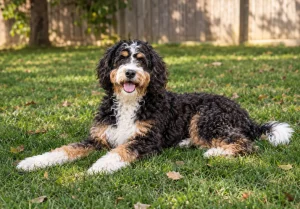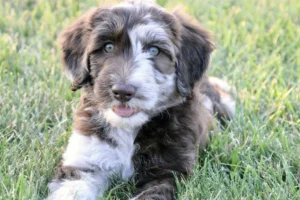
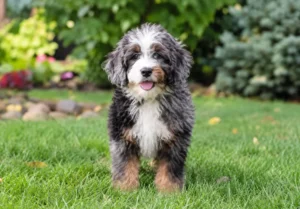
The Teacup Mini Aussiedoodle is one of those dogs that can make people stop scrolling right away. Tiny body, fluffy coat, bright eyes, little teddy bear face yeah, they’re pretty hard to ignore.
But there’s a bigger question behind all that cuteness.
Is a Teacup Mini Aussiedoodle actually healthy?
That question matters because “teacup” doesn’t simply mean a cute small dog. The word is often used for dogs that have been bred or advertised to be much smaller than normal. And when breeders keep pushing dogs smaller and smaller, health can sometimes get pushed to the side.
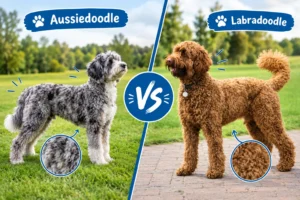
A Mini Aussiedoodle is already a smaller version of the Aussiedoodle, which comes from Australian Shepherd and Poodle lines. The exact size can vary a lot because this is a mixed dog rather than a breed with one fixed body size.
Then you’ve got the word teacup thrown into the mix.
Here’s the important bit: teacup isn’t an official dog size. There isn’t one agreed weight or height that makes a dog a “teacup.” Different sellers may use the word differently. Major dog organizations don’t recognize teacup as an official breed size either.
So don’t get hung up on the cute name.
A tiny Aussiedoodle can still be a wonderful little companion. Plenty are playful, smart, loving, and full of personality. But being unusually small can bring some extra health concerns, especially if the dog was bred mainly for tiny size instead of strong health.
Let’s look at what really matters.
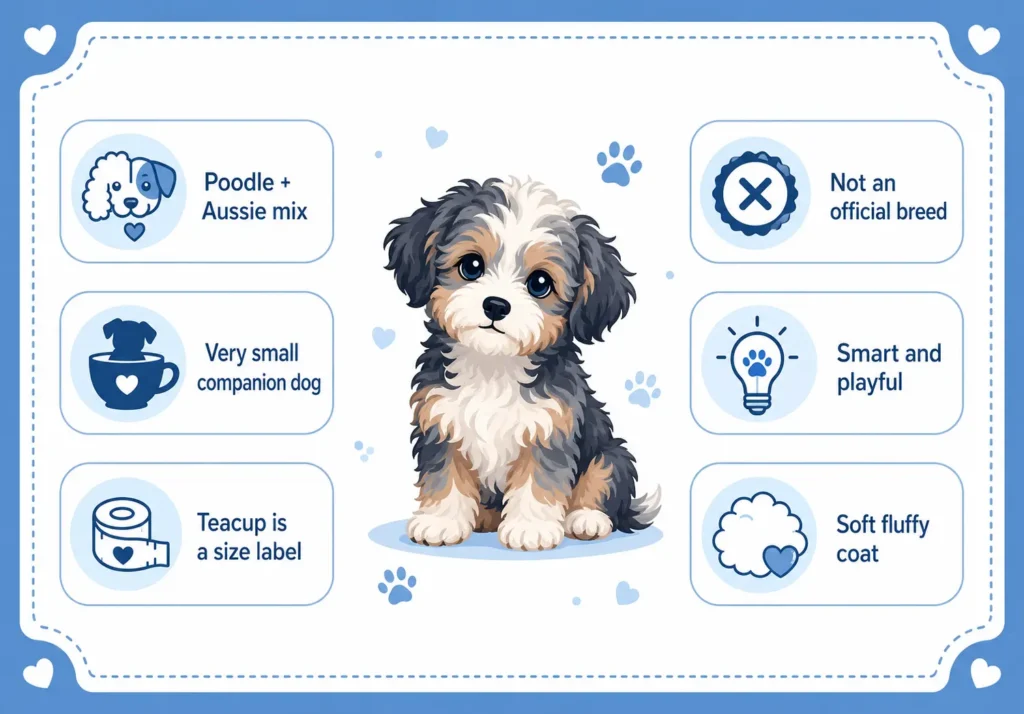
A regular Aussiedoodle is a mix involving an Australian Shepherd and a Poodle.
The Poodle side can come in different sizes, so Aussiedoodles can also turn out quite different in size. Standard Aussiedoodles can be fairly large, while Mini Aussiedoodles are much smaller. Some people also use names such as Toy Aussiedoodle, Tiny Aussiedoodle, or Teacup Aussiedoodle.
Sounds simple enough, right?
Not quite.
There is no official Teacup Mini Aussiedoodle breed standard.
Basically, the word teacup usually means “extra tiny.”
One seller might call a 9-pound adult a teacup. Another might use the term for a dog expected to stay below 6 pounds. Someone else might use it just because the puppy looks very small at eight weeks old.
That’s why the label can be a bit pointless when you’re trying to understand the dog’s actual adult size.
Dog organizations that discuss teacup dogs warn that the term isn’t an officially recognized breed category. Instead, it normally describes dogs bred to be unusually small.
So instead of asking only, “Is this puppy teacup?” ask:
Those questions tell you way more than the word teacup ever will.
The Aussiedoodle can pick up traits from both sides of its family.
Australian Shepherds are known for being active, clever working dogs. Poodles are also very smart and active. Even the small Poodle varieties aren’t lazy little couch decorations. They’ve got plenty going on upstairs.
That means a tiny Aussiedoodle may have a tiny body but a pretty busy brain.
They may enjoy training, games, walks, sniffing around, and learning tricks. Some may also have a strong urge to chase or herd things because of the Australian Shepherd side.
Their coats aren’t completely predictable either. One puppy may have soft waves. Another may grow tighter curls. Some shed less, some shed more.
Mixed dogs can be like that genetics don’t always read the brochure.
This is probably the biggest question people have.
And the answer is kind of annoying: there isn’t one exact size.
A normal Mini Aussiedoodle may grow to around 15 to 30 or 35 pounds, though different bloodlines can fall outside that range. One veterinary breed guide notes that Miniature Aussiedoodles can reach about 30 pounds as adults. Other breed references place many minis roughly in the 15-to-35-pound area.
A dog advertised as a Teacup Aussiedoodle is usually expected to be much smaller.
But remember no official line says, “Below this number is teacup.”
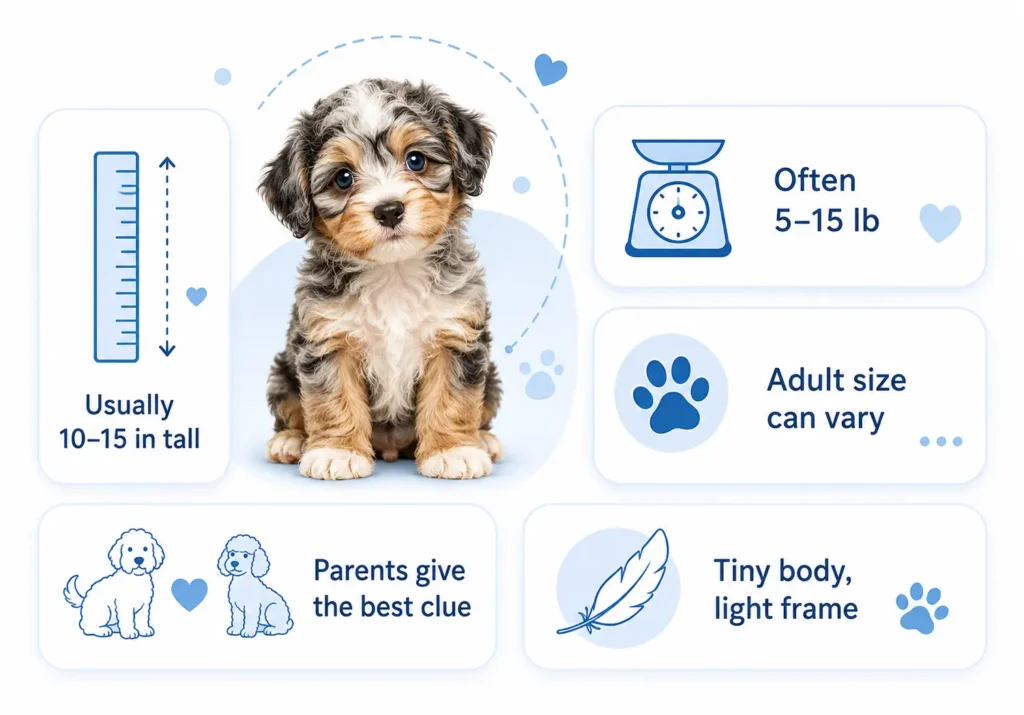
Puppy size can fool you.
A small eight-week-old puppy won’t necessarily become a super-small adult. Puppies don’t all grow at exactly the same speed. Some start small and catch up later.
The parents give you a much better clue.
For example, Toy Poodles generally weigh only a few pounds, while Miniature Poodles are larger. Official size information puts Toy Poodles around 4 to 6 pounds and Miniature Poodles around 10 to 15 pounds.
The Australian Shepherd side is much bigger.
So when someone tries to produce a very tiny Aussiedoodle, the smaller Poodle side usually plays a pretty big part in the size.
Still, genes can surprise you.
Two puppies from the same litter may grow at different rates and finish at different adult weights.
This part is super crucial.
A dog being 5 pounds instead of 10 pounds doesn’t automatically make it cuter, better, healthier, or more valuable.
The number on the scale is important, but it isn’t the only thing.
A sturdy little 10-pound dog with strong bones, normal blood sugar, healthy knees, good teeth, and clear eyes is a much better deal than a 4-pound dog struggling with health problems just because somebody wanted the smallest puppy possible.
Extreme smallness can make everyday accidents more dangerous too.
A large dog might jump from the couch and barely notice. A very tiny dog can land badly and hurt a leg.
Even somebody accidentally stepping backward can become a serious problem when your pup is small enough to disappear behind a slipper.
That’s the less glamorous side of having a super-small dog.
Now we’re getting to the main concern.
A Teacup Mini Aussiedoodle is not guaranteed to have health problems.
That would be unfair to say.
But tiny dogs can have some special risks, and Aussiedoodles can also inherit health issues seen in the dogs they come from. Health testing recommendations for Australian Shepherds and smaller Poodles include checks involving hips, knees, eyes, and certain inherited genetic conditions.
Here are some problems worth knowing about:
That looks like a scary list, I know.
Don’t read it as “my dog will get all these things.”
It means these are problems an owner should know about.
Tiny puppies don’t have much body reserve.
If a very small puppy goes too long without eating, gets sick, becomes stressed, or uses a lot of energy, its blood sugar can sometimes drop too low.
This is called hypoglycemia.
A puppy with dangerously low blood sugar may look weak, shaky, sleepy, confused, or unsteady. Severe cases can cause seizures or loss of consciousness. Extra-small puppies are one of the groups at higher risk.
That’s why feeding a tiny growing puppy properly isn’t something to guess about.
They need enough food for growth and energy, but you also don’t want to turn them into a little furry potato by overfeeding.
Your vet can help you work out suitable amounts and meal timing.
Here’s another thing people don’t always think about.
Tiny size means tiny bones.
Very small teacup-type dogs can be easier to injure than sturdier dogs. Falls from furniture, being dropped, getting stepped on, or rough play with a larger dog may cause serious injuries. Veterinary information about teacup dogs specifically warns about their physical fragility and increased risk from accidents.
A couch doesn’t look high to us.
To a five-pound puppy? That’s another story.
Patellar luxation sounds complicated, but it’s pretty simple to understand.
The patella is the kneecap.
In some small dogs, the kneecap can slide out of its normal position.
You might notice the dog suddenly lift one back leg, skip a few steps, then start walking normally again. Some mild cases don’t cause much trouble. More serious cases can cause pain and may need treatment or surgery.
Patella checks are specifically recommended for Toy and Miniature Poodles because knee problems matter in these smaller dogs.
Both sides of the family can bring eye concerns.
One inherited eye condition worth knowing is progressive retinal atrophy, usually shortened to PRA.
The retina helps the eye detect light. PRA slowly damages the retina and can lead to loss of vision.
Smaller Poodles have specific testing recommendations for PRA, while Australian Shepherd lines also have several inherited eye conditions that responsible breeding programs watch closely.
You aren’t expected to become a dog genetics scientist here.
The practical lesson is easy: healthy-looking eyes on a puppy don’t prove that inherited eye problems aren’t present in the family.
That’s where proper parent testing helps.
This one comes mostly from the herding-dog side.
Some Australian Shepherds carry a change in a gene commonly called MDR1. Dogs with this genetic change can react badly to certain medicines at doses that may be safe for many other dogs.
A mixed puppy can inherit genes from either parent, so this is something worth discussing with your veterinarian.
No need to panic about every medicine.
Just make sure your vet knows the dog’s background and any available genetic test results.
Tiny dogs may have little jaws but they still need room for a whole bunch of teeth.
Crowding can make it easier for plaque and tartar to build up.
Dental disease isn’t just smelly breath. It can lead to sore gums, infection, loose teeth, and pain. Small dogs often need especially close dental care, and veterinary dental guidance notes that dogs expected to remain below roughly 20 to 25 pounds may require more dental prevention than larger dogs.
Teeth are easy to forget when your puppy is young and chewing everything in sight.
Start good habits early.
Future-you will be glad you did.
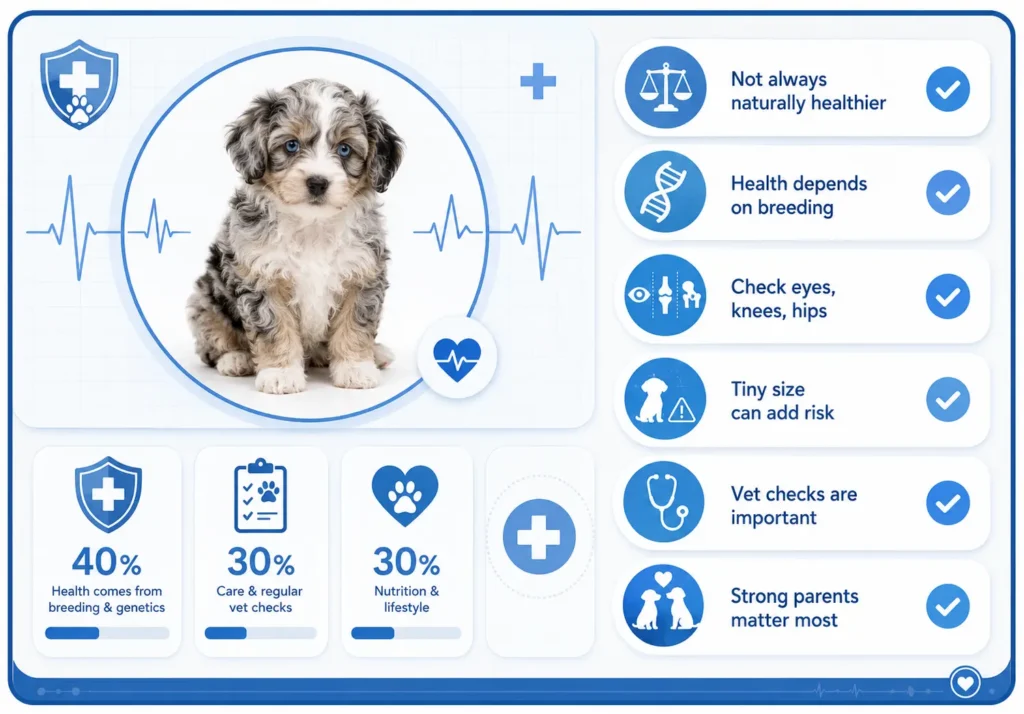
This question needs a careful answer.
Aussiedoodles aren’t automatically unhealthy.
They’re also not automatically healthy because they’re mixed dogs. You sometimes hear people say mixed dogs can never get genetic diseases.
Nope.
That’s too simple.
A puppy receives genes from both parents. If health problems run in one or both family lines, the puppy may still inherit them.
Imagine two puppies.
Puppy number one comes from healthy adult parents that had their hips, eyes, knees, and relevant genetic conditions checked before breeding.
Puppy number two came from two unusually tiny dogs selected mainly because they were small.
Which one sounds like the safer bet?
Exactly.
The size label doesn’t tell you much about health. Parent health does.
Health-testing recommendations for Australian Shepherds include hip, elbow, and eye checks. Recommendations for Miniature Poodles include hips, patellas, eye exams, and testing for certain inherited retinal disease. Toy Poodle recommendations also include patella and eye-related testing.
Responsible breeding doesn’t magically remove every health problem.
It lowers avoidable risk.
That’s a pretty big difference.
If someone tells you, “This puppy is extra special because it’ll only be three pounds,” don’t let the number make the decision for you.
Ask about health first.
A tiny puppy can be completely adorable while still being a poor choice if it came from weak parents or careless breeding.
Organizations that discuss teacup dogs warn that repeatedly choosing the smallest dogs mainly for size can increase the chance of health trouble.
The healthiest goal isn’t “as small as physically possible.”
It’s small, strong, active, and healthy.
That sounds less exciting than “micro teacup,” but your dog has to live in that body every day.
There’s no scientifically fixed lifespan for a Teacup Mini Aussiedoodle.
Why?
Because it isn’t an official standardized breed or size category.
Regular Aussiedoodle lifespan estimates commonly sit somewhere around 10 to 15 years depending on the dog’s size, genetics, and the source being used. One veterinary guide gives an average range around 10 to 12 years, while Mini Aussiedoodle sources commonly place smaller dogs somewhat higher.
So can a tiny Aussiedoodle live a long life?
Sure.
Some little dogs can stay active well into their teens. But I wouldn’t trust anybody promising an exact lifespan for a puppy.
No one can do that.
Small dogs often live longer than giant dogs as a general pattern.
But there’s a catch.
Making a dog extremely small isn’t the same as simply having a naturally healthy small dog. A normally built small dog may have a pretty good shot at a long life.
A very fragile dog with repeated low blood sugar, weak bones, bad teeth, heart trouble, or inherited disease could face a different story.
Health organizations warning about teacup breeding point out that unusually tiny dogs may experience serious health problems that can affect both quality and length of life.
So don’t focus only on years.
Quality matters too.
A healthy 13 years of running around, learning tricks, stealing your socks, and begging for chicken sounds a lot better than a longer life filled with repeated medical problems.
Genes matter.
But everyday care counts for a lot too. Keep your dog at a healthy body weight. Extra weight places more stress on small joints.
Feed proper food in the right amount. Keep vaccines and parasite prevention up to date based on your vet’s advice.
Look after those teeth.
Give the dog regular exercise without treating a tiny puppy like an adult athlete. And don’t skip routine veterinary visits just because the dog looks fine.
A little problem caught early is usually easier to deal with than a big problem caught late.
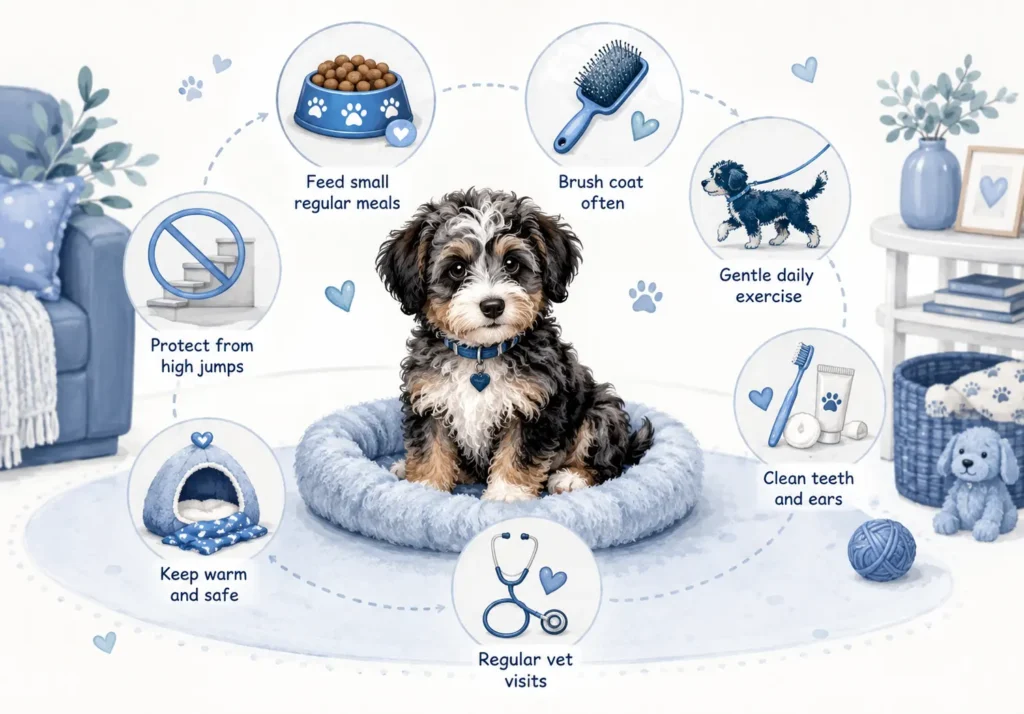
Living with one of these little guys takes a bit of planning.
They aren’t glass ornaments. They need to walk, play, sniff, learn, and act like dogs. At the same time, you’ve got to remember how small they are.
Tiny puppies have tiny stomachs.
They need food suitable for their age and growth. Don’t simply copy the feeding amount used for somebody else’s dog because two small dogs can have different calorie needs.
Young puppies may need meals spread through the day rather than getting one giant bowl of food.
Keep an eye on body condition too.
You should be able to feel the ribs without the dog looking painfully thin. If you can’t tell whether your little guy is too skinny or getting chunky, ask your veterinarian.
Aussiedoodles can be energetic. That doesn’t disappear just because the dog is tiny.
They still need physical activity and stuff to do with their brain. Training games, sniffing, short walks, gentle play, and puzzle-type activities can all help.
But use some common sense.
A growing puppy doesn’t need huge runs, endless jumping, or repeated leaps from furniture.
Those little joints are still developing. Build activity gradually as the dog grows.
That cute fluffy coat doesn’t brush itself. Some Aussiedoodles grow wavy coats. Others get tighter curls. Hair can tangle around the ears, legs, belly, and tail, especially if brushing gets skipped for a while.
Matting isn’t just ugly. Tight mats can pull on the skin and become uncomfortable.
Regular brushing makes life easier. Check ears too, especially after bathing or swimming. Floppy or hairy ears can hold moisture, and that can make ear trouble more likely.
This is one of those boring jobs that pays off later.
Brush your dog’s teeth regularly with dog-safe dental products.
Human toothpaste isn’t meant for dogs. Have the mouth checked during routine veterinary visits and follow professional advice about dental cleaning.
Small dogs often need closer dental care because crowded teeth can trap plaque. Dental disease may start surprisingly early in life.
Your pup may strongly disagree with tooth brushing at first.
Start slowly.
Make it normal instead of turning every brushing session into WrestleMania.
A tiny dog sees your house differently.
A large dog stepping on them during play can also cause injury.
Some practical habits help:
It sounds like a lot at first.
After a while, most of it becomes automatic.
You start checking under blankets before sitting down because, yep, your tiny fluffy dog will eventually decide that’s the perfect sleeping spot.
The answer really depends on what kind of home you have and what you’re expecting from the dog.
If you want something tiny only because it looks cute online, think a little harder.
This is still a living dog with exercise needs, grooming, vet bills, training, teeth, poop, muddy paws, and a mind of its own.
Small package. Full dog.
A healthy small Aussiedoodle may be affectionate, bright, playful, and very attached to its family.
Training can be fun because both sides of its background include intelligent dogs. They can fit into smaller homes too, provided you still give them enough activity. Being little doesn’t mean they should spend the entire day in someone’s arms.
Let them explore safely.
Let them walk.
Let them sniff stuff.
Let them be dogs.
A very fragile tiny dog may not be the best match for a home where young children want to carry and squeeze the puppy all day.
A house full of big, rough-playing dogs may need extra management too. And if you want a low-maintenance dog, this probably isn’t your dream match.
The coat needs work.
The brain needs work.
Training takes time.
Vet care matters.
Teeth need attention.
Plus you’ve got to keep an eye on the dog’s physical safety because a tiny body doesn’t handle every accident as well as a bigger, sturdier one.
If you’re choosing between two puppies, don’t automatically pick the smaller one.
Look at the bigger picture. Ask whether the puppy seems bright, active, alert, and comfortable. Look at the parents.
Ask about health screening. Asking about the puppy’s growth.
Find out whether any close family members developed serious eye, joint, seizure, or other inherited problems. And don’t let words such as “micro,” “tiny,” or “teacup” throw you off the scent.
They’re labels.
A label can’t make a dog healthy.
Good genetics, thoughtful breeding, sensible care, proper nutrition, exercise, and veterinary support matter far more. Health-screening programs specifically recommend checking parent dogs for inherited conditions instead of judging breeding quality from appearance alone.
So, is a Teacup Mini Aussiedoodle healthy?
It can be.
But the word teacup isn’t a health guarantee, and it isn’t an official breed size either.
That’s probably the most important thing to remember.
A Mini Aussiedoodle already comes from dogs with very different possible sizes. Making the puppy even smaller can add another layer of uncertainty. Some tiny dogs grow up strong and stay playful for many years. Others may have more trouble with low blood sugar, fragile bones, knees, teeth, eyes, or inherited health problems.
Don’t let that scare you away from every small Aussiedoodle.
Just don’t get obsessed with finding the tiniest dog on the planet.
A slightly bigger puppy with healthy parents, sturdy legs, clear health checks, good growth, and plenty of energy is usually a much better choice than an extremely tiny puppy bred mainly to fit a trendy label.