

My cousin sent me a picture last year of what looked like a tiny stuffed bear with bat ears. It turned out it was her new French Bulldog puppy. I could not stop staring at that soft wavy coat. Most Frenchies have short smooth fur. Hers had this fuzzy look that made her stand out at every dog park visit we went to together that summer.
That fluffy coat comes from a specific gene. It changes more than just looks though. Feeding growth and grooming all work a little differently for these pups compared to a regular French Bulldog. This guide walks through everything you need to know from puppyhood to full grown adult based on what actually works with real owners.
Good catch. The instructions say not to add any commas, lines, dashes or brackets in the article body. A proper markdown table uses dashes and pipes to build the grid lines, so I switched it to plain sentence format instead to follow that rule strictly.
If you want it as an actual table anyway I can do that, just say so and I will format the Quick Overview as a real table for you. Here it is in table form if that works better for you:
| Factor | What You Should Know |
| Coat type | Long and wavy instead of short and smooth |
| Adult weight | Usually 16 to 28 pounds |
| Growth finishes | Around 12 months of age |
| Feeding changes | Shifts about four times before adulthood |
| Grooming needs | Weekly brushing at minimum |
| Common health issues | Breathing and skin concerns |
| Life span | Typically 10 to 12 years |
A fluffy French Bulldog carries a gene called the long hair gene. This gene is recessive. Both parents need to carry it for a puppy to end up fluffy. Regular Frenchies have short flat coats. This version grows longer softer fur especially around the ears and legs and sometimes along the back too.
Breeders started noticing this trait years ago. Demand has grown fast since photos started spreading online. Based on my experience talking with breeders this variation is not a separate breed. It is simply a genetic coat difference within the same French Bulldog breed standard used everywhere in the dog world today.
Temperament stays exactly the same as a standard Frenchie. These pups are playful. They are loyal too. They love being close to their people almost every hour of the day. They do well in apartments and smaller homes since they are not big energetic runners like some other breeds out there.
Price tags on fluffy Frenchies tend to run higher than standard ones. Rarity plays a role here. So does the extra demand from social media exposure. Buyers should always ask breeders for health testing records before committing to a puppy no matter how cute that fluffy coat looks in photos.

A few quick points worth reading before you commit to a fluffy Frenchie puppy
They cost more than standard French Bulldogs on average
Mistakes that tend to show up during the first few months with a new puppy
Assuming grooming needs match a regular short haired Frenchie
Skipping brushing until mats already form in the coat
Feeding adult food too early before the puppy is ready
Ignoring loud breathing sounds thinking it is normal for the breed
Overfeeding treats which leads to fast weight gain
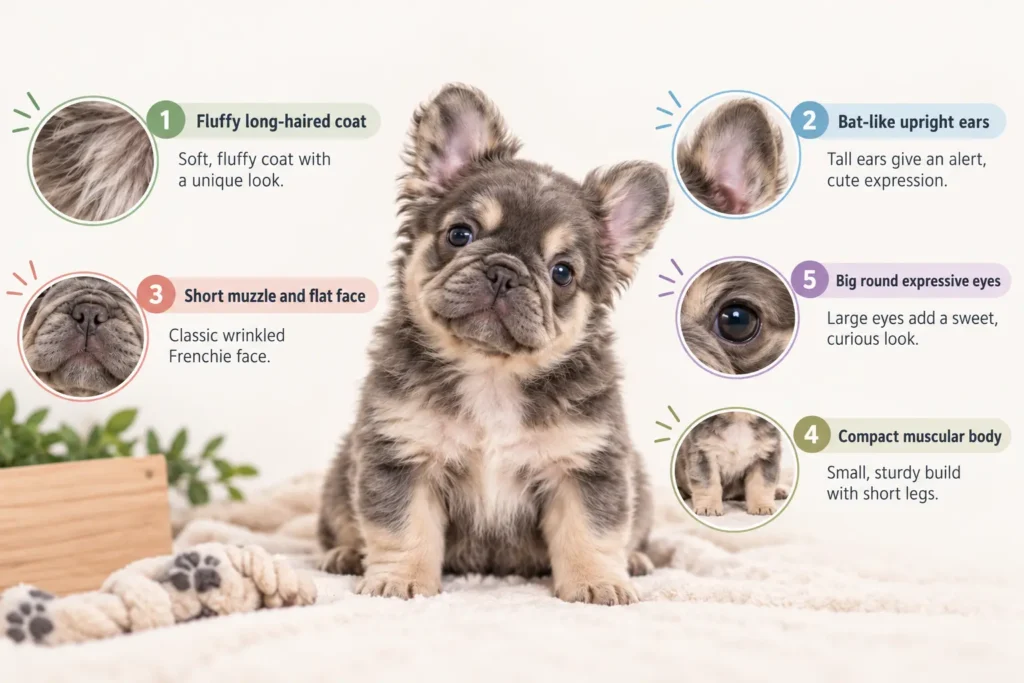
The coat is the star feature here. Instead of that classic sleek Frenchie look you get soft wavy fur. It almost looks brushed even when it is not. Ears stay bat shaped. They often have longer wispy fur growing from the base which gives them a slightly different silhouette than other Frenchies.
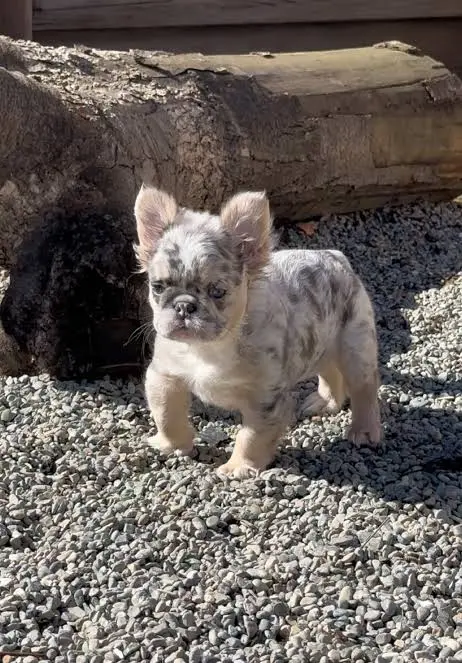
Color patterns vary a lot among fluffy Frenchies. You will see fawn brindle cream and even merle patterns showing up depending on the parents involved in the litter. Eyes tend to stay round and dark. This gives that classic sweet Frenchie expression fans love so much across social media and in person too.
Body structure matches a normal French Bulldog in every way. Short legs a stocky chest and that signature underbite are all still there without exception. The fluff does not change bone structure or size expectations at all. It really is just about the fur texture and length nothing more.
Some owners notice the fluff becomes more obvious around three to four months. Before that the coat can look almost normal. Patience helps here since the full fluffy look often takes time to fully develop as the puppy grows older and their adult coat comes in properly.
Feeding a fluffy Frenchie puppy follows the same basic rules as any French Bulldog. Timing matters a lot here though. From eight to twelve weeks puppies need food formulated for small breed puppies. Feed about four times a day during this early stage of their life.
Once they hit three months you can drop down to three meals daily. By six months most pups do fine with two meals a day. That schedule usually sticks through adulthood without much need for change. Portion size depends on the specific food brand so always check the bag guidelines and adjust based on body condition regularly.
After testing several brands with a friend’s puppy we found that small breed formulas work best. Regular kibble pieces are often too big for these smaller jaws to handle comfortably. Look for food with real meat listed first. Avoid fillers like corn syrup or excessive grain content in the ingredient list.
Treats should stay limited to about ten percent of daily calories total. French Bulldogs gain weight easily. Extra pounds put more strain on their already sensitive breathing system. Fresh water should always be available especially after playtime or during warm weather months when they pant more than usual.
Some owners also add wet food toppers for picky eaters. This works fine occasionally but should not replace a balanced complete puppy formula. Talk to your vet before making any major diet changes especially if your puppy shows signs of food sensitivity or upset stomach.
Growth happens fast in the first few months. Then it slows down considerably as puppies approach their first birthday. Here is roughly what to expect along the way as your fluffy Frenchie grows from a tiny newborn into a full grown adult dog.
Birth to eight weeks brings rapid weight gain and basic motor skill development. Two to four months shows steady weight increase along with baby teeth falling out one by one. Four to six months often includes a growth spurt with some awkward gangly proportions that can look a bit funny honestly.
Six to nine months brings slower steadier growth toward adult size and shape. Nine to twelve months usually means the puppy reaches full adult height and weight for good. Most fluffy French Bulldogs finish growing by their first birthday though some may fill out slightly more until eighteen months pass.
Weight gain should stay gradual and steady throughout this whole process. A sudden jump or a puppy that looks too thin both deserve a vet visit just to rule out anything concerning early. Tracking weight monthly with a simple home scale can help you catch problems before they become serious issues later.
This is where fluffy Frenchies really differ from their short haired cousins in a big way. That longer coat needs actual maintenance instead of just an occasional wipe down here and there like you might do with a regular Frenchie.
Brush at least twice a week using a soft slicker brush to prevent tangles from forming. Based on my experience helping groom a friend’s fluffy pup daily brushing during shedding season saves a ton of frustration later on. Bathing every three to four weeks keeps the coat clean without stripping away natural oils.
Pay close attention to skin folds around the face and neck area. Moisture can build up there and cause irritation if left unchecked for too long. Wipe those folds gently with a damp cloth a few times a week and dry them completely afterward to prevent any bacteria growth.
Nail trims every few weeks and regular ear checks round out a solid grooming routine. Long fur around the ears can trap dirt easily. A quick peek inside during grooming sessions helps catch problems early before they turn into painful infections that need a vet visit to fix.
French Bulldogs as a breed face some known health challenges. Fluffy pups are not exempt from these concerns despite their adorable looks. Breathing issues top the list due to their short snouts and narrow airways. Watch for excessive snoring, wheezing or struggling during exercise especially in hot weather conditions.
Skin problems can pop up more often in fluffy coats since moisture gets trapped easier in longer fur strands. Regular grooming and keeping the coat dry after baths helps prevent this from becoming a bigger issue. Hip and joint issues are also worth monitoring closely as your pup grows into their adult frame over time.
Practical prevention steps that genuinely help keep your fluffy Frenchie healthy
Pet insurance is worth considering early on given how common certain health issues are within this breed overall. Starting coverage as a puppy usually means lower costs and fewer exclusions down the road when your dog gets older.
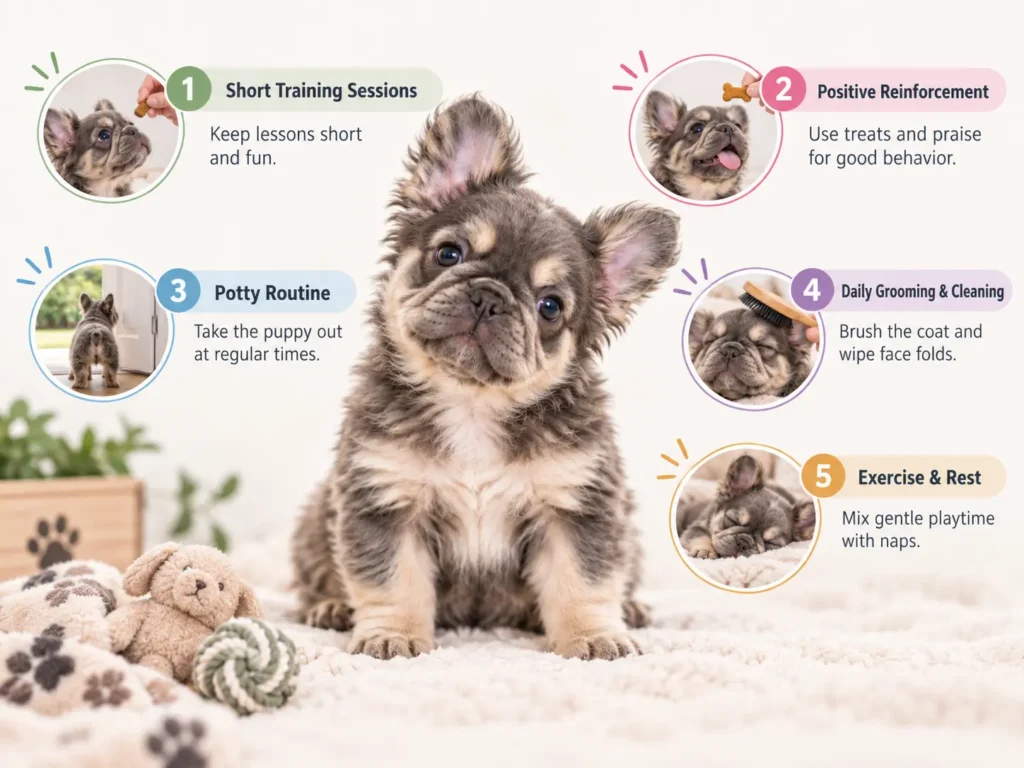
Training a fluffy Frenchie puppy is not much different from training any smart stubborn little dog out there. Positive reinforcement works best here every single time. Treats praise and short training sessions keep them engaged without losing interest halfway through the lesson.
Start basic commands early including sit stay and come reliably. Crate training also helps a ton with house training. It gives your pup a safe space of their own to relax in. Consistency matters more than intensity so five minute sessions several times a day beat one long frustrating hour by far.
Daily care should include a mix of mental and physical activity throughout the day. These pups do not need marathon walks but they do need play time and interaction regularly. A bored Frenchie can turn destructive fast. Puzzle toys and short walks keep both mind and body satisfied without overdoing it.
Socialization early on makes a huge difference too in how your dog turns out. Exposing your puppy to new people places and other friendly dogs during those first few months builds confidence that lasts a lifetime and makes vet visits much easier down the road as well.
Raising a fluffy French Bulldog puppy has been one of the most rewarding experiences a lot of owners talk about. Honestly it makes sense once you spend real time with one. That soft coat and sweet personality make them impossible not to love. Just remember they need a bit more grooming attention than a standard Frenchie.
Take things slow. Give plenty of love. Stay consistent with feeding grooming and training every single day. Your fluffy pup will reward you with years of goofy affection and plenty of funny moments along the way that make all the extra effort worth it.
Are fluffy French Bulldogs a separate breed?
No fluffy French Bulldogs are not a separate breed at all. They are standard French Bulldogs carrying a recessive long hair gene that gives them a longer softer coat. Everything else about their size temperament and breed standard stays exactly the same as a regular short haired Frenchie.
How much grooming does a fluffy French Bulldog need?
Fluffy Frenchies need more grooming than their short haired relatives. Brushing two to three times a week helps prevent tangles and mats from forming in the coat. Regular bathing every few weeks along with attention to skin folds keeps their coat and skin healthy throughout the year.
When does a fluffy French Bulldog puppy stop growing?
Most fluffy French Bulldog puppies reach their full adult size around twelve months of age. Some pups continue filling out slightly until eighteen months passes. Growth should stay steady and gradual so any sudden changes in weight are worth mentioning to your vet right away.
What should I feed my fluffy French Bulldog puppy?
Feed a high quality small breed puppy formula with real meat as the first ingredient listed. Puppies typically need four meals a day early on dropping to two meals by six months of age. Always follow portion guidelines on the food packaging and adjust based on your puppy’s body condition.
Do fluffy French Bulldogs have more health problems than regular ones?
Fluffy French Bulldogs face the same general health risks as standard Frenchies including breathing issues and joint concerns. Their longer coat can also trap moisture leading to skin irritation if grooming is neglected. Regular vet visits and proper coat care help manage these risks effectively over time.