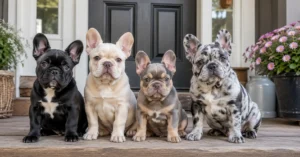

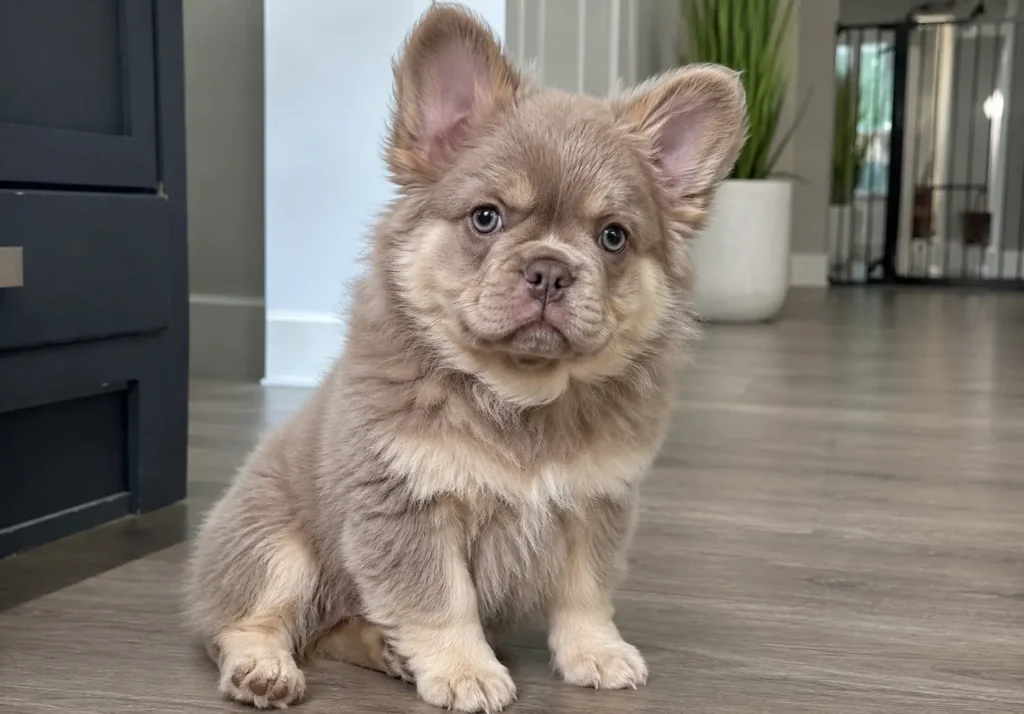
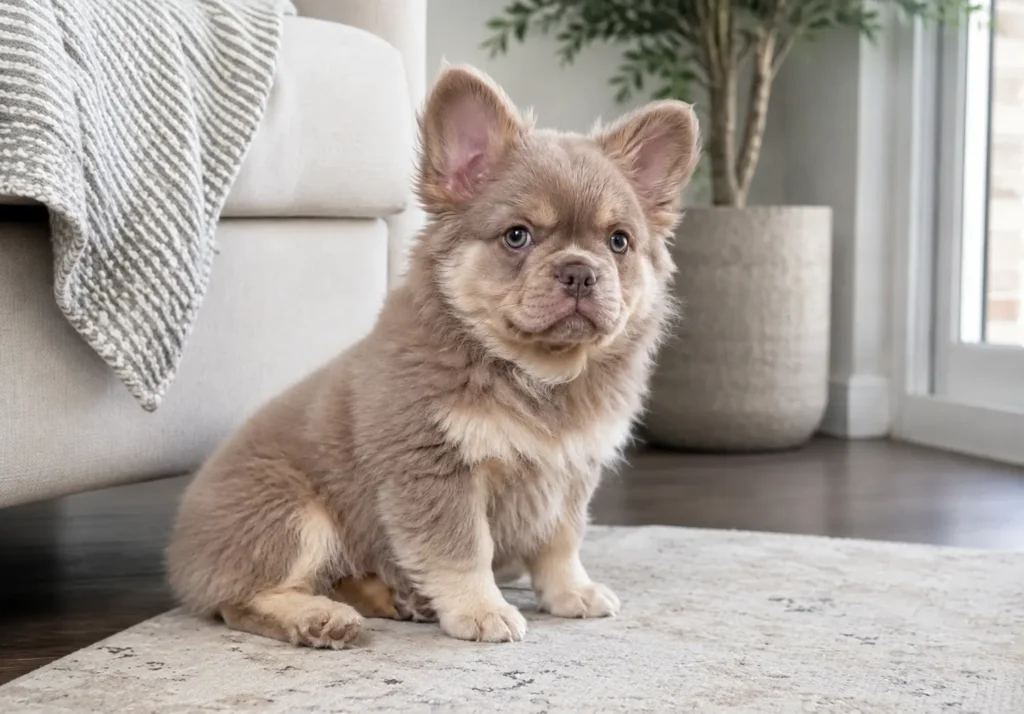
A Fluffy French Bulldog looks like a regular Frenchie wearing a soft winter coat. It has the same bat ears. It also has the same short body and flat face. The main difference is its longer hair.
These dogs have become popular because they look unusual and cute. Their soft hair often grows around the ears, chest, back and legs. Some have a fluffy tail too. This coat gives them a different look from the smooth-coated French Bulldog most people know.
The fluffy coat comes from genetics. It does not mean the dog is a different breed. A Fluffy French Bulldog is still a French Bulldog when its parents are French Bulldogs. However the long coat does not match the traditional show standard.
Their rare looks can make them very expensive. It can also attract careless sellers who focus more on color and hair than health. A buyer should learn about breathing problems, spine problems, allergies and other breed risks before paying for a puppy.
This guide explains what a Fluffy French Bulldog is. It also covers genetics, colors, grooming health costs and personality in simple words.
| Feature | Simple Details |
| Breed | French Bulldog |
| Main difference | Longer and softer coat |
| Cause of long hair | Recessive coat-length genes |
| Usual size | Small and compact |
| Coat care | Regular brushing and skin checks |
| Exercise needs | Short daily walks and indoor play |
| Personality | Friendly playful and people-focused |
| Main concern | Breathing and heat problems |
| Price | Often higher than a standard Frenchie |
| Best home | A cool indoor home with close family contact |
A Fluffy French Bulldog is a French Bulldog with longer hair than usual. People may also call it a long-haired French Bulldog or fluffy Frenchie.
The dog still has many well-known Frenchie features. It normally has a large square head and upright bat ears. Its body looks short, strong and muscular. The nose is short and the face has loose skin and wrinkles.
The coat creates the biggest visual change. Hair may look longer around the ears, neck chest , shoulders and back legs. Some dogs have feather-like hair behind their ears. Others have a thicker coat over most of the body.
No. The fluffy Frenchie is not a separate dog breed.
Its longer coat comes from inherited genes. The same breed can produce puppies with different coat lengths when the parents carry the needed genes.
The long coat also does not prove that another breed was mixed into the family. Genetic changes related to coat length can remain hidden for generations.
Some sellers use fancy names such as rare Frenchie exotic Frenchie or teddy Frenchie. These names are mostly used for marketing. They do not create a new official breed.
The traditional French Bulldog standard calls for a short smooth coat. A long or fluffy coat does not match that show description.
This means a fluffy Frenchie may not qualify for regular breed competition under organizations that follow the smooth-coat standard. That does not stop the dog from being a loving family pet.
Registration and show eligibility are not the same thing. A puppy may have registered parents while still having a feature that does not meet the show standard.
Before buying one ask the breeder to explain the dog’s paperwork honestly. Never accept claims that every rare feature is officially approved.
They are usually small dogs. They often have a heavy and solid build for their height.
A healthy adult should have a visible waist without looking thin. You should be able to feel the ribs under a light layer of fat. Extra weight puts more pressure on the dog’s joints spine and breathing system.
Their small size makes them suitable for apartments. Yet small does not mean easy in every way. They still need training attention grooming and careful health care.
Genes act like instructions inside the body. They help decide a dog’s size coat texture hair length and many other features.
The fluffy coat is connected with the FGF5 gene. Variants in this gene can produce longer hair in dogs.
Long hair usually acts as a recessive trait. This means a puppy normally needs to receive a long-hair copy from both parents to show the fluffy coat.
Imagine that each parent gives one coat-length instruction to the puppy.
A dog with two short-coat copies will usually have short hair. A dog with one short-coat copy and one long-coat copy may still look short-haired. This dog can be a carrier.
A carrier can pass the hidden long-hair copy to its puppies.
When two carriers have puppies there are several possible results:
Not every puppy in the litter will look the same. Chance decides which copy each parent passes on.
Yes. Two smooth-coated parents may produce a fluffy puppy when both carry a recessive long-hair variant.
The parents can look completely normal. Their hidden genes may not become clear until a fluffy puppy appears.
A DNA coat-length test can help show whether a dog carries certain long-hair variants. This testing is useful for understanding coat inheritance. It does not prove that the dog is healthy in every other way.
Some sellers proudly show a coat-color or coat-length DNA report. Buyers may think this means the puppy has passed full health testing.
It does not.
A coat test only checks specific coat genes included in that test. It does not fully examine breathing ability, heart health, knees, hips spine eyes or general fitness.
Responsible breeding looks at the whole dog. A rare coat should never matter more than healthy movement, clear breathing and a stable personality.
Ask for health records for both parents. Look for results from recognized veterinary health programs rather than accepting a simple statement that the parents are healthy.
The fluffy coat can vary from one dog to another. Some Frenchies have only slightly longer hair. Others develop thick feathers around the ears, neck and legs.
The texture may feel soft and smooth. It should not automatically be compared with the coat of a large long-haired breed. The dog is still a small French Bulldog with a longer version of its natural coat.
French Bulldogs are commonly seen in colors such as fawn cream brindle and white. These colors can also appear in fluffy dogs.
Fawn may range from a light tan shade to a deeper reddish tone. Cream dogs look pale and even in color. Brindle coats have darker stripes or streaks over a lighter base.
White can appear alone or in patches with another accepted color. A dark mask may cover the muzzle and part of the face.
Markings can make each dog look different. Two fluffy puppies from the same litter may have very different patterns.
Online sellers often advertise blue lilac chocolate merle tan points or other unusual colors. These shades may cost more because buyers see them as rare.
Rarity does not guarantee quality. A high price also does not prove careful breeding.
Some coat patterns can come with added genetic concerns. Merle-to-merle breeding can increase the risk of serious eye and hearing problems in puppies. Color-focused breeding may also reduce the size of the breeding group and encourage poor matches.
Do not choose a puppy only because its color looks unusual. Ask how the breeder selected the parents and what health checks were completed.
A puppy’s color may look different as it grows. The coat can become lighter or darker. Brindle markings may become clearer.
Sunlight can also change the look of the hair. Dirt dryness and poor nutrition may make the coat appear dull.
A healthy coat should feel clean and soft. It should not have a strong smell like bald patches, thick flakes or wet sores.
Color cannot tell you whether a dog is healthy. A plain fawn puppy from health-tested parents may be a safer choice than a very expensive rare-colored puppy with weak health records.
A fluffy Frenchie needs more coat care than a smooth-coated French Bulldog. However it usually does not need the heavy grooming routine of breeds with very long hair.
Regular care keeps loose hair dirt and small tangles under control. It also gives you a chance to notice skin problems early.
Brush the dog two or three times each week. You may need to brush more often during periods of heavier shedding.
Use a soft pin brush or a gentle slicker brush made for small dogs. Work slowly around the ears, chest, tail and back legs. These areas may tangle more easily.
Do not pull hard on a knot. Hold the hair close to the skin and gently work from the end of the tangle. A dog-safe detangling spray may help.
Keep brushing sessions short at first. Give calm praise or a small treat. This teaches the puppy that grooming is safe.
A bath every few weeks may work for many dogs. The correct schedule depends on the dog’s skin activity and lifestyle.
Use a mild dog shampoo. Human shampoo may irritate canine skin because it has a different balance.
Rinse the coat well. Soap left behind can cause itching and flakes.
Dry the dog carefully. Moisture can stay trapped beneath longer hair and inside skin folds. Use a towel and a cool or low-heat dryer if the dog accepts it.
Never use strong heat. French Bulldogs can overheat quickly and their skin can burn.
Frenchies often have folds around the nose and face. Food dirt tears and moisture can collect inside them.
Wipe the folds with a soft damp cloth or a product suggested by your veterinarian. Dry each fold after cleaning.
Watch for redness, smell discharge or sore skin. These signs may point to a fold infection.
The area beneath the tail may also need checks. Some Frenchies have a tight tail pocket that traps dirt and moisture.
Include these jobs in the dog’s regular care:
Do not use cotton swabs deep inside the ears. Ask a veterinarian or groomer to show you safe ear cleaning.
The fluffy coat does not protect a Frenchie from the health risks linked with its body shape. These dogs have short muzzles, compact bodies and heavy heads. Some live active and comfortable lives. Others need regular medical care or surgery. A buyer should prepare for the possibility of high veterinary costs.
French Bulldogs are brachycephalic dogs. This word describes breeds with short skulls and flat faces.
Some have narrow nostrils, a long soft palate or other airway changes. These problems can make breathing difficult.
Warning signs include loud breathing, heavy snoring gagging and poor exercise tolerance. A dog may struggle more during hot or humid weather.
Blue or gray gums collapse and severe breathing distress are emergencies.
Keep the dog cool. Avoid hard exercise in warm weather. Use a harness instead of placing pressure on the neck with a collar.
Do not accept constant breathing trouble as normal just because the dog is a Frenchie.
A dog cools itself mainly through panting. A short airway can make this process less effective.
Never leave a French Bulldog in a parked car. A mild day can still become dangerous inside a vehicle.
Walk during cooler parts of the day. Bring water and stop when the dog pants heavily or slows down.
Air conditioning may be important in hot areas. A cooling mat can help indoors but it does not replace a safe room temperature.
French Bulldogs can develop back and spine problems. Some are born with oddly shaped vertebrae. Others may suffer from disc disease.
Signs include back pain weakness shaking and trouble walking. A dog may avoid stairs or cry when lifted.
Sudden loss of movement in the back legs needs emergency care.
Knee and hip problems can also occur. Keep the dog lean and reduce repeated jumping from high furniture.
Use steps or a ramp near the bed or couch. Support both the chest and rear end when lifting the dog.
Fluffy Frenchies can develop itchy skin and allergies. Longer hair may hide redness at first.
A dog may lick its paws rub its face or scratch its ears. Repeated ear infections can also be linked with allergies.
Fleas food ingredients and things in the environment may trigger symptoms. A veterinarian can help find the cause.
Do not keep changing food every few days. Random diet changes make the problem harder to understand.
Large open eyes can collect dust and suffer scratches. Watch for squinting redness cloudiness or heavy tearing.
Eye injuries can become serious quickly. Contact a veterinarian when the dog keeps one eye closed. Frenchies also have many teeth inside a short jaw. Crowding can trap food and lead to gum disease. Brush the teeth often. A professional dental cleaning may be needed during the dog’s life.
A good breeder should discuss health risks openly. Ask about evaluations for the parents and family history.
Useful checks may include:
No test can promise a perfectly healthy puppy. Testing still helps breeders make better choices and gives buyers more information.
Avoid sellers who refuse to show documents. A photo of a smiling puppy is not a health record.

Fluffy French Bulldogs often cost more than smooth-coated Frenchies. Sellers usually charge extra because the coat is less common and demand is high.
There is no single correct price. The amount can change based on country location color family line breeder reputation and demand. Some puppies cost several thousand dollars. Dogs with fashionable colors may be advertised for much more.
A high price does not mean the breeder acted responsibly.
A breeder may charge more for coat length, unusual color or breeding rights. Shipping and transport can add another cost.
Health testing, proper veterinary care and safe puppy raising also cost money. A responsible breeder may spend a lot before puppies go to new homes.
However some sellers use the word rare only to increase the price. They may skip health tests and still ask for a huge amount.
Compare the quality of care rather than only comparing photos.
Ask the seller for clear answers before sending a deposit:
Be careful when a seller creates pressure. Statements such as pay today or lose the puppy can be a warning sign.
Never send money only because someone shares cute pictures. Stolen photos are common in puppy scams.
Owning the dog costs money every year. You will need food vaccinations, parasite prevention toys, grooming supplies and routine veterinary care.
A Frenchie may also need allergy treatment, airway surgery, eye care or back treatment. Emergency bills can be much higher than normal checkups.
Pet insurance may help with some future costs. Read the rules before buying a plan. Many plans do not cover conditions that started before enrollment.
Create an emergency fund even when you have insurance. You may still need to pay deductibles or services the plan does not cover.
A less expensive rescue dog may also need medical care. Adoption should be based on a good home match rather than the idea of getting a cheap dog.
Fluffy French Bulldogs often share the same general personality as smooth Frenchies. Many are friendly, funny and strongly attached to people.
They enjoy being close to family members. Some follow their owners from room to room. Others want to sit beside a person whenever possible.
Each dog is still an individual. Genetics early handling training and daily life shape behavior.
Many Frenchies do well in families when adults supervise children and teach respectful handling.
Children should not pull ears, climb on the dog or disturb it while it eats and sleeps.
A small dog can still bite when frightened or hurt. Give the Frenchie a quiet resting place where nobody bothers it.
Their sturdy look can be misleading. They should not take part in rough games that involve falling or hard jumping.
A well-socialized fluffy Frenchie may live peacefully with other dogs and cats.
Introduce pets slowly. Use gates, separate rooms and short calm meetings.
Do not force animals to share bowls, beds or toys. Give each pet its own safe space.
Some Frenchies become jealous when another pet receives attention. Reward calm behavior instead of pushing the dog away or shouting.
French Bulldogs can learn quickly but may have a stubborn side. They often respond well to food rewards play and praise. Keep lessons short. Five minutes of focused training may work better than one long session.
Teach useful skills such as sit wait leave it come and walking calmly on a leash. House training may take time. Take the puppy outside after waking eating drinking and playing. Praise it right after it uses the correct spot.
Do not punish accidents. Clean the area and improve the schedule.
Frenchies need daily activity but they are not long-distance running dogs.
Short walks and indoor play often suit them well. Stop before the dog becomes exhausted.
Food puzzles scent games and simple training can tire the mind without placing too much stress on breathing.
Avoid swimming without close support. French Bulldogs have heavy front bodies and may struggle to stay above water.
Use a proper dog life jacket near pools lakes and boats. Never leave the dog alone around water.
Many Frenchies love company and may dislike being alone for long periods.
Teach alone time in small steps. Give the puppy a safe area and a food toy. Leave for a very short period and return calmly.
Slowly increase the time as the dog becomes comfortable.
Signs of separation trouble include nonstop barking destruction drooling pacing and bathroom accidents.
A trainer or veterinary behavior professional can help when the problem becomes serious.
Finding a healthy puppy takes patience. Do not choose the first seller with an attractive social media page.
A responsible breeder asks questions about your home. The breeder wants to know where the puppy will live and who will care for it.
Good breeders often have waiting lists. They may not always have puppies ready for immediate sale.
They should explain both the good and difficult parts of the breed. A seller who claims that Frenchies have no health concerns is not being honest.
Visit the home or breeding area when possible. It should look clean and safe. Adult dogs should appear comfortable and cared for.
The puppies should stay with their mother until they are old enough to leave safely. They should receive early handling and basic veterinary care.
The fluffy Frenchie can be a loving companion. Its small size and indoor lifestyle fit many homes.
This dog is not right for every person.
It may need close attention during hot weather. Grooming takes more time than it does with a smooth Frenchie. Veterinary care may also become expensive.
Think about your schedule and budget before buying one. Make sure you can provide a cool home daily company training and medical care.
Do not choose the breed only because it looks good in pictures. A dog may live with you for many years.
A Fluffy French Bulldog is a long-haired version of the French Bulldog. Its special coat comes from recessive genetics rather than from magic or a new breed.
The soft hair needs regular brushing and skin care. The dog may also face the same breathing spine allergy and heat risks seen in other Frenchies.
Color and rarity should never matter more than health. Look for honest records careful breeding and a puppy that breathes and moves comfortably.
The fluffy Frenchie can be playful, loyal and very loving. Choose with care and prepare for the full cost of ownership. A healthy and well-raised dog is more valuable than any rare coat or fashionable color.
The breed standard’s smooth-coat description and accepted-color guidance come from the AKC and the breed’s national parent club. OFA and the French Bull Dog Club of America recommend health screening and registries to support better-informed breeding decisions.