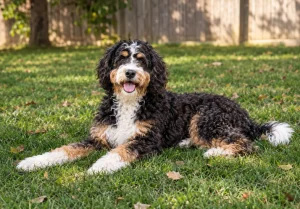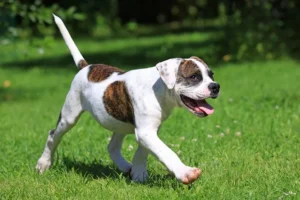
This is not a small or quiet dog that can spend most of the day doing nothing. It has a strong body and plenty of energy. It also has a history built around farm work and protecting property. That background still shows in the way these dogs move and behave today.
A good home can bring out the softer side of this powerful dog. It can become loyal to its family and very playful at home. It may also bark when someone comes to the door or when something strange happens outside.
There is a lot to like here. But there is also some work involved. Training needs to start early. Exercise needs to be part of the normal routine. Socialization matters too. A dog this strong needs an owner who can guide it calmly and consistently.
This guide looks at the breed from its body and history to its personality and daily care. The goal is simple. By the end you should have a clear idea of what living with one can really be like.
The first thing you notice is the body.
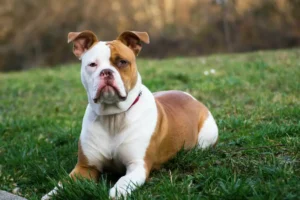
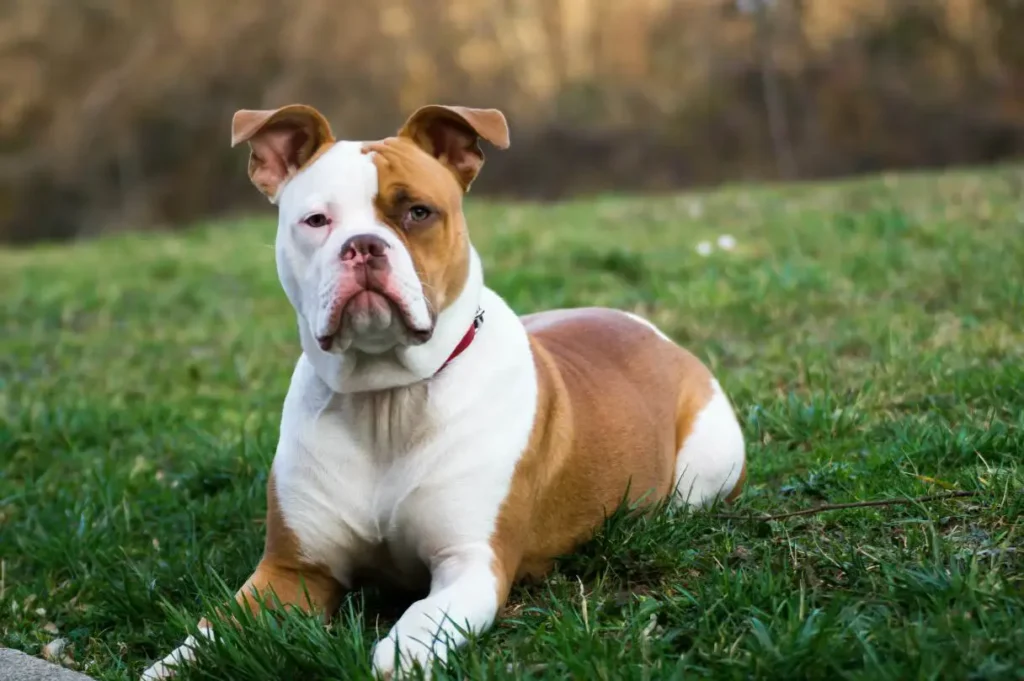
The American Bulldog has a large head and a muscular body. The chest is deep. The shoulders are strong. The legs are built for movement rather than just looking heavy. The breed standard describes the dog as balanced and athletic with strength endurance and agility.
Males are normally larger and heavier boned than females. The preferred height in the breed standard is 22 to 25 inches for males and 20 to 23 inches for females at the withers. Current breed information also commonly places males around 75 to 100 pounds and females around 60 to 80 pounds.
The body should be only slightly longer than it is tall. The back is broad and muscular. The loin is short. The chest is deep and broad without being so wide that it affects movement.
That shape tells you something about the breed’s past. This was a working dog. It needed to move quickly and use its body with purpose.
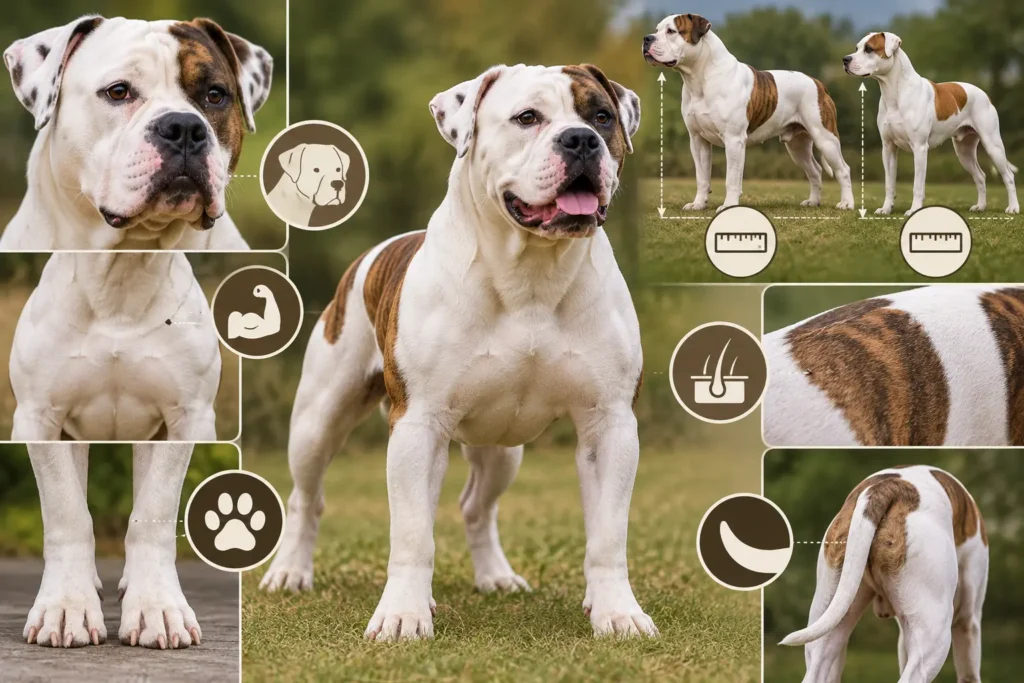
The head is one of its easiest features to recognize. It is broad and powerful with a wide muzzle and strong jaws. The eyes are normally brown. The ears may be dropped or semi-prick or rose shaped depending on the dog and the standard being followed.
The coat is short and close to the body. It can feel soft or stiff. White is common with brown black brindle red or tan markings. The breed is generally a light to moderate shedder so it does not need the kind of grooming required by a long-coated dog.
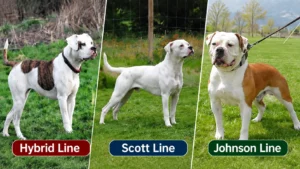
You may also hear people talk about Johnson type and Scott type dogs. Johnson dogs are usually heavier with larger heads and shorter muzzles. Scott dogs tend to look more athletic with longer muzzles. Many dogs today have traits from more than one line and are often described as hybrid types.
So if two American Bulldogs look a little different from each other do not be surprised. The breed has more than one traditional type.
| What You Want to Know | Simple Answer |
| Size | Large and muscular |
| Male height | 22–25 inches |
| Female height | 20–23 inches |
| Common weight | About 60–100 pounds |
| Life expectancy | Around 10–12 years |
| Coat | Short and easy to manage |
| Energy level | Active and athletic |
| Personality | Loyal playful and protective |
| Best home | Active home with structure and space |
These figures are general breed ranges. Individual dogs can be smaller or larger depending on genetics and breeding.
The easiest way to understand this breed is to look at what it was expected to do.
The older bulldog type in England was a working dog. These dogs helped drive and catch cattle and guarded property. Working-class immigrants later brought their dogs to the American South. Farmers and ranchers found plenty of jobs for them. They could work around livestock. They could guard the farm. They could also help deal with animals that threatened the property.
This was not a breed created simply for looks.
For a long time the dogs were selected mainly for temperament and work ability. A farmer needed a dog that could actually do its job. Strength mattered. Courage mattered. Athletic ability mattered too.
The breed almost disappeared after World War II. John D. Johnson and Alan Scott helped bring the working type back. Their breeding programs became closely linked with the two best known lines of the modern breed.
The Scott type became known for a more athletic build. The Johnson type became known for a heavier body and larger head. Modern dogs can carry traits from both.
The United Kennel Club recognized the American Bulldog on January 1 1999. The breed later entered the Foundation Stock Service in November 2019.
That history explains why the dog still has such a strong working character. Even a family dog sleeping on the living room floor carries traits that were useful on farms many years ago.
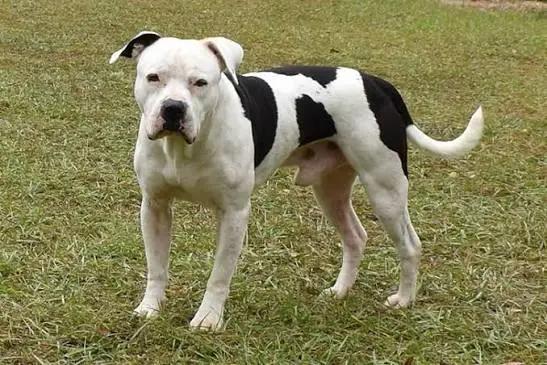
A serious face can fool you.
At home an American Bulldog can be playful and downright silly. These dogs may enjoy fetch tug of war hide and seek and outdoor play. Some are enthusiastic jumpers too. A happy dog can act more like a goofy comedian than a serious guard dog.
That family bond is one of the breed’s strongest traits. Current veterinary sources describe the breed as loyal intelligent and affectionate with proper training and socialization.
Still there is another side.
This breed has a natural protective instinct. It may bark when someone comes to the door. It may watch a stranger carefully before deciding that person is safe. That behavior makes sense when you remember the breed’s background as a farm guardian.
A simple real-life example is a delivery driver walking toward the front door. Your dog may suddenly become very interested. The barking is not something to ignore. It is better to teach the dog what to do when someone arrives.
This answer depends on the individual dog.
Some can live well with known dogs. Others may be more selective. The breed standard accepts some aloofness with strangers and some assertiveness toward other dogs. Extreme aggression or extreme shyness is not the goal.
Early socialization can help. A puppy should gradually experience different people and safe situations. It should also learn how to behave around other dogs.
Do not rush introductions.
A good basic approach is:
Children also need supervision around a large powerful dog. A friendly dog can still knock over a small child during excited play.
Training a small puppy is one thing.
Training a full-sized dog that has already learned to jump on people is another story.
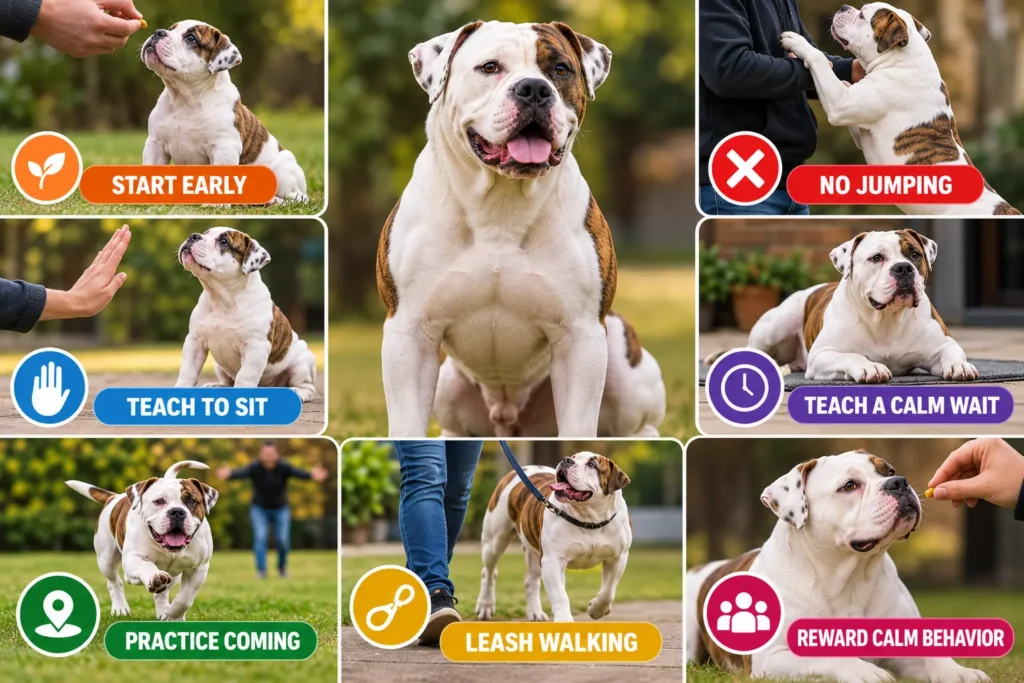
That is why early training and socialization should begin as soon as the puppy is ready for new experiences. The breed is intelligent and can learn quickly. It also has enough confidence and strength that poor habits can become difficult to manage later.
Start with simple skills. Teach the dog to sit. Teach a calm wait. Practice coming when called. Work on leash walking. Reward calm behavior around visitors.
You do not need to make every training session long. Five or ten focused minutes can be useful when repeated regularly.
The most important part is consistency. If jumping is not allowed today then it should not be allowed tomorrow just because the dog looks cute.
A firm owner does not need to be a harsh owner.
Patient and reward-based training gives the dog a clear idea of what you want. Praise good behavior. Use treats when suitable. Give the dog something useful to do instead of only correcting unwanted behavior.
Socialization should cover people dogs , sounds, places and normal household situations. This can help a young dog become more confident instead of reacting to everything it does not recognize. An experienced owner often has an easier time with this breed because they understand the value of routine. Rules should be clear. Boundaries should stay the same.
The dog should know what happens when the doorbell rings. It should know how to walk beside you. It should know when playtime is over.
Those little lessons add up.
An American Bulldog sitting around all day with nothing to do can become a problem.
This is an athletic dog. Healthy adults commonly need around one to two hours of exercise each day although the right amount depends on age health and the individual dog.
A walk is a good start. It does not have to be the whole routine.
You can mix normal walks with games and training. Fetch can work well. Tug can give the dog a controlled way to use its strength. Hiking can provide both exercise and new smells. Puzzle toys can give the brain something to work on.
The goal is not to exhaust the dog every single day. The goal is to give its body and mind useful work.
Puppies need more care. Their growing bones and joints are not ready for the same exercise as a mature dog. Repeated hard running and high-impact activity should be limited while the puppy grows. VCA also recommends controlled growth and attention to joint health in this large breed.
A secure garden helps but it is not a substitute for time with the owner.
An American Bulldog left alone outside may simply find its own project. Digging is a popular choice. Chewing is another. Barking at the fence can become a full-time career.
A healthy American Bulldog can live around 10 to 12 years. Good breeding and regular veterinary care can make a real difference but no breed is free from health risks.
The main concerns include joint problems and certain skin conditions. Some dogs can also have airway or heat-related problems.
Hip dysplasia and elbow dysplasia are important concerns in larger dogs. The joints do not develop normally. Over time this can lead to pain inflammation and arthritis.
You may notice a dog that does not want to run or jump as much as before. Stiffness after resting can also be a warning sign.
Responsible breeding includes health screening for inherited problems. Keeping a growing puppy at a healthy weight also matters.
Ichthyosis can occur in the breed. It can cause flaky skin and discomfort. Allergies can also lead to itching redness , hair loss and repeated skin or ear problems.
Do not assume every itchy dog simply needs another bath. Skin problems have different causes. A veterinarian can help find the reason.
Some American Bulldogs have shorter facial structures. That can make breathing and cooling harder in hot conditions. Heat safety matters even more during exercise.
On hot days choose cooler hours. Keep fresh water available. Provide shade. Stop exercise if the dog shows signs of overheating.
Good care is not only about dealing with disease after it appears.
A normal routine can include:
Dental disease deserves attention too. Tartar and gum problems can cause pain and infection. Regular tooth brushing can help keep the mouth healthier.
Parasites such as fleas ticks mites and intestinal worms can also cause problems. Preventive care should match the dog’s age and local risks. Your veterinarian can recommend the right schedule.
Spaying or neutering is another decision to discuss with a veterinarian. The timing can depend on the dog’s sex age health and individual situation. It should not be treated as a one-size-fits-all choice.
Grooming is one area where this breed does not make life too difficult.
The short smooth coat needs regular brushing but does not require complicated styling. A weekly brushing session can remove loose hair and help keep the coat looking clean. Shedding is generally low to moderate.
Bathing can be done when the dog gets dirty or starts to smell. There is no need to keep giving unnecessary baths.
Pay attention to the skin while brushing. Look for redness bumps dry patches or signs of irritation.
The rest of the grooming routine is basic. Nails should be trimmed when they get too long. Ears should be checked and cleaned when needed. Teeth deserve regular attention too.
A simple weekly routine can include:
That does not take much time. The bigger benefit is that you get used to what your dog normally looks like. Small changes are easier to notice when you check regularly.
A muscular dog does not need to be overweight.
Food should match the dog’s life stage size, activity level and body condition. Puppies need different nutrition from adult dogs. Large-breed puppy food can support slower controlled growth which is useful for developing bones and joints.
Portion guides on food packaging are useful starting points. They are not perfect instructions for every dog. An active young dog may need a different amount than an older dog that spends most of the day sleeping.
Treats count too.
A few treats here and there can become a lot of extra calories over a week. People’s food can do the same thing.
Fresh water should always be available.
If your dog starts gaining too much weight then adjust the feeding plan with help from your veterinarian. Keeping a large dog lean is especially useful because extra weight puts more stress on the hips, elbows and other joints.
Living with this breed is not just about food walks and grooming.
It is also about having the dog involved in normal family life.
These dogs can be affectionate and family-focused. They may want to sit near you while you watch TV. They may follow you into the kitchen for no good reason. Then they may suddenly decide it is time to play.
That closeness is part of what makes them enjoyable for the right owner.
At the same time you need to manage the dog’s size and protective behavior. Visitors should be introduced calmly. Children should not be allowed to climb on the dog. Other pets need careful introductions.
A secure garden can make life easier. A small apartment with no real exercise plan can make things harder. Current veterinary guidance generally points toward active homes where owners can provide enough physical and mental activity. The breed can fit into family life very well when its needs are taken seriously.
This question should come before the puppy arrives.
If you want a dog that needs very little exercise and can entertain itself all day then this probably is not the type of dog to choose.
If you enjoy walking training outdoor activities and spending time with your dog then the picture is different.
The breed tends to suit owners who can offer:
You also need to be comfortable owning a strong large dog. That matters around children visitors , other dogs and smaller animals.
A responsible breeder should be willing to talk about health testing temperament and the parents. Ask for health records.
The American Bulldog makes a lot more sense once you look at the whole picture.
It is strong because its history demanded strength. It is athletic because farm work demanded movement. It can be protective because guarding was part of its job. Yet inside the home it can be playful, affectionate and surprisingly goofy.
That combination is what many owners love.
But this is still a serious commitment. Training, socialization exercise healthy food weight control and regular veterinary care should all become normal parts of life.
Give the dog structure and something useful to do. Give it time with the family. Keep an eye on its health. The result can be a loyal companion with a lot of personality and plenty of heart.