

When my sister got her Mini Bernedoodle puppy home she weighed him every single week on the kitchen scale like a nervous new parent. She kept asking me if this is normal, is he too small or is he gaining too fast. Turns out most new Bernedoodle owners do the exact same thing and honestly it makes sense.
Weight tracking matters a lot with this breed since Bernedoodles come in such different sizes depending on the mix. A tiny toy pup and a standard sized one grow at totally different rates and hit totally different numbers on the scale. This guide breaks down what to expect at every stage from tiny puppy to full grown adult dog.
| Trait | What to Expect |
| Toy adult weight | 10 to 24 pounds |
| Mini adult weight | 25 to 49 pounds |
| Standard adult weight | 50 to 90 pounds |
| Growth mostly done by | 12 to 18 months |
| Fastest growth period | Birth to 6 months |
| Gender difference | Males often run slightly heavier |
| Key growth factor | Poodle parent size |
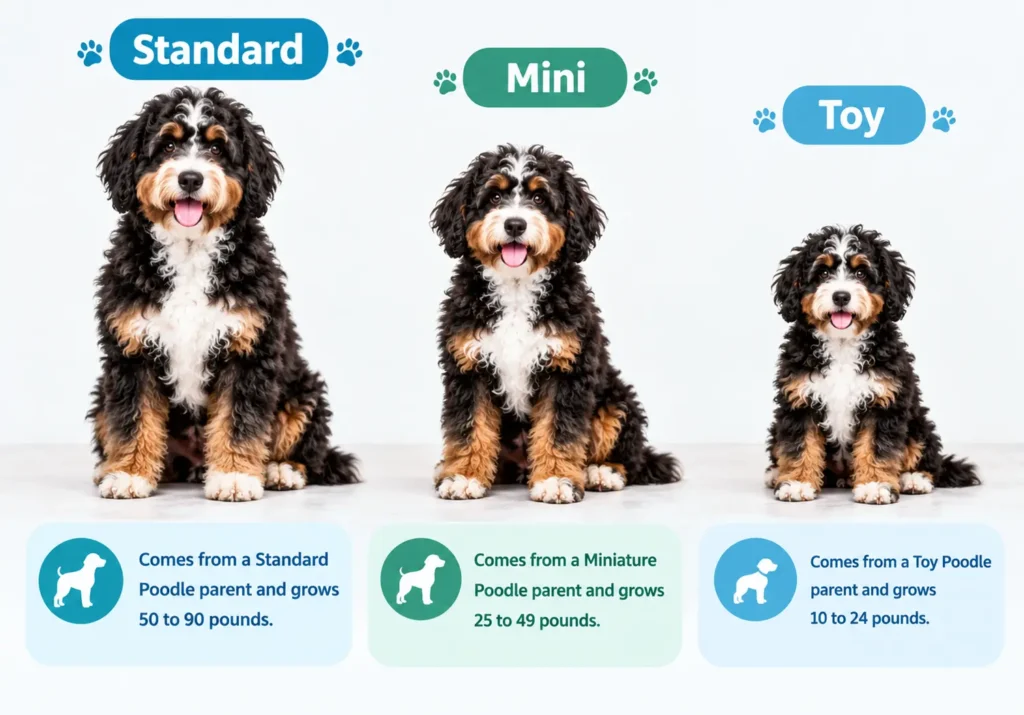
Bernedoodles come in three general size categories built around which size Poodle was used in the mix. A Standard Bernedoodle comes from a Standard Poodle and Bernese Mountain Dog pairing. These dogs grow into large sturdy adults often landing between fifty and ninety pounds once fully grown.
Mini Bernedoodles use a Miniature Poodle in the mix instead and land in a middle ground size wise. Adults typically weigh between twenty five and forty nine pounds. Toy or Tiny Bernedoodles use a Toy Poodle parent and stay much smaller usually topping out between ten and twenty four pounds as adults.
Based on my experience talking with several breeders the size category chosen really shapes everything from feeding portions to exercise needs down the road. A Standard sized pup eats way more and grows at a totally different pace compared to a tiny Toy version of the same breed.
Picking the right size for your lifestyle matters just as much as picking the right personality. Apartment dwellers often lean toward Mini or Toy sizes while families with more space sometimes prefer the sturdier Standard build for outdoor activities and hiking trips together.
Mistakes that tend to pop up when tracking a Bernedoodle puppy’s weight Comparing your puppy to a totally different size category by mistake Panicking over small weekly weight swings that are actually normal
Skipping regular vet weigh ins during the first year of growth Overfeeding because a puppy seems small compared to online charts Not accounting for the specific Poodle parent size in growth expectations.

At eight weeks old Bernedoodle puppies are tiny regardless of which size category they belong to. Toy pups often weigh around two to four pounds at this age while Standard pups can already be closer to eight or ten pounds depending on their specific litter and parents.
By three months growth really starts picking up speed across all size varieties. A Mini Bernedoodle puppy might weigh somewhere between eight and fifteen pounds at this point. Standard pups often jump up to twenty or twenty five pounds during this same window of rapid development.
Six months marks a big turning point since most Bernedoodles have already reached roughly half to two thirds of their adult weight by this stage. After testing this myself with a friend’s Mini Bernedoodle she sat right around twenty pounds at six months and finished around thirty two pounds as a full grown adult.
By twelve months most Toy and Mini Bernedoodles have reached or gotten very close to their full adult size. Standard Bernedoodles often keep filling out a bit longer, sometimes not finishing their full growth until eighteen months due to their larger bone structure and frame.
Genetics play the single biggest role in determining how big your Bernedoodle puppy eventually gets. The Poodle parent size matters enormously here since that side of the family tree largely determines which size category your puppy falls into as they mature.
Bernese Mountain Dog genetics also add their own influence on bone structure and overall build. Even within the same size category some Bernedoodles end up stockier or leaner depending on which traits show up stronger from each parent breed involved in the cross.
Nutrition during puppyhood directly affects healthy growth patterns and final adult size. Based on my experience feeding a proper large breed or small breed puppy formula depending on the expected adult size makes a real difference in how evenly a puppy grows without excess strain on developing joints.
Overfeeding during rapid growth phases can actually cause problems rather than helping a puppy grow bigger and stronger. Controlled steady weight gain tends to produce healthier joints and bones compared to rushing growth through excessive calories or treats.

Male Bernedoodles typically run a bit heavier than females within the same size category. This difference usually becomes noticeable starting around four to six months and often continues into full adulthood though the gap generally stays fairly small overall between the two.
One popular method involves taking your puppy’s weight at sixteen weeks old and doubling it to estimate adult weight. This rough formula works reasonably well for many Bernedoodles though it is definitely not perfect science by any stretch of the imagination.
Looking at both parent dogs weights often gives a pretty solid clue about where your puppy will likely land as an adult. Breeders typically share parent weight information which can help set realistic expectations well before your puppy even comes home with you.
Plotting your puppy’s weight on a growth chart week by week helps spot patterns and catch anything unusual early on. Most vet clinics can help track this during regular checkups and will flag any growth curve that looks off compared to typical patterns for the breed.
A Bernedoodle puppy that feels too bony along the ribs and spine without much padding may be underweight for their age and size category. Low energy levels along with a dull coat can also point toward nutrition or health issues worth mentioning to your vet.
On the flip side a puppy that cannot easily show a waistline when viewed from above might be carrying extra weight. Difficulty feeling the ribs under a light touch is another common sign worth paying attention to during regular home checks.
Any sudden dramatic weight change in either direction deserves a vet conversation sooner rather than later. Regular checkups throughout the first year help catch growth concerns early before they turn into bigger long term health problems down the road.
Watching a Bernedoodle puppy grow from a tiny fluffball into a full grown adult dog is honestly one of the most fun parts of the whole ownership experience. Every pup grows a little differently and that is completely normal no matter what any chart says exactly.
Keep an eye on the trends rather than obsessing over every single number on the scale each week. Give your pup good food regular vet visits and plenty of love and they will grow into exactly the dog they are meant to be right on their own timeline.
How much should a Mini Bernedoodle weigh at six months?
A Mini Bernedoodle typically weighs between eighteen and twenty five pounds around six months old. This can vary based on genetics and the specific parent dogs involved in the litter. Most Mini Bernedoodles reach close to their full adult weight somewhere between twelve and fifteen months of age.
When do Bernedoodles stop growing?
Toy and Mini Bernedoodles usually finish growing between twelve and fifteen months old. Standard Bernedoodles often take a bit longer sometimes continuing to fill out until eighteen months due to their larger frame. Bone density and muscle mass can keep developing slightly even after height and length level off.
How can I tell what size my Bernedoodle puppy will become?
Looking at the specific Poodle parent used in the breeding along with both parent dogs weights gives the best early clue. A doubling method using sixteen week weight also offers a rough estimate. Breeders can often provide the most accurate prediction based on previous similar litters they have raised.
Is it normal for Bernedoodle puppies to have growth spurts?
Yes, growth spurts are completely normal and often happen around three to five months of age. Puppies may look temporarily gangly or uneven during these phases as different body parts grow at slightly different rates before evening back out again naturally.
What should I do if my Bernedoodle puppy seems too thin or too heavy?
Consult your vet if your puppy seems noticeably underweight or overweight for their age and size category. A vet can assess body condition properly and recommend feeding adjustments if needed. Catching weight concerns early generally leads to easier corrections and better long term joint health.