

A Fluffy French Bulldog can be hard to price at first glance. Two puppies may look almost the same but have very different prices. One may cost several thousand dollars more because of its coat color. Another may cost more because of its parents. Then there is the breeder’s care and the puppy’s health testing. So if you’re thinking about getting one of these little guys you need to look beyond the number on the ad.
A Fluffy French Bulldog is a long-haired version of the French Bulldog. The fluffy look comes from a recessive change in the FGF5 gene. The Veterinary Genetics Laboratory explains that long hair in dogs is linked to recessive FGF5 variants and specifically notes that long hair is also called fluffy in French Bulldogs.
This does not mean a fluffy Frenchie is a mixed breed. It is still a French Bulldog with a different coat type. The fluffy trait can appear alongside different colors and patterns which is one reason buyers see such a wide range of prices.
The regular French Bulldog already has a strong market because people love its small body and funny personality. The breed usually weighs no more than 28 pounds under the American Kennel Club breed standard. When you add a rare coat trait to that popular breed the price can climb pretty fast.
There is no single price for every Fluffy French Bulldog. Current online asking prices can range from around $5,000 to well above $15,000 depending on the puppy. Some rare puppies may be listed even higher. One recent 2026 price guide puts standard-colored fluffy puppies around $5,000 to $8,000 and some exotic colors around $8,000 to $15,000. These are market examples rather than a fixed rule.
You may also see prices around $8,000 to $20,000 for especially rare puppies. That does not mean every puppy in that range is worth the money. Price can reflect demand more than health. This is where buyers need to slow down and look at the whole picture.
A puppy with a healthy background and proper testing can cost more because the breeder has already spent money on care. Good food starts early. So does vaccination and veterinary care. Puppies also need a clean place to sleep and enough time with people so they learn normal home behavior.
The parents matter too. If both parents have good health records and the breeder can show their test results then the puppy may have a stronger value. The American Kennel Club lists several health tests and genetic tests that can be useful for French Bulldogs. These include hip and patella checks as well as heart and eye exams.
You should also remember that the purchase price is not the full cost. A fluffy Frenchie may live for many years. The American Kennel Club gives French Bulldogs an average life span of about 11 to 13 years. That means food vet visits grooming supplies training and emergency care can add a lot over time.
So when someone asks me what a Fluffy French Bulldog costs I would not give them one magic number. I’d say start with the puppy price then add the real cost of keeping the dog healthy.
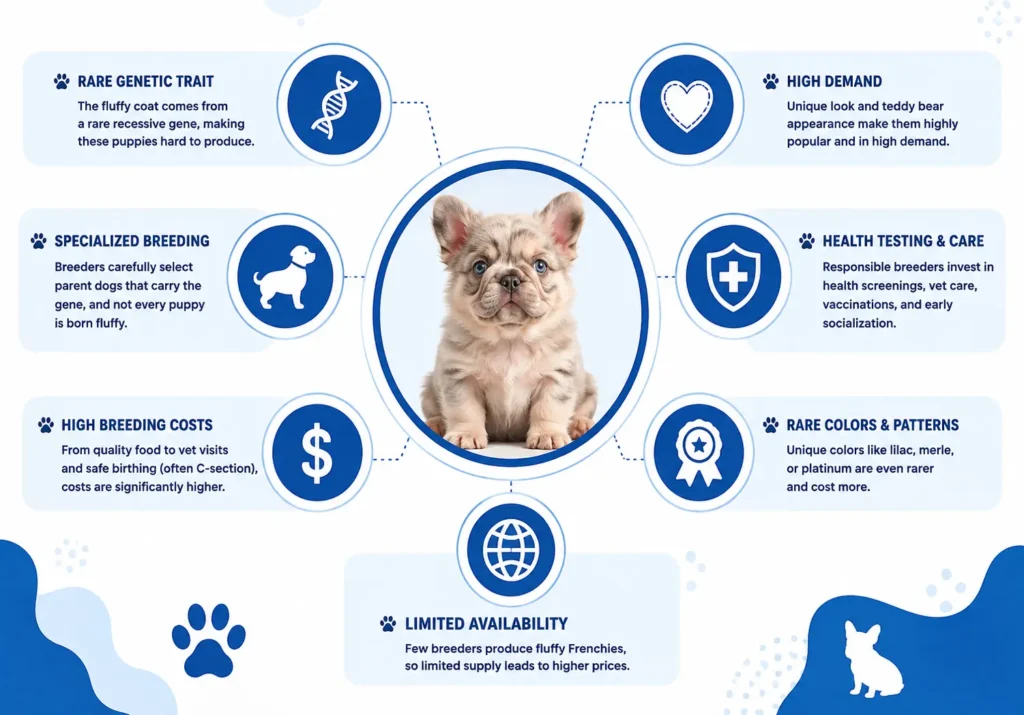
The biggest reason is rarity. The fluffy coat does not show up in every French Bulldog. It is linked to a recessive FGF5 trait. A dog can carry a long-hair variant without having a long coat itself. When the right genetic copies come together a fluffy puppy can appear.
That makes breeding more complicated than simply putting two dogs together and hoping for fluffy puppies. A breeder who takes genetics seriously needs to understand what each parent carries. DNA testing can help confirm coat traits and other inherited risks.
French Bulldog breeding can also require extra care. The breed has a compact body and a large head. Pregnancy and birth can need close veterinary attention. That adds to the breeder’s costs before a puppy ever reaches a new home.
There is another simple factor here. People want them. Fluffy Frenchies have a soft coat and a teddy bear look that stands out from the normal short coat. When lots of buyers want a dog that is not easy to find the asking price tends to rise.
Color can push the price even higher. A fluffy puppy with a common color may have a very different price from a fluffy puppy with a rare color combination. The coat length and coat color are separate traits. The FGF5 gene controls coat length while other genes help control color.
This is why you might see names such as fluffy blue or fluffy lilac. The word fluffy describes the coat length. The other word describes color. They are not the same genetic trait.
Still don’t get hung up on the rare name. A fancy color does not automatically mean a healthier dog. That part is super important when you are spending thousands of dollars.
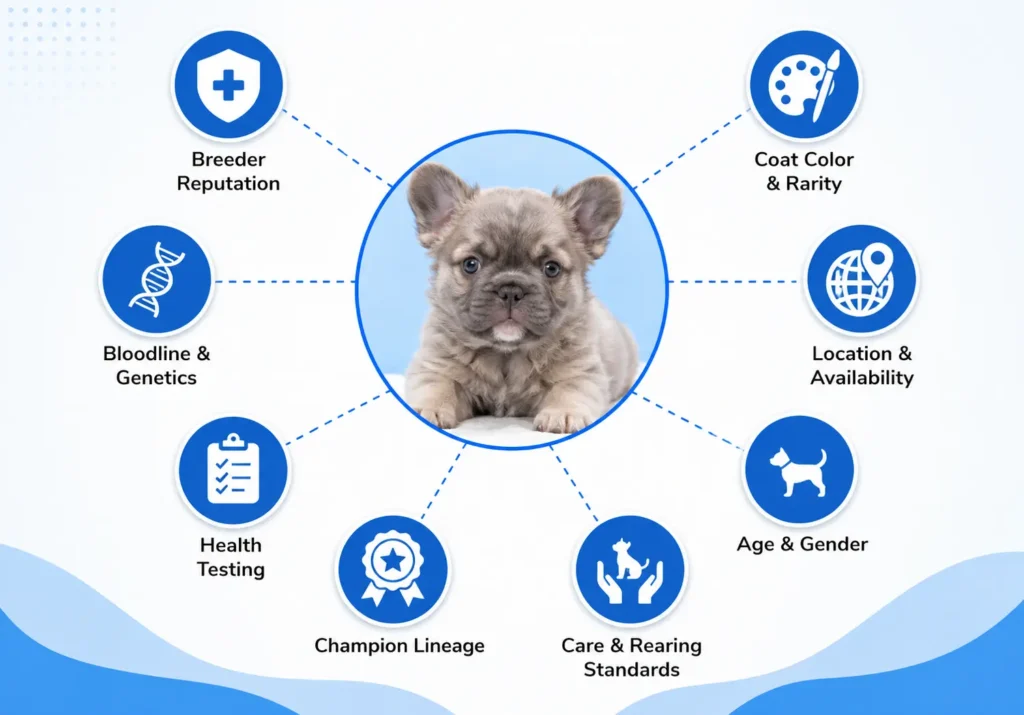
The breeder is one of the biggest factors. A breeder who spends time on health testing veterinary checks puppy care and safe breeding may charge more. That extra cost can make sense when you can actually see where the money went.
Health records should be part of the conversation. The Orthopedic Foundation for Animals explains that breed health screening helps breeders make better breeding choices and gives buyers useful information about tested parents. It also points out that a CHIC number means the required tests were completed and made public. It does not mean every result was normal.
That small detail can save a buyer from making a bad assumption. Seeing a health certificate or database record is useful but you still need to understand what was tested and what the results mean.
Genetics also affects price. A puppy from parents with well-documented health and parentage may have more value than one where the seller cannot explain the background. A strong bloodline can add to the asking price too.
Coat color is another big factor. French Bulldog color is controlled by several genes. Some genes affect black pigment. Others affect brown pigment or dilute the color. Genetic testing can identify many of these traits.
Age can change the price as well. Young puppies often attract the highest demand because buyers want to raise them from an early age. An older puppy or adult may cost less in some cases. But age alone does not tell you whether a dog is a good buy.
Location matters too. A puppy in a large city with high demand may cost more than a similar puppy in another area. Shipping can then add another bill.
The number on the price tag is important but it is not the only thing. Health testing breeding quality temperament and care should all sit on your checklist.
When you buy a Fluffy French Bulldog from a careful breeder you may be paying for much more than the puppy itself. You are also paying for the parents’ care and testing. You are paying for food and veterinary visits during the first weeks. You are paying for the breeder’s time and the work involved in raising a puppy properly.
A cheap puppy can sometimes look like a great deal. Then a missing health record or poor early care can throw you off the scent. Ask questions before sending money.
These are useful things to check before you pay:
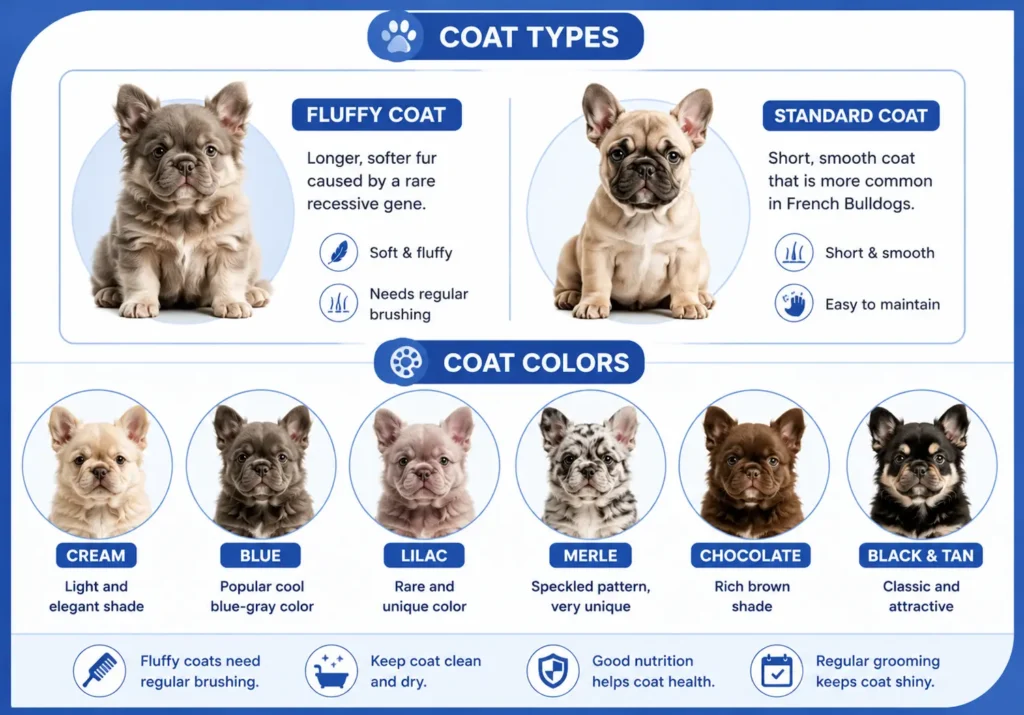
Color is one of the most confusing parts of the Fluffy French Bulldog market. Sellers may use words like blue lilac chocolate platinum merle or Isabella. Some of these names describe colors while others describe patterns or combinations.
The important thing to understand is that fluffy is not a color. It describes coat length. The Veterinary Genetics Laboratory identifies FGF5 as the gene linked with long hair and lists a French Bulldog specific long-hair variant among the known FGF5 variants.
A fluffy fawn Frenchie and a fluffy lilac Frenchie can both have the long coat. Their color genes are different. That is why a fluffy dog can come in more than one color family.
Some colors are more common while others are marketed as rare. Rare colors often bring higher asking prices because buyers like unusual looks. Current market guides show that standard colors can start around the lower end of the fluffy price range while blue chocolate and lilac examples can move higher.
But there is a catch. Color should never be the first thing you judge. Some color combinations have health concerns that buyers should understand.
Merle is a good example. The merle pattern comes from a separate genetic change and can be linked with serious problems when two merle dogs produce double-merle puppies. Genetic testing can help breeders avoid risky pairings.
Dilute colors also deserve some attention. Genetic color panels can identify dilute traits and other color genes. Some dilute dogs may develop coat or skin problems so buyers should ask questions instead of assuming a rare color is always better.
The coat itself also needs care. A longer coat can collect more dirt than a short coat. Regular brushing can help keep the fur neat. You do not need to turn grooming into a huge project though. A few minutes at a time can make a big difference.
It is easy to get excited when you see a fluffy puppy with a rare color. The photos look great. The price may look like a luxury product. But don’t let that fool you into thinking the puppy is automatically better.
Health testing is far more useful than a fancy color name. A responsible breeder should be able to explain the parents’ health background and the tests used before breeding. Breed health programs exist because inherited problems matter when choosing breeding dogs.
If a seller talks for twenty minutes about color but cannot answer basic health questions that is a red flag. A good breeder should be comfortable talking about both.
Location can make a noticeable difference in the price of a Fluffy French Bulldog. The United States has a large French Bulldog market and you can find a wide range of prices depending on the breeder and puppy.
Some current market guides place fluffy puppies in the United States and Canada in the several-thousand-dollar range with rare colors reaching higher prices. These figures change often so treat them as a rough guide rather than a promise.
Canada can have similar prices because the demand for French Bulldogs is strong. If a puppy comes from another country the final cost can rise because of travel and paperwork.
The same thing can happen in the United Kingdom and Australia. Local availability plays a role. If only a small number of breeders have fluffy puppies available then buyers may have fewer choices.
Importing a puppy is where things can get expensive quickly. The advertised puppy price may not include transport. You may also need veterinary documents and other import paperwork depending on where the dog comes from and where it is going.
Shipping also needs careful planning. A puppy is not a box you can just send across the country. Travel can be stressful and the dog needs safe handling.
If you are comparing prices in different locations make sure you compare the full cost. A puppy that looks cheaper at first may not stay cheaper after travel and other expenses are added.
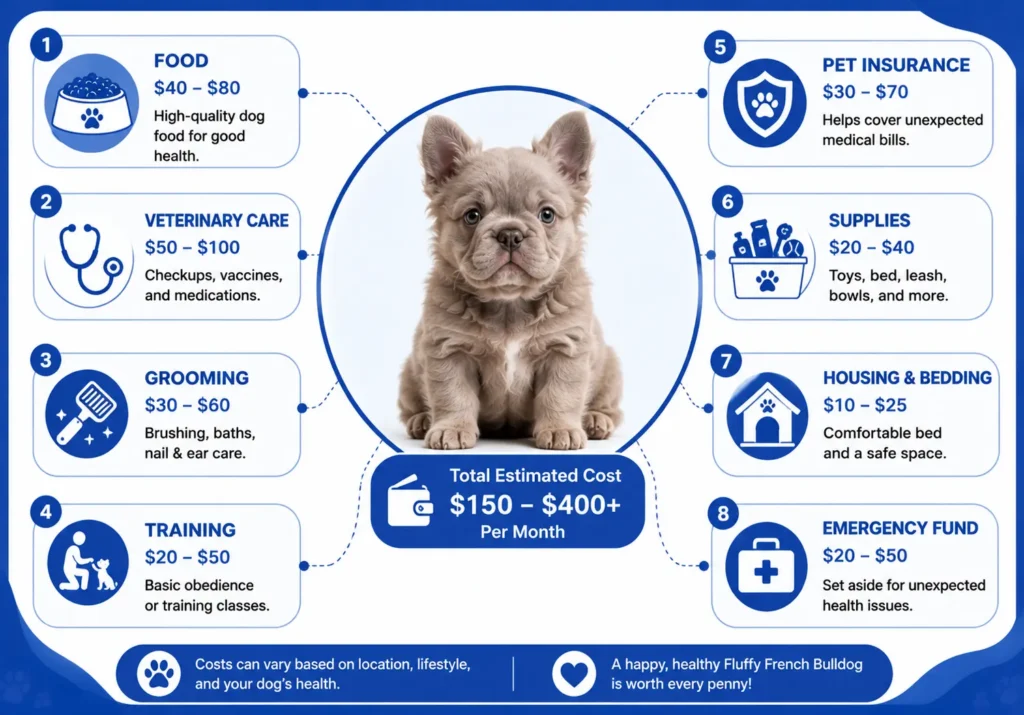
The purchase price gets most of the attention but daily care is where your long-term budget really matters. A Fluffy French Bulldog needs food veterinary care grooming and normal pet supplies.
Food will be a regular cost for the whole life of the dog. A French Bulldog is a small breed but that does not mean you should feed poor-quality food. Your vet can help you choose food based on the dog’s age weight activity and health.
Keep an eye on weight too. The breed standard sets the French Bulldog weight limit at 28 pounds. A healthy weight helps reduce extra stress on a small dog’s body.
Vet care can become one of the bigger costs. French Bulldogs have short faces and can have breathing problems. They may also have skin eye joint and other health issues. The American Kennel Club notes that their short faces make breathing less efficient and that they handle heat and hard exercise less well than long-nosed breeds.
Hot weather deserves extra attention. A Fluffy French Bulldog can struggle in high heat because of its short face. Summer walks should stay sensible and you should watch for heavy breathing or signs of distress.
Grooming is another part of the budget. The longer coat may need more brushing than the normal short coat. You should also keep the ears clean and pay attention to skin folds. Moisture trapped in folds can cause trouble.
Training costs depend on what you do yourself. Some owners train their dogs at home. Others use a trainer. Either way the early months are a good time to teach simple habits such as coming when called staying calm around people and walking nicely.
| Cost Area | What You Need to Think About |
| Puppy price | The biggest first payment |
| Food | Regular monthly cost based on size and diet |
| Vet care | Checkups vaccines and unexpected treatment |
| Grooming | Brushing nails ears and coat care |
| Training | Home training or paid help |
| Insurance | Optional protection against large vet bills |
| Emergency fund | Money kept aside for sudden problems |
| Travel | Extra cost if you buy from another area |
The real cost can change a lot from one dog to another. A healthy dog may have normal yearly expenses while another dog may need extra medical care. That is why I would keep an emergency fund instead of planning every dollar around the basic monthly bill.
Finding a fair price starts with finding a healthy puppy. Do not search only for the cheapest fluffy Frenchie. Search for a breeder who can show what they did to produce and raise the puppy.
Ask about the parents first. You want to know who the mother and father are and what health testing they have had. Breed health screening can include hip evaluation patella evaluation heart exams and eye exams.
Genetic testing is useful too. French Bulldogs can be tested for a number of inherited conditions and traits. Testing can also help confirm the long-hair trait and several coat color traits.
Do not be afraid to ask for records. A serious breeder should not get upset because you want to know what you are buying.
You should also look at the puppy itself. A puppy should be alert and interested in what is going on. It should move normally and interact with people. A quiet puppy is not automatically sick and an active puppy is not automatically healthy but basic behavior gives you useful information.
The living area matters too. A clean space with good bedding food and safe room for movement tells you something about how the puppies are being raised.
Watch out for sellers who pressure you to pay quickly. If someone says you must send money right now because another buyer is waiting that is a good reason to slow down.
These are some practical warning signs to keep in mind:
A fair price should make sense when you look at the whole package. If the puppy has proper veterinary care good early socialization tested parents and clear records then a higher price can be easier to understand.
On the other hand a huge price does not excuse poor care. A seller can put a giant price on a puppy and still give you very little useful information.
This is the part I would take most seriously. Fluffy French Bulldogs can be adorable but their short face still comes with the normal French Bulldog health concerns. The fluffy coat does not remove those issues.
Breathing is one area to watch. Brachycephalic dogs can have airway problems and signs may include noisy breathing trouble during exercise and worse breathing in hot weather.
That is why you should ask about the parents’ breathing and overall health instead of only asking what color the puppy is.
The same idea applies to eyes joints and heart health. Health screening does not give a perfect guarantee but it gives you more information. The more useful information you have the better your buying decision can be.
A good breeder should also care about temperament. A puppy will spend years with you so personality matters. You want a dog that can fit your home and your daily routine.
Fluffy French Bulldog price can sit much higher than the price of a normal French Bulldog because the long coat is uncommon and demand is strong. The FGF5 gene plays a key role in the fluffy coat and other genes control the many colors and patterns buyers see.
You may find fluffy puppies around several thousand dollars while rare colors and strong breeding backgrounds can push prices much higher. The final number depends on the breeder location genetics color health testing and care.
If you are ready to buy one of these little guys do not rush because of a cute photo. Look at the parents. Check the health records. Ask about genetic testing. Think about food vet care grooming and possible emergency bills too.
A healthy puppy with good care is a much better deal than a flashy puppy with a huge price and no health information. That is the part worth remembering when you start comparing Fluffy French Bulldog prices.