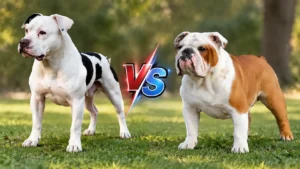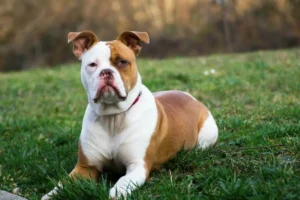
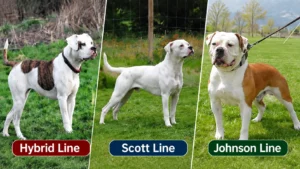
American Bulldogs can look quite different even when they carry the same breed name. Some have a thick body and a large square head. Others look taller and leaner with longer legs and a longer muzzle. Then there are dogs that sit somewhere in the middle.
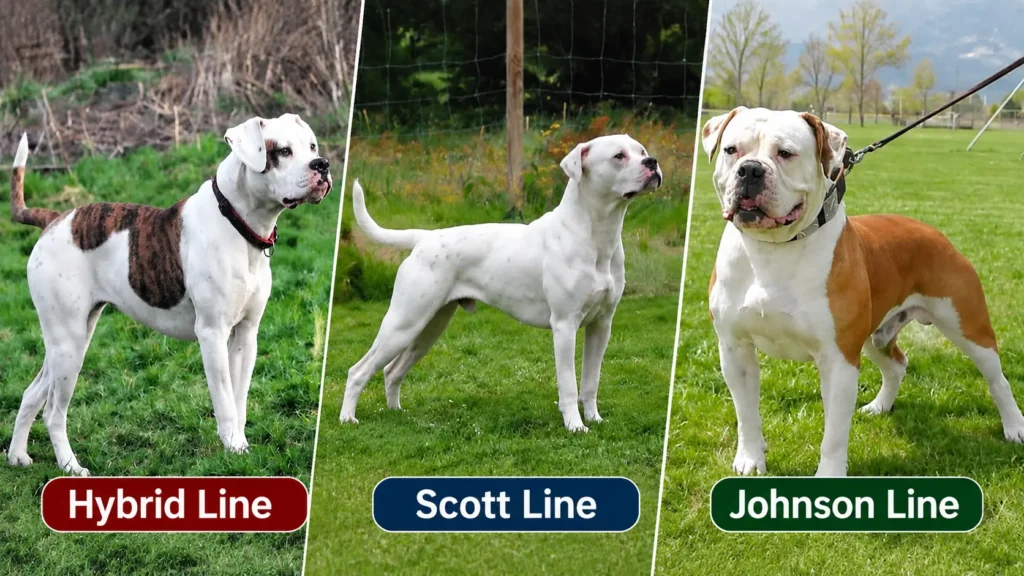
Those differences come from the working history and breeding lines behind the dogs. The Johnson line is commonly linked with the Classic or Bully style. The Scott line is usually connected with the Standard or Performance style. Many modern dogs also carry traits from more than one line and are often described as hybrids.
The history helps explain why these dogs do not all look alike. Early working Bulldogs in the American South were used for farm work property protection and catching livestock. They needed strength but they also needed enough athletic ability to do a real job. When their numbers dropped sharply around World War II John D. Johnson and Alan Scott became important figures in bringing the breed back.
I would not choose a type based only on a big head or athletic body. The better question is what kind of dog fits your daily life. A powerful Bulldog that loves to work can be a poor match for a quiet home. A calmer dog may be much easier for a family that wants a companion first.
| Type | General Look | Typical Drive | Main Traits | Good Fit |
| Johnson | Heavy and broad | Low to moderate | Power and protection | Calm active families |
| Scott | Lean and athletic | Moderate to high | Speed and working ability | Active owners |
| Hybrid | Mixed structure | Varies | Traits from different lines | Flexible experienced homes |
| Classic | Large head and heavy bone | Moderate | Strong companion and guard traits | Families wanting a heavier Bulldog |
| Standard | Longer legs and muzzle | Higher | Athletic and performance focused | Owners who enjoy training |
The Johnson American Bulldog is usually associated with the Classic type. This style has a heavier and more powerful appearance than the leaner Scott style.
John D. Johnson played a major role in preserving the breed after its numbers had fallen. He worked with surviving Bulldogs in the American South and helped maintain dogs that could still perform useful work. His line became strongly associated with the heavier Bulldog look.
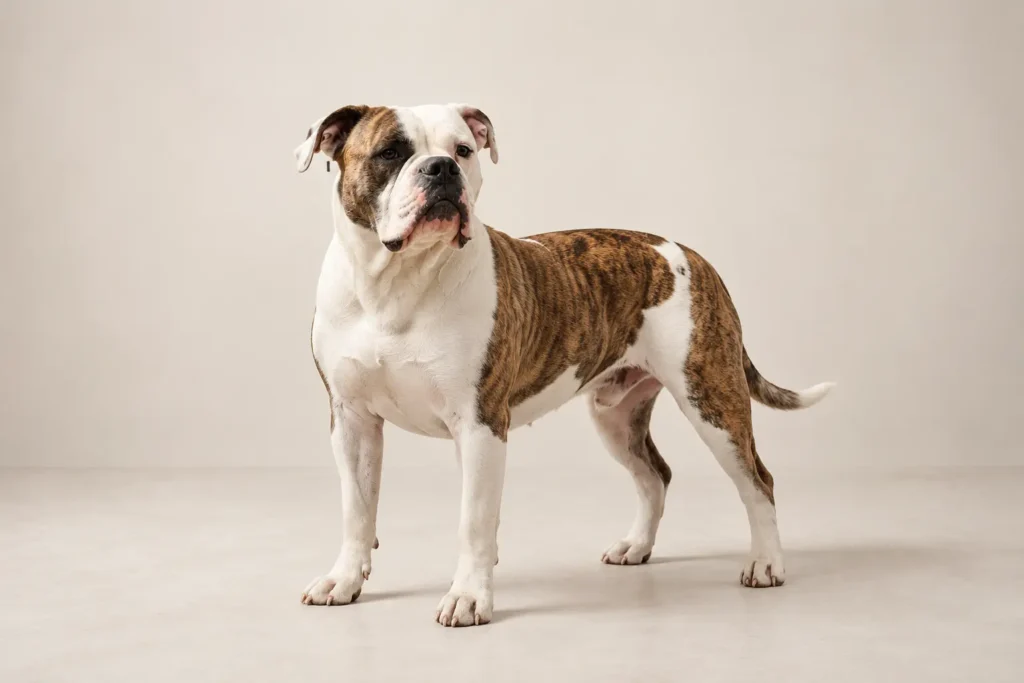
A Johnson type dog often has a broad muscular body. The chest can be wide and the neck thick. The head is usually large and boxy with a shorter muzzle. A noticeable undershot bite is also common in descriptions of the Classic type.
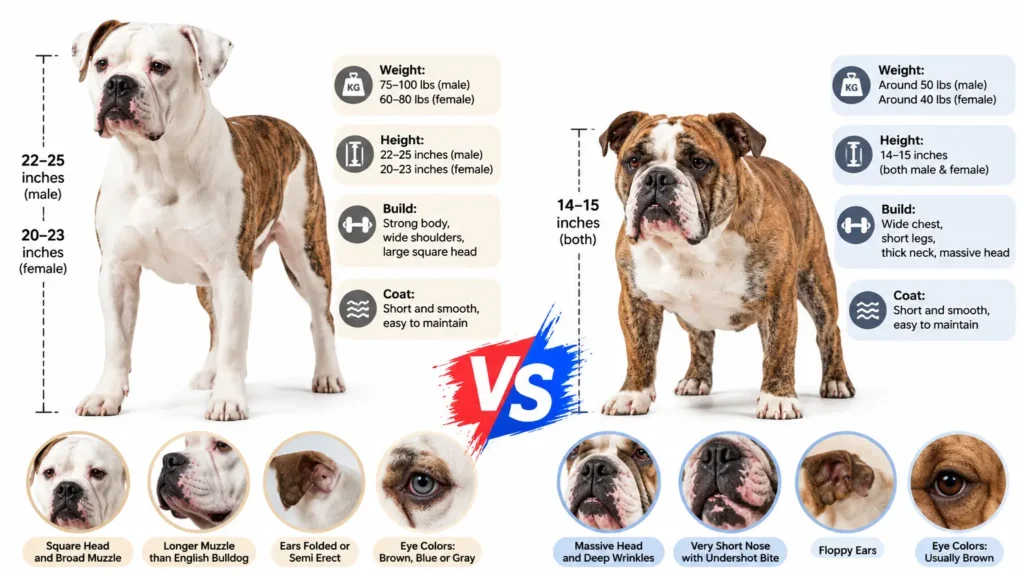
The body gives these dogs a stout appearance. They can look closer to the old Bulldog style than the longer legged Scott type. Some people even confuse a heavy Johnson dog with an English Bulldog at first glance. The difference becomes easier to see once the whole body is considered.
The coat is usually short and simple to care for. White is common with patches of red brown brindle or black. The face can have wrinkles but the amount varies from dog to dog.
The personality matters just as much as the appearance. American Bulldogs are known for loyalty, affection and confidence. With proper training and socialization they can become excellent family pets. They may also be watchful around strangers because of their history as working and protective dogs.
Johnson dogs are often described as more laid back than Scott dogs. That does not mean they should spend every day sleeping on the couch.
A large dog with a heavy build still needs regular movement. Too little activity combined with too much food can lead to obesity. Keeping a healthy weight is especially useful for a powerful breed because extra weight can put more stress on the joints. American Bulldogs can be prone to hip and elbow problems.
A simple routine can work well. Daily walks can be mixed with short obedience sessions and play. The goal is not to turn every Johnson dog into a competition athlete. It is to keep the dog fit and mentally engaged.
Early training also matters. A strong adult dog that never learned basic manners can be difficult to control. Positive clear rules and steady handling are usually better choices than harsh methods.
The Scott American Bulldog is commonly connected with the Standard or Performance type. This style has a different look from the heavier Classic dog.
The body is usually leaner and more athletic. Longer legs give the dog a more upright outline. The muzzle is generally longer and the head can look less massive. Scott type dogs are often described as having less bone and a less extreme undershot bite than Johnson dogs.
Alan Scott worked with Johnson dogs and developed his own direction for the breed. The Scott line became known for dogs with strong physical drive and working ability. Their structure made them useful for jobs that needed movement speed and stamina.
That history still shows in the way many Scott dogs behave. A young dog may want to run play , explore and learn something new instead of taking a long nap after a short walk.
This can be great for the right owner.
It can also become a headache when the dog has nothing to do.
Scott type American Bulldogs may have a strong prey drive. They can also show dog to dog aggression if they lack proper socialization and training. That does not mean every Scott dog will behave this way. Individual temperament still matters.
A Scott type dog can enjoy an active routine that gives both its body and mind a job.
Useful activities can include:
The key is variety. Repeating the same short walk every day may not be enough for a highly driven individual.
A bored dog can create its own entertainment. Barking, digging chewing and destructive behavior may show up when the dog lacks exercise or mental stimulation.
One real world situation is easy to picture. An owner chooses a Scott Bulldog because the athletic body looks impressive. The dog then spends most of the day inside with little activity. A few weeks later the owner is dealing with a dog that constantly wants attention and has started digging in the yard. The dog may not be difficult by nature. It may simply be getting the wrong kind of daily life.
Hybrid American Bulldogs are where the picture gets less simple. Many modern dogs carry traits from more than one line. That means their appearance and behavior can fall between the Classic and Standard styles.
A hybrid may have the muscular body of a heavier dog while keeping the longer legs and muzzle associated with a performance line. Another may have a moderate build and a temperament that sits between the two.
This variation is not necessarily a bad thing. Breeders may combine lines because they want certain working traits or a particular balance of structure and temperament.
Still there is no single hybrid personality.
The parents matter. So does the purpose behind the breeding.
A breeder aiming for a working dog may select very different parents from someone focused on a family companion. Looking at the puppy alone will not always tell you what the adult dog will become.
Before choosing a puppy it makes sense to ask about more than color and head shape.
Look at these areas:
This gives you a much better picture of what you may be bringing home.
Some hybrid dogs are broad and heavy. Others are sleeker and more athletic. Some have strong protective instincts while others are easier going. That is why the word hybrid should not be treated as a promise about personality.
The biggest difference between these lines is not just body shape. It is the kind of daily relationship they may need.
A Johnson type may be more comfortable with a slower household routine. It can still be energetic and playful but many owners like the calmer adult personality associated with the heavier style.
A Scott type may ask more from its owner. It can enjoy training physical activity and structured work. An active person may love that drive. Someone looking for a dog that mostly relaxes indoors may find it harder to manage.
Both types need early socialization. Both need training. Both are strong dogs.
American Bulldogs are generally affectionate with their families but can be watchful around unfamiliar people. Proper training helps them learn how to behave in normal situations such as visitors arriving at the door.
Children can also enjoy living with a well trained American Bulldog. But supervision still matters because these are powerful dogs. Even a friendly Bulldog can knock over a small child during excited play.
The best type depends on what you can realistically provide every day.
A Johnson type may suit someone who wants a strong loyal companion with a heavier Bulldog appearance. The dog still needs exercise and training but may be easier to settle after its daily activity.
A Scott type may suit an owner who enjoys being active. Hiking training, running and structured games can give this dog useful outlets. Its working background can make training enjoyable when the owner knows how to use that drive.
A hybrid can work well when the owner understands the parents and knows what traits went into the breeding.
Think about your routine before choosing:
Your answers matter more than choosing a dog because it looks tough.
American Bulldogs have strength and confidence. That combination can be wonderful when the dog has good manners.
Puppy training should focus on basic commands, calm greetings leash manners and safe interaction with people and animals. Positive reinforcement can make the process easier and helps build a good working relationship.
Socialization is just as important. A young dog should gradually experience different people places , sounds and situations.
This is especially useful for dogs that may become protective as adults. The goal is not to remove their natural alertness. It is to teach them when they need to pay attention and when they can simply relax.
Exercise should also match the individual dog. American Bulldogs are generally active dogs and need both physical and mental activity.
People sometimes talk about Johnson and Scott as if they are completely separate breeds. They are not. They are commonly used labels for different lines or styles within the American Bulldog population. Many dogs have mixed ancestry.
Another common mistake is assuming the biggest dog is automatically the best Johnson type. Size alone cannot tell you the complete lineage.
The same goes for athletic dogs. A lean body does not prove that a dog comes from a pure Scott line.
Pedigree and breeding history give much better information than appearance alone.
There is also a temptation to focus too much on the tough look. American Bulldogs were developed as working dogs but many today live as family companions. Their strength still needs responsible handling. Their affectionate side deserves attention too.
Johnson Scott and hybrid American Bulldogs show how much variation can exist within one breed. The Johnson style is generally heavier and broader. The Scott style is usually leaner and more performance focused. Hybrid dogs can combine traits from both.
The most useful way to choose is to look beyond the head shape and body size. Think about energy temperament training needs working drive and family life.
A good match can turn a strong working dog into a happy family companion. The wrong match can leave both the owner and the dog frustrated. Knowing the line behind the dog is a helpful starting point but understanding the individual dog matters even more.
If you want the same article made more casual and less polished while keeping the SEO structure and facts, I can also push the tone closer to the Highland cattle style you showed earlier.