Dogs scratch themselves sometimes. A quick scratch behind the ear or a little chewing on the paws can be normal. But constant scratching and biting is not normal. If your dog keeps rubbing against furniture or chewing its skin then something may be making it itchy.
There are many reasons why dogs scratch and bite themselves. Fleas and mites can make their skin itchy. Allergies to pollen or certain foods can also cause itching. Dry skin and infections may lead to redness and discomfort. Some dogs may also chew their skin when they feel bored or stressed.
The first step is to find out what is causing the itching. Do not just try to stop your dog from scratching. Too much chewing can hurt the skin and cause sores or infections. Check your dog’s coat and skin for any changes. Also notice which parts of the body your dog scratches most. A vet can help find the problem and give the right treatment.
This guide explains why dogs keep scratching and biting themselves. It also shares easy ways to keep your dog’s skin healthy and comfortable.
Can Fleas and Mites Make Dogs Scratch and Bite Themselves?
Fleas and mites are common reasons dogs scratch and chew their skin. These tiny bugs can make your dog feel very itchy. You may not always see them in the fur. Your dog may keep biting one spot because the skin feels uncomfortable. Even a few fleas can cause strong itching in some dogs because of an allergic reaction to their bites.
Signs of Fleas on Dogs
Fleas are tiny insects that live in a dog’s fur and feed on blood. They often hide around the neck and belly. You may also find them behind the ears or near the tail.
Look for these signs:
- Small black spots in the fur that look like pepper.
- Tiny red bumps on the skin.
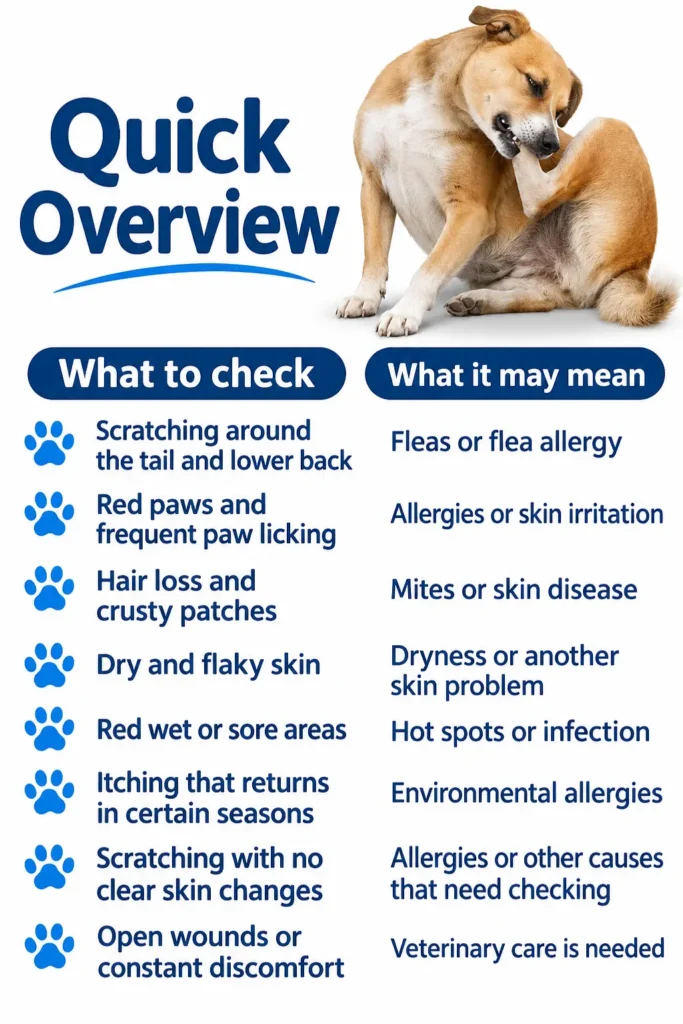
- Frequent scratching near the tail and lower back.
- Biting or chewing around the belly and legs.
- Small fleas moving through the fur.
These black spots may be flea dirt. Place a few spots on a wet white paper towel. If they leave a reddish-brown mark then they may be flea dirt. This can mean your dog has fleas.
Mites and Mange in Dogs
Mites are tiny bugs that can irritate your dog’s skin. Some mites live in or around the skin and can cause a problem called mange. Dogs with mange may scratch a lot. They may also develop scabs and lose patches of hair. Their skin can become thick and rough.
Mites can affect areas such as the ears and elbows. They may also cause problems around the armpits and belly. Ear mites can make your dog shake its head and scratch its ears often. You may also notice dark dirt inside the ears.
A vet needs to check your dog and find out which mites are causing the problem. Do not use random sprays or home treatments. Some products can harm your dog or make the itching worse.
How to Prevent Fleas and Mites
Use flea and tick treatment recommended by your vet. Wash your dog’s bedding often and vacuum the areas where your dog sleeps. If you have other pets then ask your vet if they need treatment too. Flea eggs can stay in your home and cause the problem to return.
Why Is My Dog Constantly Scratching and Biting Himself?
There are many reasons why a dog may keep scratching and biting itself. Fleas and mites can make the skin itchy. Allergies and skin infections can also cause discomfort. Dry skin may be another reason. Sometimes a dog bites one spot because it feels sore or irritated.
A little scratching is normal for dogs. But if your dog keeps scratching or chewing the same area then something may be wrong. Too much scratching can hurt the skin and make the problem worse.
Skin Irritation and Dryness
Dry skin can make your dog feel itchy. You may see small white flakes in its coat or notice rough skin under the fur. Dryness can happen because of dry weather or too many baths. Strong shampoos can also remove the natural oils from your dog’s skin.
Some dogs get skin irritation after touching grass or cleaning products. A new shampoo or laundry soap used on their bedding may also cause itching.
Check your dog’s skin for redness and flakes. Think about any new products you have started using. Do not bathe your dog too often. Use a gentle shampoo made for dogs. If the itching does not stop or the skin becomes sore then visit your vet.
Stress and Anxiety
Some dogs lick or bite their bodies when they feel stressed or bored. Dogs that spend too much time alone or do not get enough playtime may develop this habit. They may keep licking or chewing the same spot even when there is no clear skin problem.
Watch your dog and notice when the behavior starts. Does it chew its legs when you leave the house? Does it lick the same spot when everyone is busy? These signs may help you understand what is happening.
However do not assume that stress is the only reason. Allergies and skin problems can cause the same behavior. Let your vet check your dog before treating it as an anxiety problem.
How to Find the Main Cause
Pay attention to the areas your dog scratches the most. Different body parts may give you clues about the problem.
- Tail and lower back: Fleas may cause itching in these areas.
- Paws and face: Environmental allergies may be the reason.
- Ears: Mites or an ear infection may cause irritation.
- Armpits and belly: Allergies or skin irritation may affect these areas.
- One sore spot: An injury or hot spot may cause your dog to bite that area.
Also notice when the itching starts. Does it get worse after walks or meals? Write down any changes you see. Take pictures of red skin or hair loss. This can help your vet find the cause and choose the right treatment.
Can Food and Environmental Allergies Cause Constant Itching in Dogs?
Allergies are a common reason why dogs keep itching. An allergy happens when a dog’s body reacts to something that is usually safe. This can make the skin red and itchy. The dog may keep licking or chewing its body to feel better.
Some dogs have food allergies. Others react to things around them. A dog can also have more than one allergy.
Food Allergies in Dogs
Food allergies can make a dog’s skin itchy. They may also cause ear problems and repeated skin irritation. Some dogs may vomit or have loose stools. Certain proteins in food can trigger an allergic reaction. However you cannot know the exact cause just by looking at your dog’s skin.
Do not keep changing your dog’s food on your own. Your vet may suggest a food test. This means giving your dog a special diet for a set time. You must avoid giving other foods and treats during this test. Even small snacks can affect the results.
Environmental Allergies
Some dogs react to things in their surroundings. These may include pollen and grass as well as mold and dust mites. Your dog may start itching after playing outside or spending time in a dusty place.
Common signs include:
- Red and itchy skin.
- Licking the paws again and again.
- Rubbing the face against carpets or furniture.
- Scratching the ears often.
- More itching during certain seasons.
Some dogs itch all year. Others have more problems during certain months when pollen is common.
How Vets Check for Allergies
Your vet may ask about your dog’s food and daily routine. They may also check the skin and ears for fleas or infections. If they think food is the cause then they may suggest a special food test. Finding environmental allergies can take more time because many things can cause the same reaction.
Never give your dog human allergy medicine without asking your vet. The right medicine and dose depend on your dog’s size and health.
What Skin Problems Cause Dogs to Scratch and Chew Their Bodies?
Some dogs keep scratching because they have a skin problem. Chewing the skin again and again can cause damage. It can also let bacteria and yeast grow. This makes the skin more irritated and causes even more itching.
Dry and Flaky Skin
Dry skin may feel rough and have small white flakes. Your dog may scratch its body or rub against furniture. Check if the coat looks dull or feels dry. Too many baths or using human shampoo can make the problem worse.
Hot Spots and Skin Infections
A hot spot is a sore patch of skin that looks red and swollen. It may also look wet or raw. Dogs often lick and chew these spots because they feel itchy or painful. The sore can get bigger when your dog keeps biting it.
Bacterial infections may cause red skin and small bumps. Yeast infections can make the skin itchy and cause a bad smell. Your dog may also have greasy or dark skin. These problems can happen because of allergies or too much scratching.
Redness and Hair Loss
Look for bald spots and scabs on your dog’s body. Hair may fall out when your dog keeps biting the same area. Mites and other skin problems can also cause hair loss. Red and swollen skin may be a sign of irritation or infection.
Contact your veterinarian if you notice:
- Open sores or bleeding.
- Wet or painful skin.
- Pus or a bad smell.
- Redness or swelling that spreads.
- Large patches of missing hair.
- Severe itching that keeps your dog from resting.
Do not wait until the sore gets bigger. Your dog may need proper treatment to heal and feel better.
How to Stop Your Dog From Scratching and Biting Himself
The best way to stop itching is to find and treat the cause. Fleas need proper treatment. Allergies may need special care. Skin infections may need medicine from a vet. Home care can help your dog’s skin but it cannot replace medical treatment when your dog has a skin problem.
Check Your Dog’s Skin and Coat
Check your dog’s coat a few times each week. Look at the belly and neck as well as the ears and paws. Watch for fleas and black specks or small bumps. Also look for red skin and hair loss.
If your dog keeps biting one spot then check that area closely. Do not pull off scabs or rub sore skin. If you find a tick and do not know how to remove it safely then ask your vet for help.
Keep Your Dog’s Bedding Clean
Your dog’s bed can collect dust and other things that make the skin itchy. Flea eggs can also stay in blankets and carpets. Wash your dog’s bedding often and vacuum the areas where your dog spends time.
If your dog has fleas then cleaning your home is also important. Treating only your dog may not solve the problem because fleas can come back from the home.
Use Flea Prevention Recommended by Your Vet
Use regular flea and tick treatment to protect your dog. Your vet can suggest a safe product based on your dog’s age and health. Always follow the instructions.
Never use a flea product made for cats on your dog unless your vet says it is safe. Some treatments can harm pets. Do not mix different products without asking your vet.
Follow a Gentle Bathing and Grooming Routine
Bathing can help remove dirt from your dog’s coat. Use a gentle shampoo made for dogs and rinse it out well. Shampoo left on the skin can cause more itching.
Avoid strong soaps and human skin products. Brush your dog gently to remove loose hair and dirt. Do not brush over sore or painful areas.
Help Your Dog Stay Calm
If your vet finds no skin problem or parasites then check your dog’s daily routine. Give your dog regular walks and playtime. Choose activities that match its age and health. Give it safe toys and spend time playing together.
Keep the same daily routine as much as possible. If your dog becomes very nervous when left alone then ask your vet or a dog behavior expert for help.
When Should You Take Your Dog to the Vet?
Take your dog to the vet if it keeps scratching for several days or the itching gets worse. You should also visit the vet if the problem keeps coming back. The vet can check your dog for fleas and mites. They can also look for allergies or skin infections.
Get help quickly if your dog has open sores or bleeding skin. Pus and swelling or a bad smell can also be signs of a skin problem. If your dog feels very uncomfortable or cannot sleep because of itching then contact your vet.
The vet may check your dog’s skin and ears. They may also look for tiny parasites or take a small skin sample. Some dogs may need allergy tests or a special food test. The treatment will depend on what is causing the itching.
Never give your dog human pain medicine or itch medicine without asking your vet. Some medicines made for people can harm dogs. Do not use human creams or strong oils on your dog’s skin either.
Final Thought
If your dog keeps scratching and biting himself then do not ignore it. Fleas and mites can make his skin very itchy. Allergies and dry skin can also cause this problem. Too much chewing can even lead to skin sores and infections.
Check your dog’s skin and fur often. Keep his bed clean and use flea treatment recommended by your vet. Use gentle dog shampoo and avoid human skin creams. If your dog keeps itching or has wounds and hair loss then take him to the vet. Finding the cause can help your dog feel better and stay healthy.