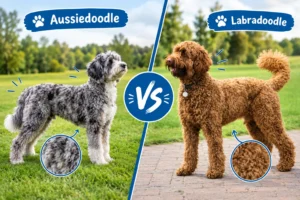
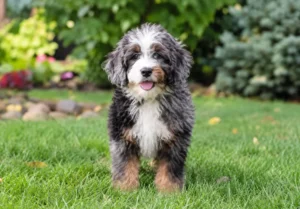
Aussiedoodles and Labradoodles look so much alike that plenty of people think they are the same dog in different outfits. Soft coat. Big eyes. That teddy bear face. Easy mistake to make.
But they are not the same dog. An Aussiedoodle is an Australian Shepherd mixed with a Poodle. A Labradoodle is a Labrador Retriever mixed with a Poodle. Swap one parent and a lot changes. Size changes. Energy changes. So does the way the dog acts around kids and cats and strangers.
Here is the quick version. Aussiedoodles lean toward the herding side. They watch everything and love having a job. Labradoodles lean toward the retriever side. They want to play and swim and say hi to everyone they meet.
Neither one wins every round. Your home and your schedule and your patience for brushing will decide it. So let’s walk through all 8 key differences and see where each dog fits.
| Feature | Aussiedoodle | Labradoodle |
| Parent breeds | Australian Shepherd and Poodle | Labrador Retriever and Poodle |
| Personality | Smart loyal playful and alert | Friendly social playful and loving |
| Energy | High | High |
| Daily exercise | At least 1 hour | 1 to 2 hours |
| Coat | Wavy or curly and varies a lot | Straight wavy curly or wiry |
| Grooming | Brushing every couple of days plus trims | Brushing twice a week or more plus trims |
| Main instinct | Herding and chasing | Retrieving and play |
| Best home | Active home with time for training | Active family that wants a friendly buddy |
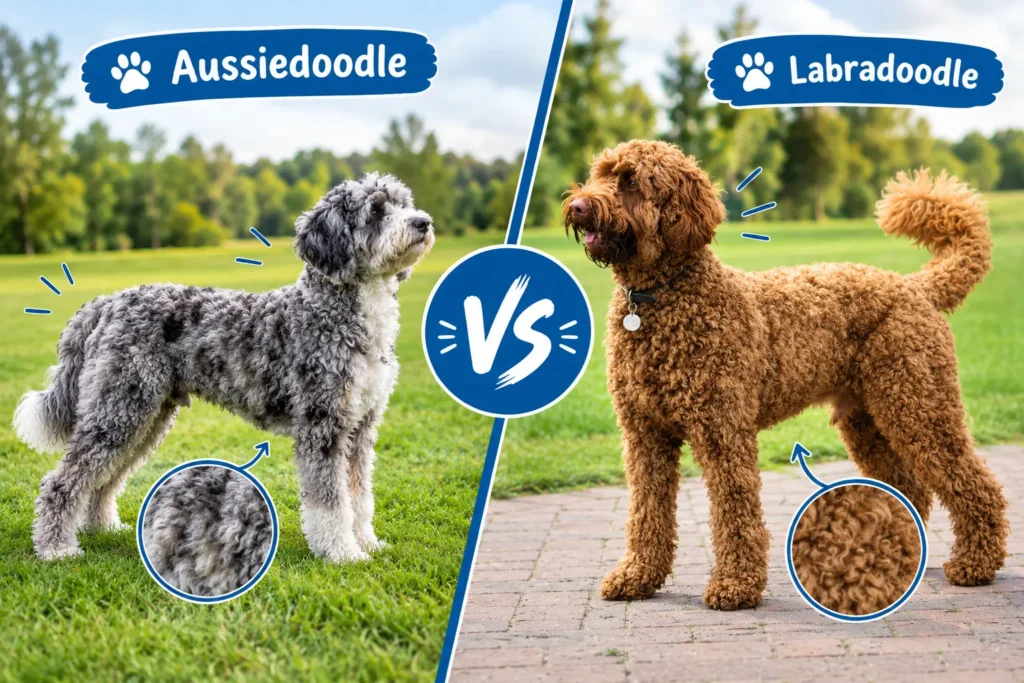
The 8 key differences in a nutshell
The biggest gap between these two shows up at home and not in photos. An Aussiedoodle is friendly and loving but a lot of them also pick up the watchful streak of the Australian Shepherd. Your dog may trail you from room to room and keep tabs on everyone in the house. Some act a little shy around strangers at first. Give them time. Early socialization with new people and dogs and places helps a ton.
Then there is the herding thing. Not every Aussiedoodle does it. Some do though. They chase movement or circle around people or nip at heels. Homes with running kids see it the most. It looks cute until your toddler gets rounded up like a sheep.
Labradoodles are more open and easygoing. The Labrador side makes them playful and ready to join whatever is going on. Most of them enjoy people and other animals when the introductions are done right. They greet the mail carrier like an old friend.
Both dogs get attached to their families fast. Aussiedoodles often pick 1 or 2 favorite people and stick to them. Labradoodles spread the love around. Neither one likes being home alone all day. A lonely doodle gets loud or starts chewing the couch.
One more thing. Parents and training and early experiences matter as much as breed. So don’t pick a puppy only because you like the usual personality of the mix.
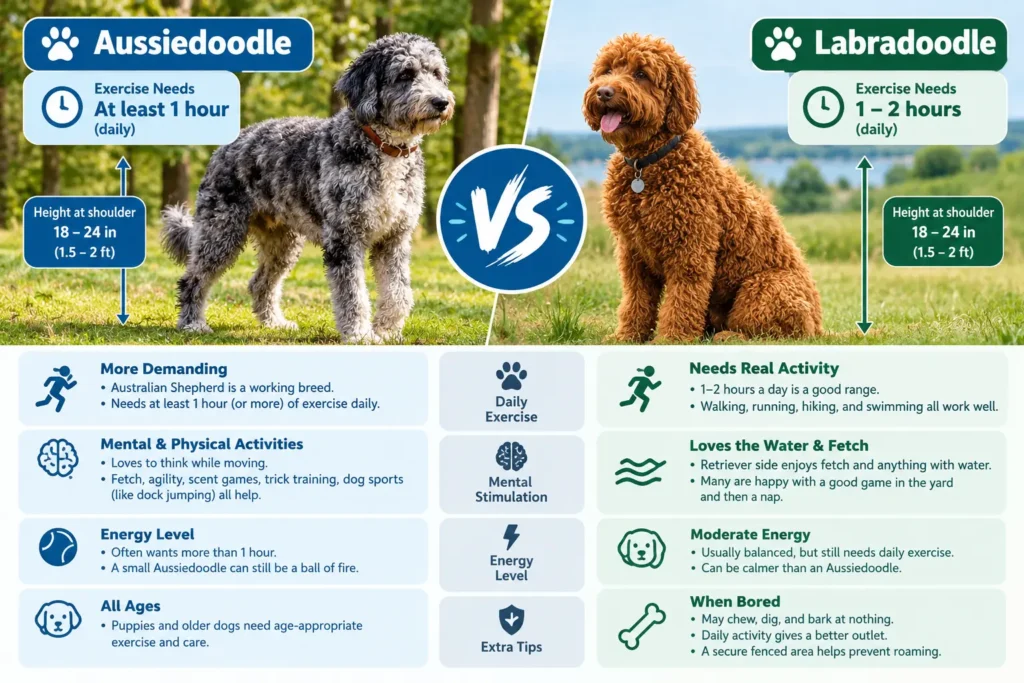
Both dogs need an active routine. No way around it. The Aussiedoodle can be the more demanding one because the Australian Shepherd is a working breed. Plan on at least 1 hour of exercise every day. Some need more.
Long walks help but they are not the whole answer. Aussiedoodles like to think while they move. Fetch and agility and scent games and trick training all burn that energy. Dog sports like dock jumping can be a blast too. A tired brain makes a calm dog.
Labradoodles need real activity too. 1 to 2 hours a day is a good range. Walking and running and hiking and swimming all work well. The retriever side loves fetch and anything with water. Plenty of them are happy with a good game in the yard and then a nap next to you.
An Aussiedoodle often wants more than that. It wants a task or a puzzle or something to figure out.
Don’t judge energy by size. A small Aussiedoodle can still be a ball of fire. Puppies and older dogs need exercise that matches their age and health.
When a doodle gets bored it finds its own fun. That usually means chewing and digging and barking at nothing. Daily activity gives your dog a better outlet. A secure fenced area helps too since a chasing dog may room off.
Here is where people get fooled. Everybody hears low shedding and thinks no work. Not true.
Aussiedoodle coats come wavy or curly. Some pups get more of the Australian Shepherd coat and shed a fair amount. Others look more like the Poodle side and shed little. You can’t tell for sure when they are babies.
Labradoodle coats swing wildly too. Straight or wavy or curly or wiry. Some barely shed and some shed a lot. Don’t count on a Labradoodle being hypoallergenic. No dog is allergen free. If allergies matter in your house spend time with the parents before you commit.
Both coats need brushing. Curly and wavy fur grabs loose hair and turns into tangles. Mats get painful when they sit close to the skin. Brush all the way down to the skin since tangles hide there. Aussiedoodles do best with brushing every couple of days. Labradoodles need it at least twice a week and some need it daily. Watch the ears and the area between the legs and around the rear. Friction makes mats in those spots.
Plan on a groomer every 2 to 3 months. Dry those floppy ears after swimming because they hold water. Keep nails and teeth in check and trim the hair around the eyes.
If you want a dog that needs almost no grooming skip both. They look easy right after a trim. Staying that way takes steady work.
Both mixes are smart. Really smart. The Australian Shepherd and Poodle give the Aussiedoodle a long history of working with people. The Labrador Retriever and Poodle give the Labradoodle a similar head start.
Aussiedoodles pick up basic obedience fast when you stay steady. They love tricks and agility and scent work. The catch is boredom. A dog that learns fast also learns bad habits fast. Short training sessions through the week keep things fresh.
Labradoodles are eager to please and that makes training smooth. Treats and toys and praise work great. They learn sit and stay and recall quickly. Some move on to advanced tasks and even service dog work.
Start training the day your puppy comes home. Teach the name and recall and leash manners and basic commands. Do socialization at the same time. New people and dogs and sounds and places should all feel normal by the time your pup grows up.
Keep this in mind. A smart dog is not always an easy dog. Big brains need a job. If training stops after the basics your dog still needs games and tasks to stay busy.
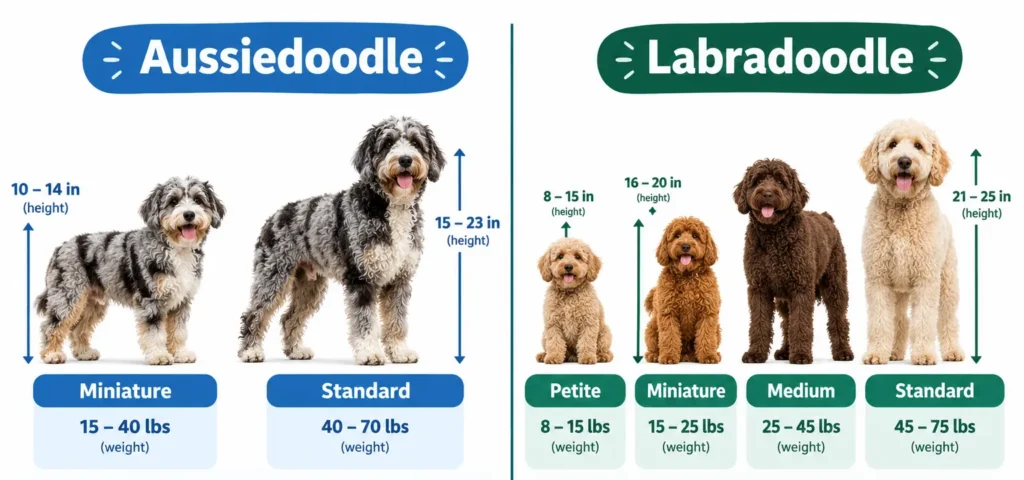
Treat those numbers as a guide and not a promise. The Poodle parent size and the traits a puppy inherits can change the outcome.
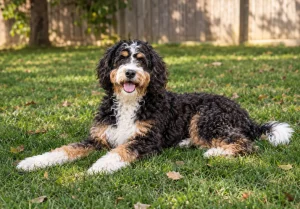
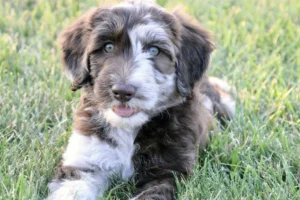
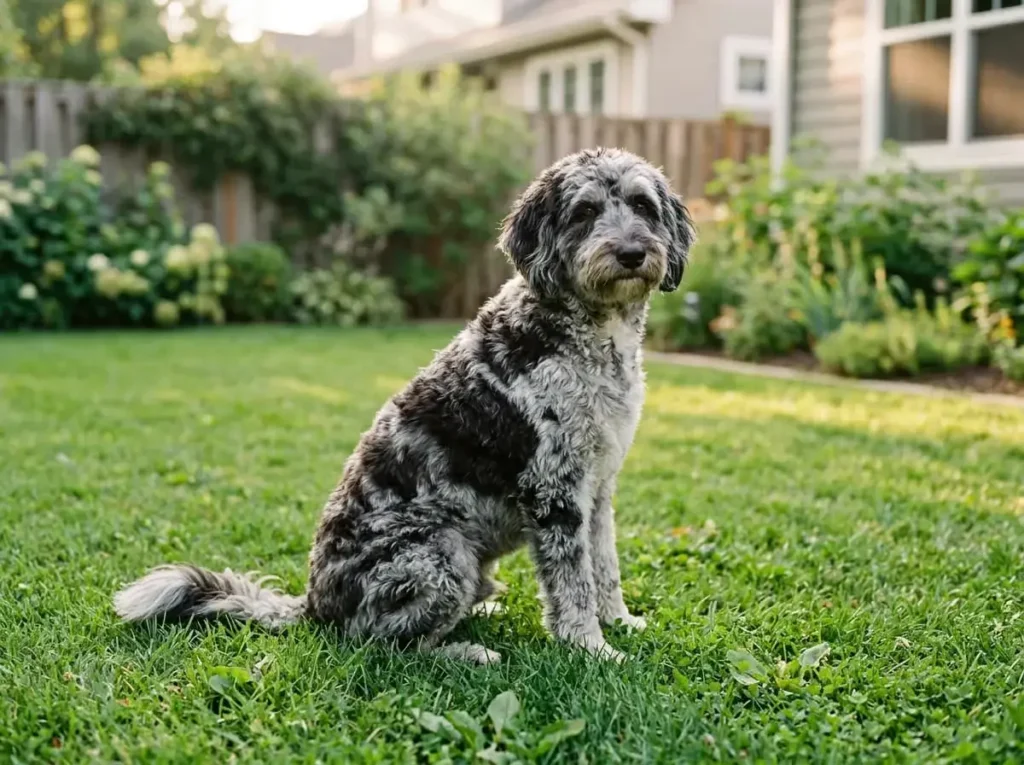
Coats and colors vary too. An Aussiedoodle may have soft waves or tight curls. Colors include black and brown and cream and gray and red and silver and apricot and white. Some wear red merle or blue merle patterns. Eyes can be brown or blue or amber.
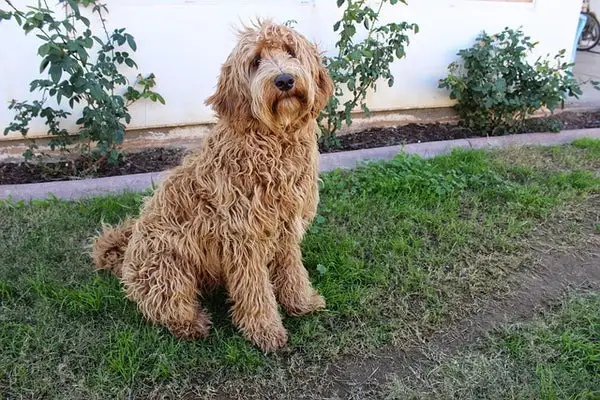
Labradoodles come in black and cream and chocolate and yellow and red with coats that are straight or wavy or curly or wiry. Both have floppy ears and a straight muzzle.
Want to know the adult size? Ask about both parents. That tells you way more than the weight of the puppy today.
Either one can be a great family dog when you meet its needs. Your daily routine makes the choice easier.
Aussiedoodles fit active families that like training and games and outdoor time. The herding side can show up as chasing. Families with small kids should watch for it since running children can set it off.
Labradoodles are active too but they bring a social and playful attitude that kids love. They do well with kids and other pets once socialized and supervised. Lots of people call them the friendly family dog for a reason.
Ask yourself a few things. How much exercise can you give each day? Can you keep up with brushing? Do you have time for training? Will the dog be alone for long stretches? Are there young kids or other pets at home? A calm and low energy home won’t match either mix. Both need exercise and attention and company. Always supervise young kids around any dog.
Both mixes can live with other dogs and pets after good socialization. Don’t assume a friendly puppy knows how to act around every animal.
An Aussiedoodle may chase or herd. That matters with cats or rabbits or other small animals. Labradoodles can get wound up around small pets too because of the retriever background. Go slow on introductions. Give every pet room to walk away. If your dog gets too excited or starts chasing calmly separate them and try again later.
Think about a normal weekday and not your best day. If you work long hours and the dog sits alone most of the time either mix can struggle. Both are people dogs.
Love hiking and running and swimming? Either dog fits right in. Enjoy training and want a dog that stays mentally busy? An Aussiedoodle may be your match. Want a friendly buddy for fetch and walks and family time? A Labradoodle may be the one.
Aussiedoodle vs Labradoodle is not a fight between a good dog and a bad dog. Both are smart and loving and active. The Aussiedoodle brings more of the alert herding side. The Labradoodle brings more of the social playful side. Look at the individual dog and ask about the parents. Think about adult size and your schedule. Then pick the dog whose exercise and training and grooming needs match the life you can really give it.