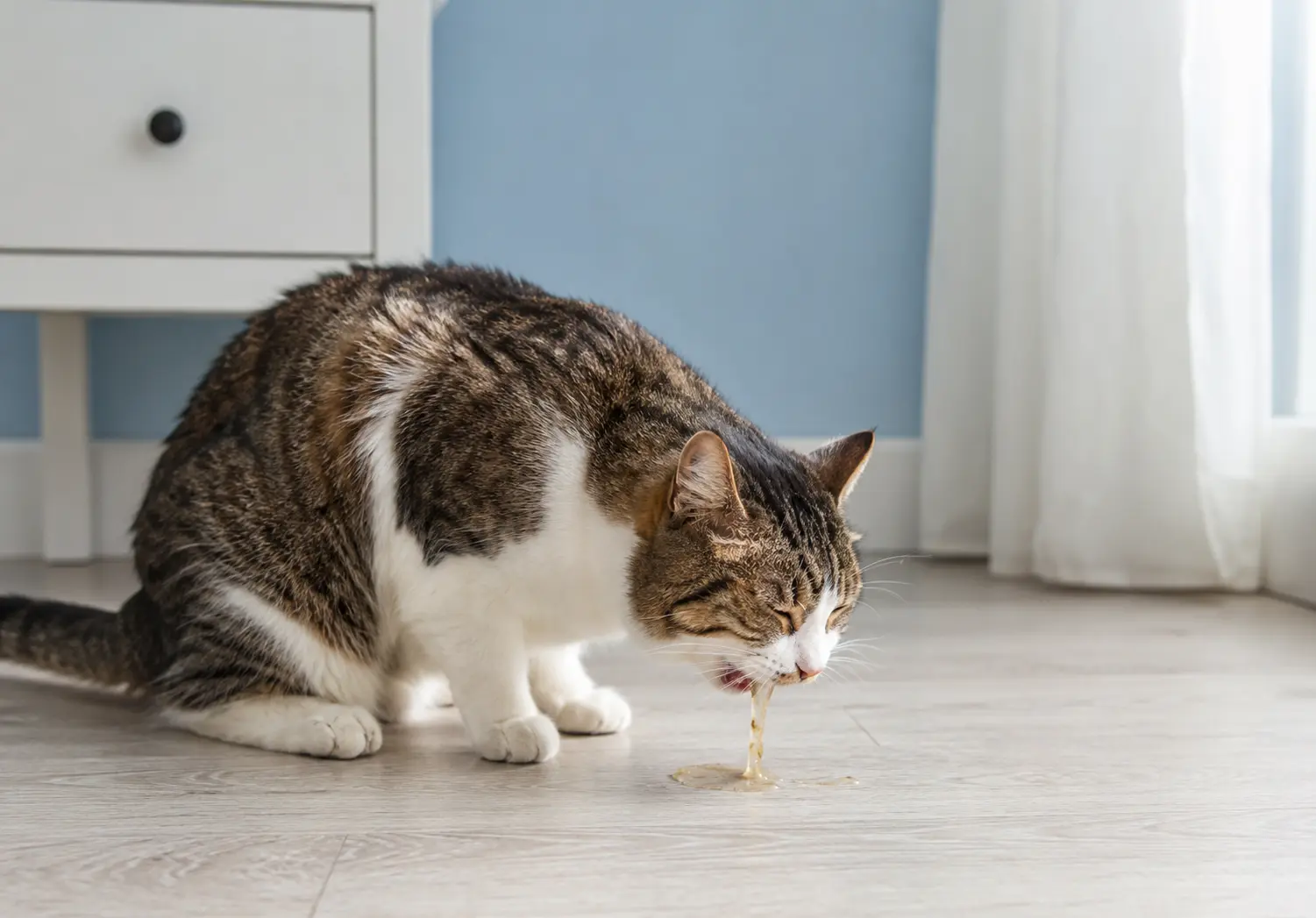
Finding cat vomit on the floor is never pleasant. It can also be confusing. One day you may see whole pieces of food. Another day the mess may look yellow or white and foamy.
The color and texture can give useful clues. They cannot tell you the full cause by themselves.
A cat may throw up after eating too fast. Hairballs and sudden food changes can also upset the stomach. In other cases vomiting can point to parasites poisoning an intestinal blockage or an internal health problem.
One mild episode may not be an emergency when your cat still eats drinks and acts normal. Repeated vomiting is different. It can lead to water loss and weakness. It may also mean your cat needs medical treatment.
Watch what happens before and after each episode. Notice the color of the vomit. Check for food, hair foam, blood grass worms or pieces of an object.
Your cat’s behavior matters too. A cat that vomits and then plays normally is different from one that hides and refuses food.
| What You See | Possible Meaning | Other Clues | What to Do |
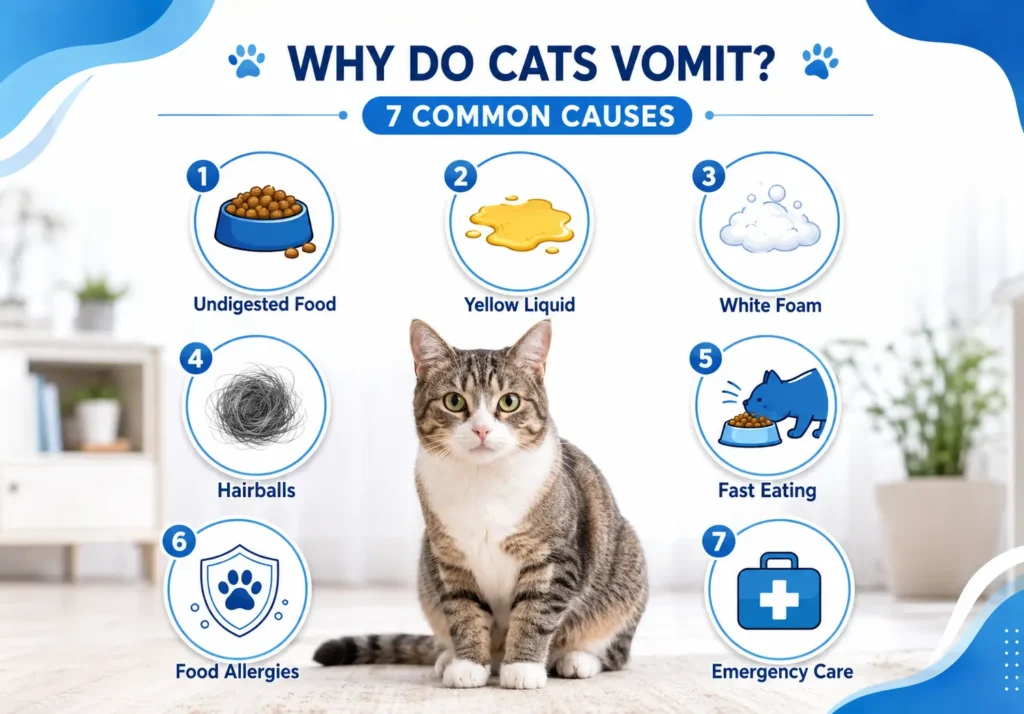
| Undigested food | Fast eating or regurgitation | Happens soon after a meal | Slow meals and watch closely |
| Yellow liquid | Bile from an empty or upset stomach | May happen between meals | Offer smaller regular meals |
| White foam | Stomach fluid mixed with air | Empty stomach or irritation | Watch for repeat episodes |
| Hairball | Swallowed fur in the stomach | Gagging and overgrooming | Brush often and check the skin |
| Food and diarrhea | Diet change or food reaction | Gas itching or poor appetite | Contact a vet if it continues |
| Blood or dark material | Bleeding or strong irritation | Weakness or pain | Seek urgent veterinary care |
| Vomiting with no stool | Possible intestinal blockage | Pain hiding or food refusal | Emergency veterinary care |
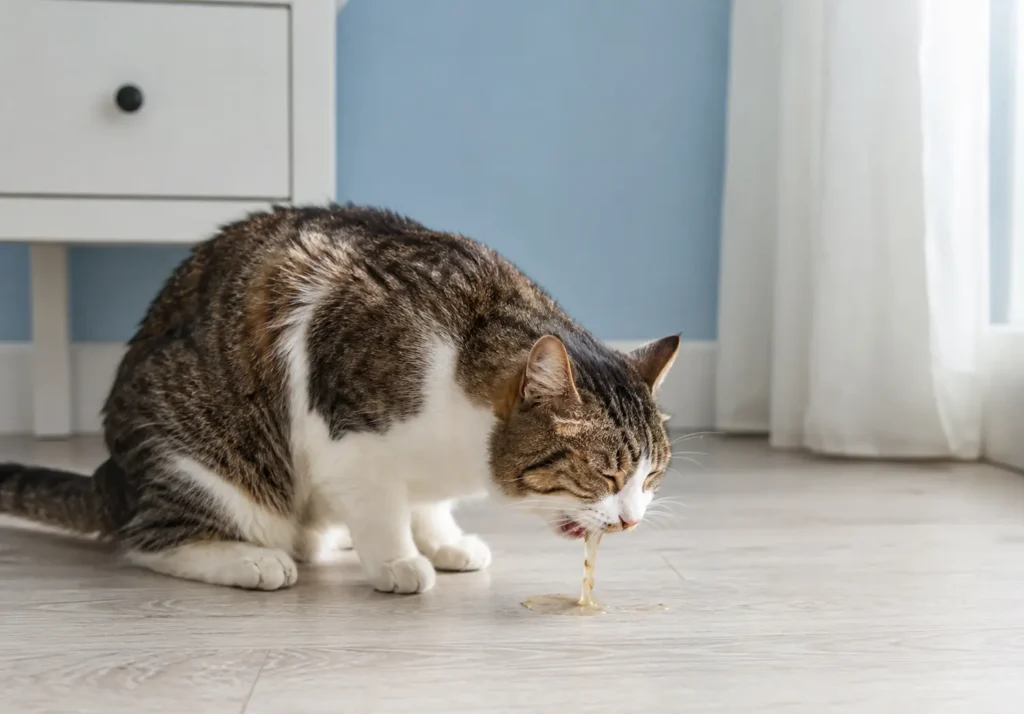
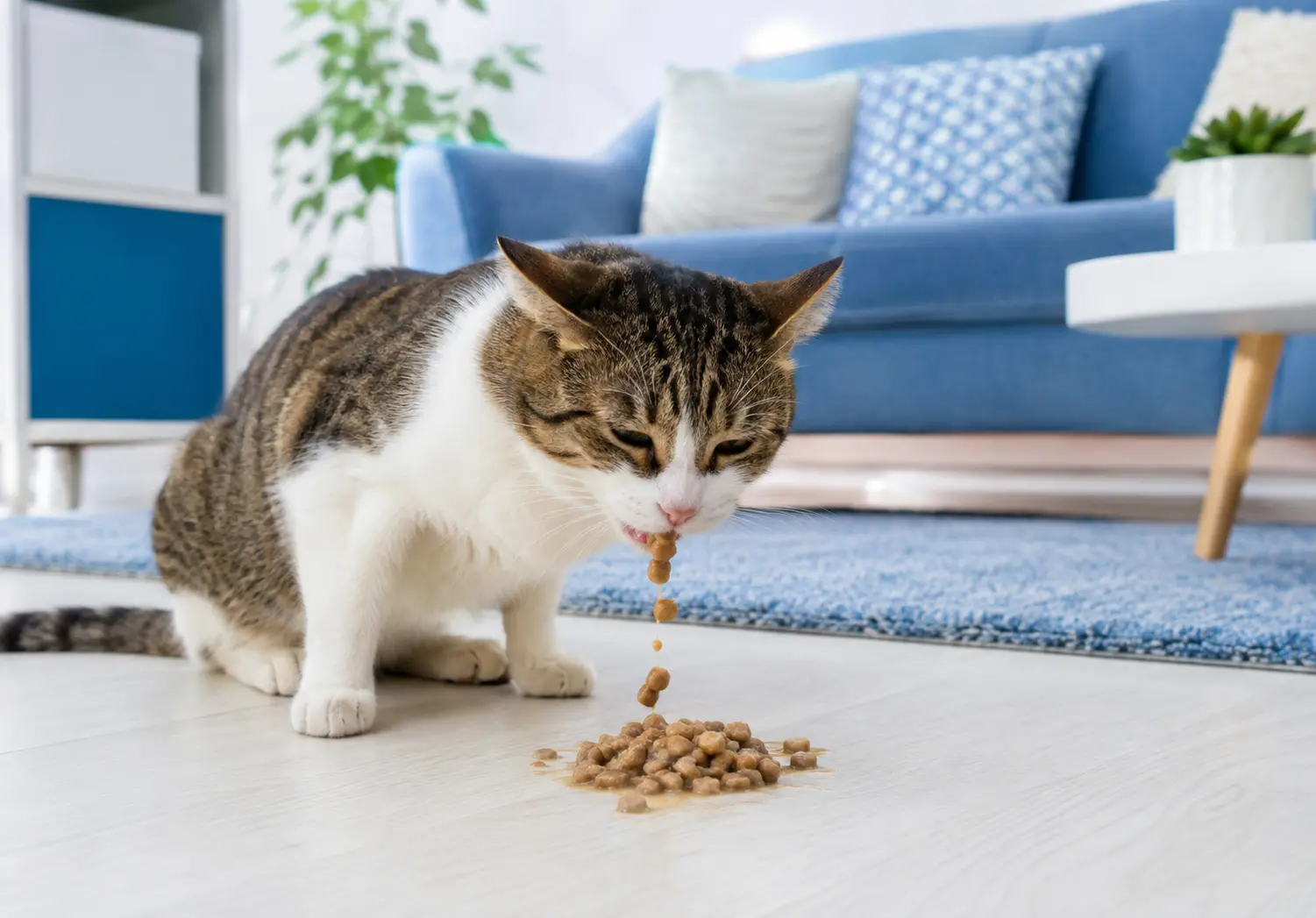
Undigested food often looks almost the same as it did inside the bowl. Dry pieces may still have their normal shape. Wet food may come up as a soft pile or long tube.
This can happen because your cat ate too quickly. It may also be regurgitation rather than true vomiting.
Vomiting takes effort. A cat may lick its lips or drool first. It may swallow several times and crouch close to the floor.
The belly muscles move during vomiting. You may hear retching before food comes out.
Regurgitation is usually faster and quieter. Food may suddenly fall from the mouth with little warning. The belly does not make the same strong movement.
Regurgitated food often looks whole because it may not have reached the stomach. It can have a long shape from sitting inside the esophagus.
Some cats finish a meal in less than one minute. They swallow large bites and take in air with the food.
The stomach fills before it has time to settle. Food may come back up soon after the meal.
Fast eating is common in homes with several pets. A cat may worry that another animal will take its food.
Former stray cats may also eat quickly. They learned to finish every meal because food was not always available.
A large serving puts more pressure on the stomach. This can make vomiting or regurgitation more likely.
Dry food may also swell after it mixes with liquid. A cat that eats a large meal and drinks a lot of water may feel too full.
Treats can add to the problem. Different family members may give treats without knowing someone else already gave them.
Try feeding three or four smaller meals instead of one large serving.
A slow-feeder bowl can help. It has raised shapes that make the cat take smaller bites.
You can also spread wet food across a wide plate. A thin layer takes longer to lick than a pile inside a deep bowl.
Puzzle feeders release only a few dry pieces at a time. They also give the cat something to do.
Feed pets in separate rooms when food competition is a problem.
Call a veterinarian if food comes up after many meals.
Repeated regurgitation can point to a problem in the esophagus. Repeated vomiting may come from stomach disease or another health condition.
Watch for weight loss and poor growth. These signs may mean your cat is not keeping enough food inside its body.
Coughing or breathing trouble after regurgitation also needs quick attention. Food or liquid may have entered the lungs.
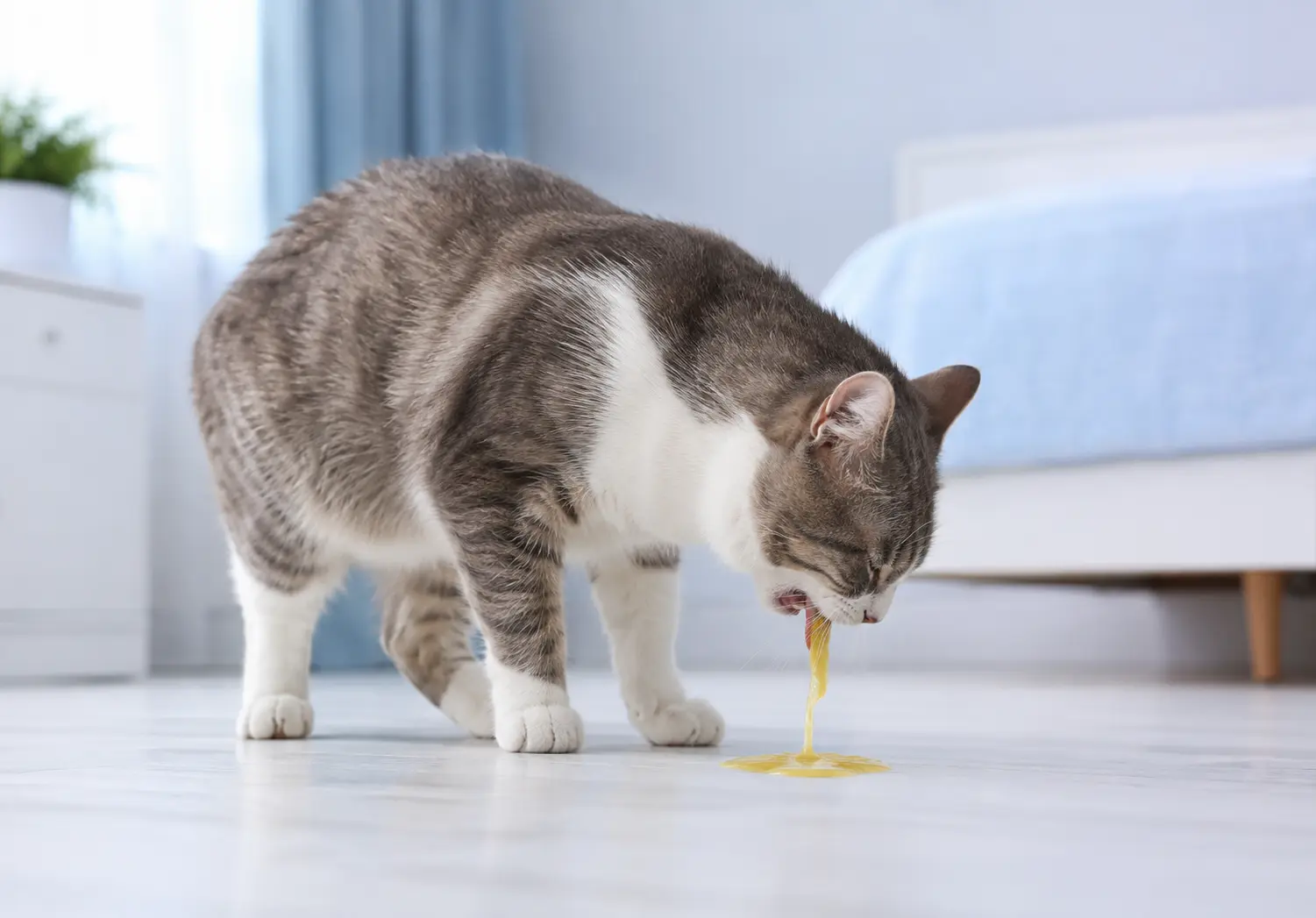
Yellow vomit often contains bile. Bile is a digestive fluid made by the liver. It helps the body break down fat.
Bile normally moves into the small intestine. It may enter the stomach when the stomach is empty or irritated.
Yellow vomit can look watery. It may also have foam or mucus mixed into it.
Some cats vomit yellow liquid early in the morning. Others do it late at night or between meals.
The stomach keeps making acid and digestive fluid when no food is present. These fluids may irritate the stomach lining.
A small meal before bed may help a cat that vomits before breakfast.
You can also divide the daily food amount into smaller servings. Keep the total amount the same to avoid weight gain.
A cat may first vomit its meal. It may then retch again after the stomach is empty.
The second puddle may look yellow because only bile and stomach fluid remain.
This can happen after fast eating. It can also happen with stomach inflammation or another illness.
Bile is yellow even in a cat with a healthy liver.
Yellow vomit alone does not prove that your cat has liver disease.
Yellow gums or yellow eyes are more serious signs. This change is called jaundice. It needs prompt veterinary care.
Hairballs can irritate the stomach and cause bile vomiting.
Food changes may also cause it. Parasites and infections can upset the stomach or intestines.
Pancreatitis and liver disease can lead to nausea. An intestinal blockage may cause yellow vomiting after the stomach becomes empty.
The pattern helps more than the color alone. Notice appetite, energy weight and litter box habits.
White foam often contains air and stomach fluid. It may look like bubbles or a small pile of soap foam.
A cat can throw up white foam when its stomach is empty. Mild stomach irritation can cause it too.
One episode may pass without another problem. Frequent white foam needs more attention.
The stomach contains fluid even when it has no food.
When the cat feels sick it may swallow air and saliva. These mix with stomach fluid during retching.
The result can look white and foamy.
A steady feeding schedule may help when foam appears after long gaps between meals.
Gastritis means the stomach lining is irritated or inflamed.
A cat may develop gastritis after eating spoiled food or garbage. A sudden diet change can also upset the stomach.
Plants, chemicals, medicine and other unsafe items may cause stronger irritation.
The cat may vomit foam food or yellow liquid. It may also stop eating and become tired.
Cat owners sometimes mistake coughing for vomiting.
A coughing cat may crouch low and stretch its neck. It may make harsh sounds but produce little or nothing.
Asthma and other breathing problems can cause coughing.
A video can help your veterinarian see the difference. Do not delay emergency care to record an episode when your cat struggles to breathe.
White foam with diarrhea may point to digestive trouble.
Foam with repeated dry retching may happen during an intestinal blockage.
A cat that vomits foam and refuses food may have nausea from kidney disease pancreatitis or another illness.
Contact a veterinarian when the foam keeps returning or appears with weakness, pain or weight loss.
Cats swallow loose hair when they groom. Their rough tongues pull fur from the coat and move it toward the throat.
Most hair travels through the digestive system and leaves in the stool.
Some hair stays in the stomach. It can form a wet clump called a hairball or trichobezoar.
Hairballs often have a long shape because they pass through the narrow esophagus. Occasional hairballs can happen but frequent vomiting should not be blamed on hair alone.
A hairball may look like a dark wet tube. It often contains hair mixed with bile and digestive fluid.
The cat may gag or retch several times before bringing it up.
Food may also come out with the hairball. Some cats vomit yellow liquid before or after it.
Long-haired cats may swallow more fur.
Heavy shedding can raise the amount of hair inside the stomach. Indoor heating and weather changes may affect shedding.
Fleas can make a cat lick and bite its skin all day.
Skin allergies may cause redness, scabs and bald spots. Pain and stress can also lead to excessive grooming.
Brush your cat often. A long-haired cat may need daily brushing. A short-haired cat may need it once or twice a week.
Use flea control made for cats. Some dog flea treatments can be toxic to cats.
Give your cat playtime and safe hiding places. This can reduce boredom and stress.
A veterinarian may suggest a hairball diet or a cat-safe hairball product.
Do not give butter cooking oil mineral oil or human laxatives without veterinary advice.
A large hairball can become stuck in the stomach or intestines.
The cat may vomit many times and stop eating. It may become weak or hide.
Little or no stool can be a warning sign.
Repeated retching without producing a hairball also needs a veterinary check.
A blockage can become life-threatening when food and water cannot move through the intestines.
Fast eating can cause more than undigested food. It can also lead to stomach discomfort and repeated vomiting.
Some cats eat so quickly that they barely chew. Others eat a normal meal and then steal food from another pet.
Boredom can lead to food seeking. A cat may return to the bowl because it has little else to do.
Free feeding can also make it hard to track how much a cat eats.
In a multi-cat home one cat may eat from several bowls.
Some health conditions can increase hunger. Hyperthyroidism and diabetes may cause a strong appetite along with weight loss or thirst changes.
Measure the full daily food amount.
Divide it into smaller servings. Do not simply add extra meals on top of the normal amount.
Read the calorie information on the package. Different foods can contain very different calories.
Treats should stay limited. They should not replace a complete and balanced cat food.
Use a slow bowl or puzzle feeder.
Place small amounts of food in several safe spots. This lets your cat move between them.
For wet food use a wide plate or lick mat made for pets.
Do not place hard objects inside the food bowl to slow the cat. A cat may hurt its teeth or swallow something unsafe.
A cat that suddenly starts eating much more than normal may need a medical check.
Strong hunger with weight loss can happen with hyperthyroidism.
Increased hunger with increased thirst and urination may point to diabetes.
Intestinal disease and parasites can also affect weight and appetite.
Do not assume that every hungry cat simply needs more food.
Food can cause vomiting in several ways.
A sudden diet change may upset the digestive system. Food intolerance can make an ingredient hard to handle.
A true food allergy involves the immune system. Some affected cats develop vomiting or diarrhea along with skin problems.
Changing food overnight can cause gas diarrhea or vomiting.
The new food may contain more fat or a different protein. It may also have a new fiber source.
Switch food slowly over about seven to ten days unless your veterinarian gives another plan.
Start with mostly old food and a small amount of new food. Increase the new food every few days.
Food intolerance does not involve the immune system in the same way as an allergy.
Both can cause stomach trouble.
Food allergy may also cause itching. A cat may scratch its face or ears. It may lick the belly and legs until the hair becomes thin.
A cat can react to an ingredient it has eaten for a long time.
A veterinarian may suggest an elimination diet.
The cat may eat a new protein that it has not eaten before.
Another choice is a hydrolyzed diet. The protein has been broken into very small pieces.
The trial may last several weeks. The cat must not eat table scraps treats or another pet’s food.
Random food switching can make the problem harder to understand.
Inflammatory bowel disease can cause long-term vomiting and weight loss. It may also cause diarrhea or appetite changes.
Pancreatitis may lead to nausea, food refusal and tiredness.
Kidney and liver disease can cause vomiting because waste or chemical changes affect the body.
Parasites and infections can irritate the digestive system.
Cancer can also cause repeated vomiting in some cats.
A veterinarian may use blood tests, urine tests, stool tests X-rays or ultrasound to find the cause.
Some vomiting problems need fast treatment.
An intestinal blockage is one example. String ribbon yarn, plastic hair ties and small toys can become stuck.
Poisoning can also cause sudden vomiting. Common dangers include human medicine lilies, antifreeze cleaners and some dog flea products.
A gastrointestinal blockage can cause vomiting pain, poor appetite weakness and shock. It is an emergency because blocked tissue can become damaged or tear.
Seek urgent veterinary help if your cat:
Kittens and older cats may become dehydrated faster.
Cats with kidney disease diabetes or another long-term condition also need earlier care.
String may hang from the mouth or anus.
Never pull it. The other end may be caught inside the stomach or intestines.
Pulling can cut or tear the digestive tract.
Stop the cat from chewing the visible string and go to an emergency clinic.
Do not use hydrogen peroxide to make a cat vomit.
Do not give salt oil milk or human medicine unless a veterinarian tells you to do so.
Some substances can cause more harm while coming back up.
Call a veterinarian or animal poison service and follow professional instructions.
Take a photo of the vomit when possible.
Bring the package or bottle if your cat may have eaten a harmful product.
Write down the time of exposure and the amount your cat may have swallowed.
Tell the veterinarian about food changes, medicines, plants and missing household objects.
A good history can help the veterinarian choose the right tests.
Write down when the vomiting started.
Note how often it happens and whether it follows a meal. Look at the material before cleaning it. Check for food hair yellow liquid white foam blood worms grass string or plastic. Watch what your cat does before vomiting. Notice drooling lip licking retching and belly movement.
Tell the veterinarian about changes in:
A video may help show the difference between coughing, vomiting and regurgitation.
Do not delay urgent care just to collect more details.
Home monitoring may be reasonable after one mild episode when an adult cat acts normal.
Keep fresh water available. Do not force water into the mouth.
Offer small measured meals rather than a large serving.
Do not give human stomach medicine.
Keep the cat indoors where you can watch it.
Check the room for chewed plants, string plastic medicine or spilled chemicals.
Call a veterinarian if vomiting happens again or your cat develops another symptom.
Not every cause can be prevented. Daily care can lower several common risks.
Keep a record when your cat vomits often. A pattern may help uncover a food problem or health condition.
A cat throwing up may bring up undigested food yellow liquid white foam or a hairball.
Fast eating and long gaps between meals can cause mild episodes. Sudden diet changes and food reactions may upset the stomach too. Repeated vomiting should never become normal. It may point to digestive disease, parasites poisoning or an intestinal blockage.
Watch how your cat acts after vomiting. Check its appetite, energy weight and litter box habits. Seek veterinary help when vomiting continues or appears with pain weakness, blood food refusal or breathing trouble. Early treatment can prevent dehydration and help your cat recover faster.