

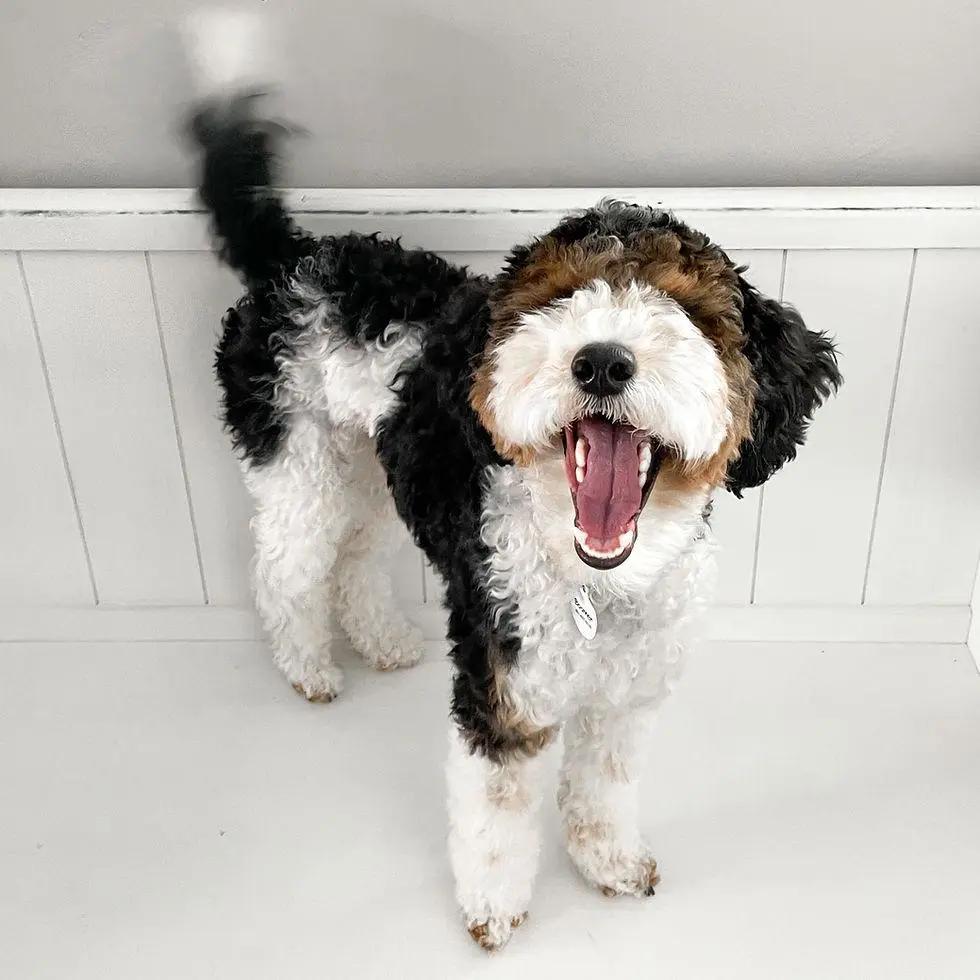
Mini Bernedoodles bark. They are dogs after all. Still most do not bark nonstop without a reason. A Mini Bernedoodle may bark when someone reaches the front door. It may make noise during play or when it wants attention. Some also bark when they feel lonely or nervous.
The amount of barking can change from one dog to another.
A Mini Bernedoodle comes from a Bernese Mountain Dog and a Miniature Poodle. Bernese Mountain Dogs are usually good-natured and alert. Poodles are smart and watchful. Poodles can also be more vocal in some homes. A Mini Bernedoodle may inherit any mix of these traits.
Training and daily routine matter just as much as genetics.
A dog that receives attention every time it barks may learn to bark more. A bored dog may bark at windows because it has nothing else to do. A dog with separation distress may bark for long periods after the family leaves.
The good news is that owners can improve most normal barking through patient training and better management.
Here is a quick look at common barking situations.

| Barking Situation | Possible Cause | Helpful First Step |
| Barking at windows | Alert behavior or excitement | Block the view and reward calmness |
| Barking at the door | Visitors or outside sounds | Teach a mat or bed cue |
| Barking during play | High excitement | Pause the game and allow a break |
| Barking for food | Learned attention behavior | Wait for a quiet moment |
| Barking when alone | Boredom or separation distress | Use a camera and build alone time slowly |
| Barking at dogs | Fear or frustration | Create more distance |
| Night barking | Noise or discomfort | Check the environment and health |
| Sudden new barking | Pain or illness | Contact a veterinarian |
A Mini Bernedoodle is not usually known as a silent dog. It is also not normally placed among the loudest dog types.
Its barking temperament often sits somewhere in the middle.
Bernese Mountain Dogs were working farm dogs. They needed to notice changes around their homes and families.
This background may give a Mini Bernedoodle some alert behavior. The dog may bark when a delivery worker arrives or when it hears a strange noise.
That does not always mean aggression.
The bark may simply say that something changed.
The Bernese Mountain Dog is generally described as alert and good-natured. A Mini Bernedoodle that takes after this parent may give a few warning barks and then settle when the owner takes control of the situation.
Miniature Poodles are active and intelligent.
They often notice small movements and sounds. A Mini Bernedoodle with strong Poodle traits may bark when it sees people outside or hears another dog.
Smart dogs also learn patterns fast.
Your Mini Bernedoodle may learn that barking makes you open the back door. It may learn that one loud bark brings food or petting.
This is why owners should reward the behavior they want from the first day.
Two Mini Bernedoodles from the same litter may act very differently.
One may sleep through most household sounds. Another may run to the door whenever it hears footsteps.
Early socialization also affects barking. A puppy that safely experiences traffic and visitors and normal home sounds may feel less worried about them later.
Socialization does not mean forcing the puppy into scary situations. It means creating calm and positive experiences.
Health matters too.
A dog that suddenly starts barking more may feel pain or discomfort. Do not assume every behavior problem comes from poor training.
A barking plan will not work until you understand the cause.
Owners often say one word over and over.
“Quiet.”
The dog may stop for one second and begin again because the reason for barking is still present.
Alert barking often happens at windows and doors.
The Mini Bernedoodle hears a car or sees someone walking near the home. It barks to announce the event.
A few alert barks may not become a serious problem. Long barking sessions can disturb the family and neighbors.
Close curtains or use privacy film when outside movement keeps triggering the dog.
Move beds away from busy windows. Use a fan or calm background sound when hallway noise causes trouble.
Attention barking works because people react to it.
The dog barks. The owner looks at it and talks or throws a toy.
Even saying “stop” gives attention.
The dog may decide that barking is useful.
Wait for a brief quiet moment before offering food or play. At first you may only get one second of silence.
Reward that second.
Slowly wait for two seconds and then three.
A Mini Bernedoodle may bark before a walk or during play.
Excitement barking often comes with jumping and spinning or running.
Prepare the leash only when the dog has four paws on the floor. Stop moving when barking begins.
Continue when the dog settles.
The walk becomes the reward for calm behavior.
A frightened dog may bark to create distance.
It may bark at another dog because it does not want that dog to come closer. A frustrated dog may bark because the leash stops it from reaching something exciting.
Do not pull the dog closer to its trigger.
Move farther away until it can eat treats and respond to its name.
A bored Mini Bernedoodle may create its own job.
It may watch the street for hours. Every person becomes a reason to bark.
A predictable routine with exercise and mental enrichment can help dogs remain calmer during the day.

Puppies and adult dogs may bark for different reasons.
A puppy is still learning how the home works. It may bark in a crate or when it cannot reach its owner.
An adult may bark because the behavior has become a strong habit.
Young puppies may bark because they feel confused or lonely.
The puppy has recently left its mother and littermates. A new crate or room may feel strange.
Take the puppy outside for a toilet break before bedtime. Give it a safe sleeping area and a simple routine.
Do not expect an eight-week-old puppy to remain alone for a full day.
Puppies may also bark during play because they become overstimulated.
Watch for jumping and hard biting and wild running. The puppy may need a nap instead of another game.
Adolescence can begin before the dog looks fully grown. The young Mini Bernedoodle may become more alert. It may notice people or dogs that it ignored as a small puppy.
Training can also appear weaker during this stage.
Return to easy practice. Use good rewards and create more distance from distractions. Do not assume the dog is trying to challenge your authority. Its brain is still developing.
Adult barking often follows clear patterns.
The dog may bark at the same window each morning. It may bark when the owner prepares food or leaves the home.
Keep a simple record for one week. Write down the time and place and trigger. Also note what happened after the barking.
A pattern usually becomes easier to see. Once you know the pattern you can change the environment and teach a better response.

Separation barking and attention barking may sound similar. The emotions behind them can be very different.
An attention-seeking dog wants a reaction.
A dog with separation distress may feel real panic.
Attention barking often happens while the owner is nearby.
The dog may look directly at you. It may bark once and wait for your reaction.
It may stop when it receives food or play.
The behavior can become stronger when family members respond in different ways.
Everyone should follow the same rule.
Calm behavior brings attention. Barking does not start a game.
A dog with separation distress may bark or howl after the family leaves.
Other signs can include pacing and panting and scratching at doors. Some dogs have toilet accidents or try to escape. Severe escape attempts can cause injuries.
Use a home camera to watch the first 20 to 30 minutes after leaving.
Look for these signs:
This is the first practical list.
Do not punish the dog after coming home. The damage may come from fear rather than bad manners.
Begin while you are still at home.
Give the dog a safe chew behind a gate. Step away for a few seconds.
Return while the dog remains calm.
Increase the time in small steps.
When the dog begins barking or scratching you may have increased the difficulty too quickly.
Severe cases need support from a veterinarian or qualified behavior professional. Some dogs need a detailed behavior plan rather than simple obedience work.
You cannot remove every bark.
Barking is a normal form of communication. The goal is to reduce unwanted barking and teach the dog how to settle.
Stand back and watch before reacting.
Is the dog looking out the window? Is it staring at you? Did a sound happen outside?
The answer guides your plan.
Window barking needs visual management. Attention barking needs careful reward timing. Fear barking needs more distance.
Owners often wait for barking before speaking to the dog.
Reward calmness before the noise begins.
When the dog hears a hallway sound and looks at you give a small treat.
When it lies quietly near the door, reward it.
You are showing the dog which behavior pays.
Place a mat several feet away from the front door.
Reward the dog for looking at it. Then reward one paw and later all four paws.
Build toward lying down.
Practice when nobody is at the door.
Once the behavior becomes easy you can use it during quiet door sounds. Do not begin with a loud group of visitors.
Allow one or two natural barks.
Hold a treat near the dog’s nose. Most dogs pause to smell it.
Say “quiet” during the pause and reward.
Repeat during easy situations.
Do not keep showing treats after long barking sessions. The dog may learn to bark first to make the treat appear.
Shouting may sound like more barking to the dog.
Painful collars can add fear without teaching a calm replacement behavior.
The American Veterinary Society of Animal Behavior recommends reward-based training for normal skills and behavior problems.
Use these steps during a common barking moment:
This is the second practical list.
Exercise can help reduce boredom barking.
Still more exercise is not always better.
A dog that plays intense fetch for an hour may return home more excited. Some Mini Bernedoodles need slow activities as well as fast ones.
A sniffing walk lets the dog explore safe smells.
The walk may not cover a long distance. It still works the brain.
Mental exercise can tire a dog in a different way from running. Sniffing walks and food-search activities provide useful enrichment.
Let the dog stop and smell.
You do not need to pull it through the walk as fast as possible.
Use part of the daily meal in a puzzle toy or search game.
Hide a few pieces of kibble around one room. Make the hiding places easy at first.
A food-filled toy may help during normal quiet time.
Do not depend on food toys to treat severe separation distress. A panicked dog may refuse them.
Short lessons give the dog a useful job.
Practice touch and recall and leave it. Teach the names of toys or ask the dog to find a family member.
Three to five minutes may be enough.
Stop while the dog still wants to work.
An overtired dog may bark more.
Build quiet time after walks and play. Give the dog a bed and safe chew in a calm area.
A good daily pattern may include a morning sniffing walk and breakfast puzzle. The dog can then rest.
Later it can have a short training game and toilet break. An evening walk may finish the active part of the day.
Predictability helps the dog understand that another chance for play will come later.
Barking becomes a problem when it affects the dog’s welfare or normal family life.
One or two barks at a visitor may be normal.
Hours of barking and pacing need attention.
Seek professional advice when barking comes with:
A sudden increase in barking may have a medical cause.
Pain and changes in hearing or vision can affect behavior. Older dogs may also become confused at night.
Start with a veterinary check when the change appears without a clear training reason.
Basic training can help attention barking and alert barking. Serious fear and separation distress may need a personalized plan. Choose a qualified trainer who uses reward-based methods. Ask how the trainer handles fear and barking.
Avoid anyone who promises an instant cure through punishment.
Behavior change takes time because the dog needs to learn a new emotional and practical response. Keep notes and videos for the professional. Record when the barking begins and how long it lasts.
Clear information helps them understand the pattern.
Mini Bernedoodles do not always bark a lot.
Many bark for clear reasons such as visitors or excitement or attention. Some become noisy when they feel bored. Others bark because they struggle with fear or being alone.
The first step is finding the reason.
Do not answer every bark with yelling. Do not punish a frightened dog.
Manage the trigger and reward quiet behavior. Teach a mat cue and build a steady routine.
Give your Mini Bernedoodle daily exercise and mental work. Add sniffing and food searches and short training games.
Teach alone time in very small steps.
Normal barking often improves when the dog understands what to do instead. Sudden or extreme barking deserves veterinary or professional help.
A quiet home does not come from forcing a dog to stay silent.
It comes from meeting the dog’s needs and teaching calm behavior one small step at a time.