Seeing your cat vomit right after a meal can be confusing. The food may look almost the same as it did in the bowl. Sometimes it happens within minutes. In other cases the cat eats normally and gets sick later.
There is no single reason for this problem.
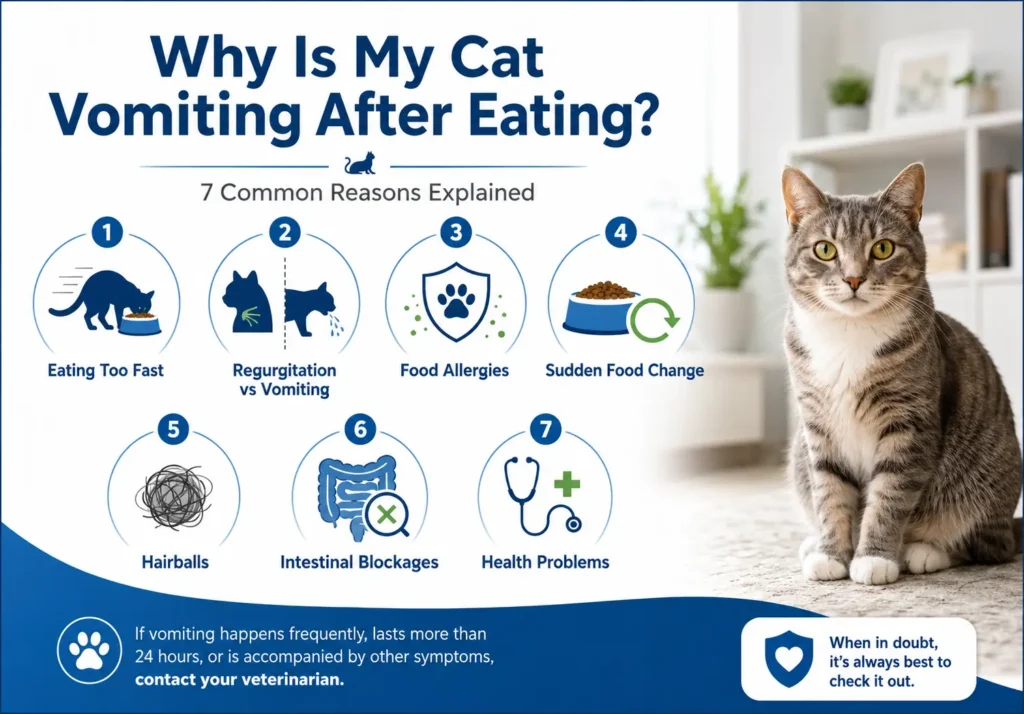
Some cats eat too fast. Others bring food back up because of regurgitation. Food allergies and sudden diet changes can also upset the stomach. Hairballs may play a part. More serious causes include intestinal blockages and diseases that affect the stomach or other organs.
The timing gives useful clues.
Food that comes back up very soon after eating may not be true vomiting at all. Regurgitation happens with little effort and often brings up undigested food. Vomiting is more active. A cat may drool or lick its lips first. You may also see strong belly movement and retching.
One mild episode may not mean your cat is sick. Repeated vomiting needs more attention. Watch your cat’s appetite and energy. Check for weight loss diarrhea pain and changes in thirst or litter box habits.
| Possible Cause | What You May Notice | When It Often Happens | Level of Concern |
| Eating too fast | Whole food comes back up | Soon after eating | Usually manageable |
| Regurgitation | Undigested tube-shaped food | Minutes after a meal | Needs a check if repeated |
| Food allergy or intolerance | Vomiting with itching or diarrhea | After eating certain foods | Needs investigation |
| Sudden food change | Stomach upset and soft stool | After starting new food | Often mild |
| Hairballs | Food mixed with hair | Before or after a hairball | Depends on frequency |
| Intestinal blockage | Repeated vomiting and poor appetite | After food or water | Emergency |
| Medical problem | Vomiting with other body changes | May happen after many meals | Needs veterinary care |
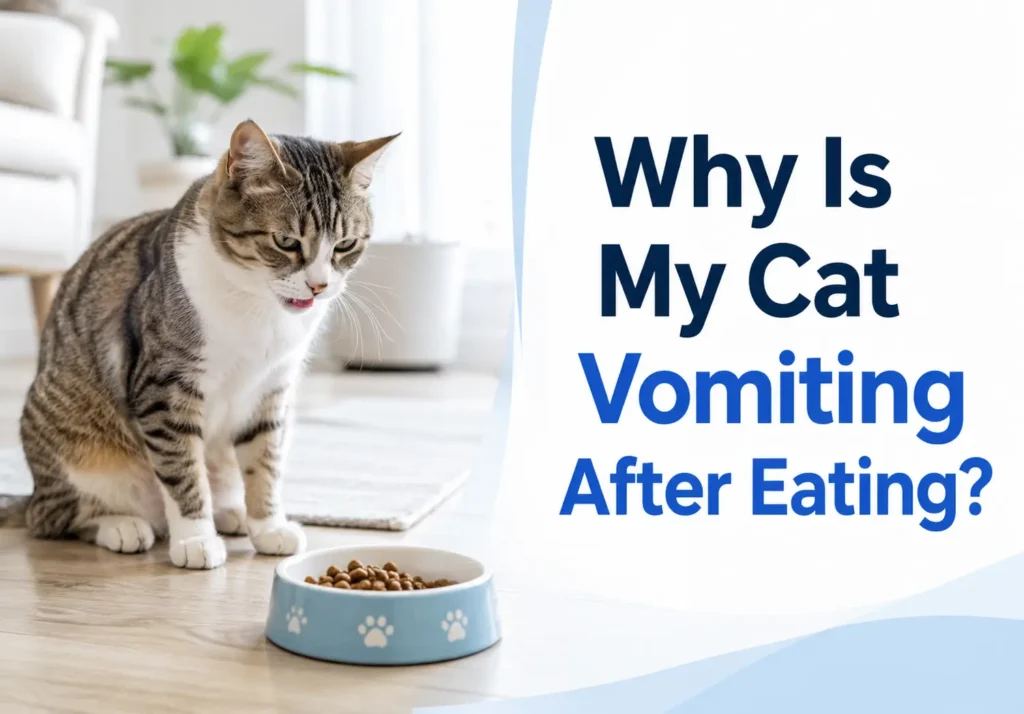
Some cats can empty a bowl in less than a minute. They swallow large bites with very little chewing. The air may go down with the food too.
The stomach fills fast. This can make food come back up before normal digestion has much time to start.
You may see whole dry food pieces on the floor. Wet food may appear as a soft pile. The cat may act normal right afterward and even return to the bowl.
Food competition is a common reason.
A cat may live with another cat or dog and feel pressure around the food bowl. The pets do not need to fight. One animal may simply stare or stand nearby.
The nervous cat learns to eat quickly before another pet gets close.
Cats that once lived outdoors may also rush through meals. They may have learned that food was not always available. Long gaps between meals can cause the same problem. A very hungry cat may eat with little control.
Overeating stretches the stomach.
A cat that gets one huge meal may struggle more than a cat eating several smaller servings. Dry food can also absorb fluid after it reaches the stomach and add to the full feeling.
Treats count as food too. Several people in one home may each give treats without knowing how much the cat already ate. This can lead to too many calories and stomach discomfort.
Try a few simple changes:
An automatic feeder can help when you are away during the day. It can release smaller portions at set times. Keep the total daily calories the same. More meals should not mean more food.
Fast eating is easy to blame because it happens around mealtime.
Still repeated vomiting may have another cause. A cat that loses weight despite eating well may have a health problem. Diarrhea and poor coat condition can point to digestive disease. Increased thirst may also be important.
If smaller and slower meals do not help then contact a veterinarian.
Regurgitation and vomiting are often confused.
Both can leave food on the floor. What happens inside the body is different. Learning the difference can help you explain the problem clearly to your veterinarian.
Regurgitation is usually passive.
The cat may lower its head and suddenly bring food up. There is often little warning. Strong belly contractions are normally absent. The food often looks undigested because it may not have reached the stomach. It may also look long or tube-shaped. This shape can come from sitting inside the esophagus.
Regurgitation may happen minutes after eating.
Vomiting takes more effort.
The cat may act restless before it happens. Some cats hide or start licking their lips.
Drooling and repeated swallowing may appear. Then the belly begins to move. Retching often happens before food or liquid comes out. Vomit may contain partly digested food. It can also include foam hair, yellow liquid or mucus.
One episode after eating too quickly may improve with feeding changes.
Repeated regurgitation can point to an esophagus problem.
Food may not move toward the stomach normally. The esophagus may be irritated or widened. A physical problem can also make swallowing harder.
Repeated regurgitation may lead to weight loss because the cat does not keep enough food down. There is another risk. Food or liquid may enter the lungs. This can cause serious breathing trouble.
Pay attention to timing.
Note how many minutes pass between eating and the episode.
Watch the body. Strong belly movement suggests vomiting. Food coming out with little effort points more toward regurgitation.
Look at the food too. Whole pieces can be useful clues.
A video may help your veterinarian understand the event. Only record it when doing so will not delay urgent care.
Food can cause repeated vomiting in some cats.
Food allergy and food intolerance are not exactly the same.
A true allergy involves the immune system. The body treats part of the food as a problem. Food intolerance does not work through the immune system in the same way. The cat still has trouble handling an ingredient.
Both can cause stomach trouble.
Vomiting may happen after eating.
Some cats also develop diarrhea or soft stool. Gas can appear too.
Food allergy may cause skin signs. The cat may scratch around its face and ears.
Some cats lick their belly or legs so much that the hair becomes thin.
Repeated ear problems can also happen in cats with allergies.
Food allergies often involve proteins.
A cat may react to an ingredient even after eating it for a long time.
This is why changing only the brand name may not solve the problem. Two brands may contain many of the same protein sources.
Milk can also upset some adult cats. Many cats do not handle much lactose well.
A veterinarian may suggest an elimination diet.
The cat eats one carefully chosen diet for several weeks. The food may contain a protein the cat has never eaten before. Another option uses hydrolyzed protein. This protein is broken into very small pieces.
The diet trial must stay strict.
Treats and table scraps can spoil the test. Another pet’s food can do the same. Do not keep changing food every few days. That makes it harder to see what is helping.
A homemade diet may sound simple.
Cats have special nutrition needs. They need enough taurine and the correct balance of vitamins, minerals fat and protein.
An unbalanced long-term diet can cause health problems.
Use a diet plan made with professional veterinary guidance when a special food trial is needed.
A cat’s stomach may not handle a sudden food switch very well.
The new food may contain a different protein source. It may have more fat or fiber.
Even a change from one good food to another can cause vomiting in a sensitive cat.
Switching from dry to wet food overnight may upset digestion.
A new treat can also cause a problem. Some treats are richer than normal meals.
Table scraps are another common cause.
Fatty meat sauces and seasoned foods may be too rich for a cat’s stomach. Some human foods may also contain unsafe ingredients.
Spoiled food and garbage can cause stronger illness.
Most normal food changes can be made over about seven to ten days.
Try a gradual plan:
| Days | Old Food | New Food |
| Days 1 to 2 | 75% | 25% |
| Days 3 to 4 | 50% | 50% |
| Days 5 to 6 | 25% | 75% |
| Day 7 onward | 0% | 100% |
This is only a simple guide.
Some sensitive cats need a slower change. A veterinarian may also give different instructions for a special medical diet.
Look for vomiting and diarrhea.
Also watch appetite. A cat that suddenly refuses food should not simply be left hungry until it accepts the new diet.
Cats can develop serious problems when they stop eating for too long. Overweight cats are at higher risk of fatty liver disease.
Go back to the last food mixture your cat handled well if mild stomach trouble starts.
Call a veterinarian when vomiting becomes repeated or the cat stops eating.
If you change the main food and treats at the same time then it becomes hard to know which item caused the problem.
Change one thing at a time when possible.
Keep a short note on your phone with the date and food amount.
This simple record can become useful if symptoms appear.

Cats swallow hair while grooming.
Their rough tongues pick up loose fur. Most of the hair passes through the stomach and intestines and leaves in the stool.
Some fur stays behind and forms a wet clump.
This is called a hairball.
Yes.
A hairball can irritate the stomach. The cat may eat a meal and then feel sick because food is sitting around the hair.
The cat may bring up food first. A hairball may appear later.
Sometimes food and hair come out together.
You may also see yellow fluid mixed with the hair.
Long-haired cats may swallow more fur.
Heavy shedding can also raise the amount of hair going into the stomach.
Skin problems are another reason.
Fleas may groom a cat all day. Allergies can cause itching and repeated licking.
Stress can also lead to overgrooming.
Check for bald spots and red skin. Scabs and broken hair can also be warning signs.
Brush your cat often.
A short-haired cat may do well with brushing once or twice each week. Long-haired cats often need more frequent care.
Remove loose fur before the cat swallows it.
Keep flea control up to date with products that are safe for cats.
Give your cat enough playtime. Boredom and stress can make some cats lick themselves too much.
A veterinarian may suggest a special diet or cat-safe hairball product when hairballs are frequent.
Hairballs do not always come back up.
A large clump can move into the intestines and become stuck.
The cat may vomit repeatedly. It may stop eating and hide.
Little or no stool may appear.
A painful belly or repeated dry retching also needs fast attention.
Do not assume every repeated vomiting episode is just a hairball.
Cats sometimes swallow things that are not food.
String is a major danger. Ribbon yarn thread dental floss hair ties rubber bands and small toy parts may also be swallowed.
These objects can become stuck in the stomach or intestines.
A blockage can make a cat vomit after eating because food has nowhere to move normally.
String can act differently from a solid object.
One end may become trapped under the tongue or inside the stomach.
The intestines may keep trying to move the other end forward.
This can pull the intestines into tight folds. The string may damage or cut through the tissue.
Never pull string that is hanging from a cat’s mouth or anus.
The visible part may be attached to something deeper inside.
Watch for:
A partial blockage can be confusing.
The cat may seem better for a few hours. It may even eat again before vomiting returns.
This does not mean the problem is gone.
A veterinarian may feel the abdomen during the examination.
X-rays can help show some objects or unusual gas patterns.
Not every object appears clearly on an X-ray. An ultrasound may provide more detail.
Blood tests can show dehydration and other body changes.
Some objects in the stomach can be removed with an endoscope.
Others require surgery.
Fast treatment matters because blocked tissue can lose its blood supply and become badly damaged.
Store sewing supplies in closed containers.
Put ribbon away after birthdays and holidays.
Use a covered trash can for dental floss.
Keep hair ties inside drawers.
Check cat toys often. Throw away anything with loose string or broken pieces.
Use wand toys only when someone is watching the cat.
Vomiting after food does not always mean the meal itself caused the problem.
Many diseases can create nausea.
The cat may eat because it feels hungry. A short time later the underlying illness makes it vomit.
Gastritis means inflammation of the stomach lining.
A cat may develop it after eating something irritating. Infection parasites medicine toxins and other health problems may also cause it.
The cat may vomit food bile or foam.
Some cats stop eating.
Long-lasting gastritis may also cause weight loss and weakness.
Inflammatory bowel disease affects the digestive tract.
The intestines become irritated and may not handle food normally.
Vomiting can happen again and again. Diarrhea may also appear.
Some cats lose weight while still eating.
Other cats become picky and start eating less.
A veterinarian may use blood work stool tests imaging and sometimes tissue samples to find the cause.
The pancreas helps the body digest food.
Pancreatitis means the pancreas has become inflamed.
Cats with pancreatitis can show quiet signs.
They may hide or sleep more than usual. Poor appetite is common.
Vomiting can happen but not every cat with pancreatitis vomits.
Dehydration and belly pain may also occur.
The kidneys remove waste from the blood.
When they stop working well waste products can build up.
This can make a cat feel sick after eating.
Kidney disease is more common in older cats.
Other signs may include increased thirst and urination. Weight loss and poor appetite can develop too.
Hyperthyroidism affects the thyroid gland.
The gland produces too much thyroid hormone and speeds up the body.
A cat may seem very hungry but still lose weight.
Vomiting and diarrhea can occur.
The cat may drink and urinate more. Some become restless or more vocal.
A blood test can help find the problem.
The liver does many jobs in the body.
Liver disease may cause poor appetite and vomiting.
Some cats lose weight and become weak.
Yellow gums or yellow eyes can appear with jaundice.
Yellow body tissue is more serious than simply seeing yellow liquid in vomit.
Intestinal parasites can irritate the stomach and intestines.
Kittens and outdoor cats may face more exposure.
An infected cat may have vomiting diarrhea poor weight gain or a swollen belly.
Some infections can also cause stomach and intestinal signs.
A stool test may help find certain parasites.
The veterinarian will first ask questions.
When did the vomiting begin?
Does it happen right after eating or several hours later?
What does the vomit look like?
Has your cat lost weight?
Testing may include blood work and urine testing.
A stool test can check for parasites.
X-rays or ultrasound may help examine the stomach and intestines.
The exact tests depend on the cat’s age symptoms and medical history.
One isolated episode may not be a major concern when an adult cat acts normal afterward.
Repeated vomiting is different.
Seek veterinary advice when your cat keeps vomiting after meals.
Urgent care is more important when the cat:
Kittens and older cats may become dehydrated faster.
Cats with an existing disease may also need care sooner.
Good details can save time during the examination.
Write down when your cat eats and when vomiting happens.
Take a photo of the vomit before cleaning it when possible.
Look for whole food and partly digested food. Note any hair yellow liquid white foam blood worms grass string or plastic.
Tell the veterinarian about recent food changes.
Mention treats and table scraps too.
Report changes in drinking urination stool energy and weight.
A video can help show whether your cat is vomiting or regurgitating.
Do not delay emergency care just to collect more information.
Not every cause can be prevented.
Good feeding habits can still lower several common risks.
Feed measured meals on a regular schedule.
Use a slow feeder when your cat eats too fast.
Change diets slowly.
Keep string ribbon medicine chemicals and small objects away from your cat.
Brush the coat often and use safe flea control.
Watch body weight.
Routine veterinary checkups can also find some health problems before vomiting becomes frequent.
A cat may vomit after eating because it ate too fast or swallowed too much food at once. Regurgitation can also make undigested food come back up soon after a meal.
Food allergies, sudden diet changes and hairballs can irritate the digestive system. More serious causes include intestinal blockages, stomach disease, pancreatitis kidney disease and other health problems.
Pay attention to the pattern. Look at how soon the vomiting happens after food. Notice what comes up and how your cat acts afterward. One mild episode may pass without a problem. Repeated vomiting needs a proper veterinary check. Early attention can help find the real cause before dehydration or another serious problem develops.