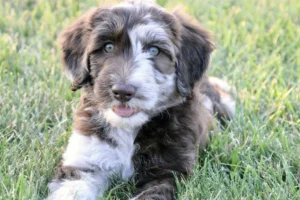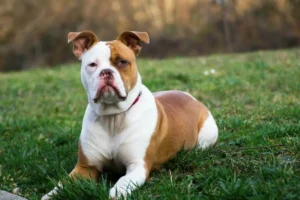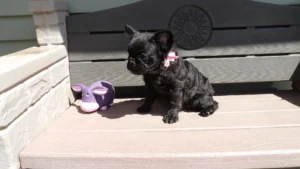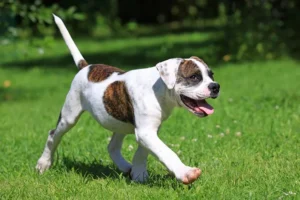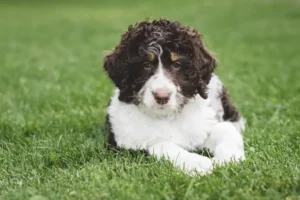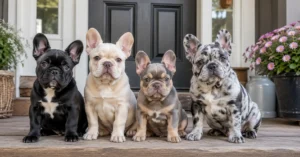
A Fluffy French Bulldog can make people stop and look twice.
The face looks like a Frenchie. The bat ears are there. The body is short and stocky. But instead of the usual smooth coat, the dog has longer soft hair around the ears, neck, chest, legs, and sometimes the tail.
So what makes a French Bulldog fluffy?
The short answer is genetics.
Long hair in dogs is strongly linked with changes in a gene called FGF5. French Bulldogs can carry a recessive FGF5 variant connected with longer hair. A puppy usually needs the right long-hair gene from both parents before the fluffy coat becomes visible. That sounds simple, but the full story is a bit more interesting.
A smooth Frenchie may secretly carry the long-hair trait. Two short-haired parents can sometimes produce a fluffy puppy. DNA testing can help find these hidden genes. And no, seeing long hair by itself does not automatically prove that another breed was recently mixed in.
One thing needs to stay clear though. The normal French Bulldog show standard calls for a short and smooth coat. A fluffy coat sits outside that traditional show look.
Let’s break all of this down without turning it into a genetics textbook.
| Question | Simple Answer |
| What causes fluffy hair? | Recessive long-hair genetics |
| Main gene involved | FGF5 |
| Can smooth parents carry it? | Yes |
| Can two smooth Frenchies have fluffy puppies? | Yes, if the right genes are passed down |
| Is the coat naturally possible in Frenchies? | Yes, long-hair variants occur in the breed |
| Does fluffy hair meet the usual show standard? | No |
| Can DNA testing detect coat genes? | Yes |
| Does fluffy hair itself prove poor health? | No |
| Does fluffy hair prove the dog is purebred? | No, pedigree and parentage matter too |
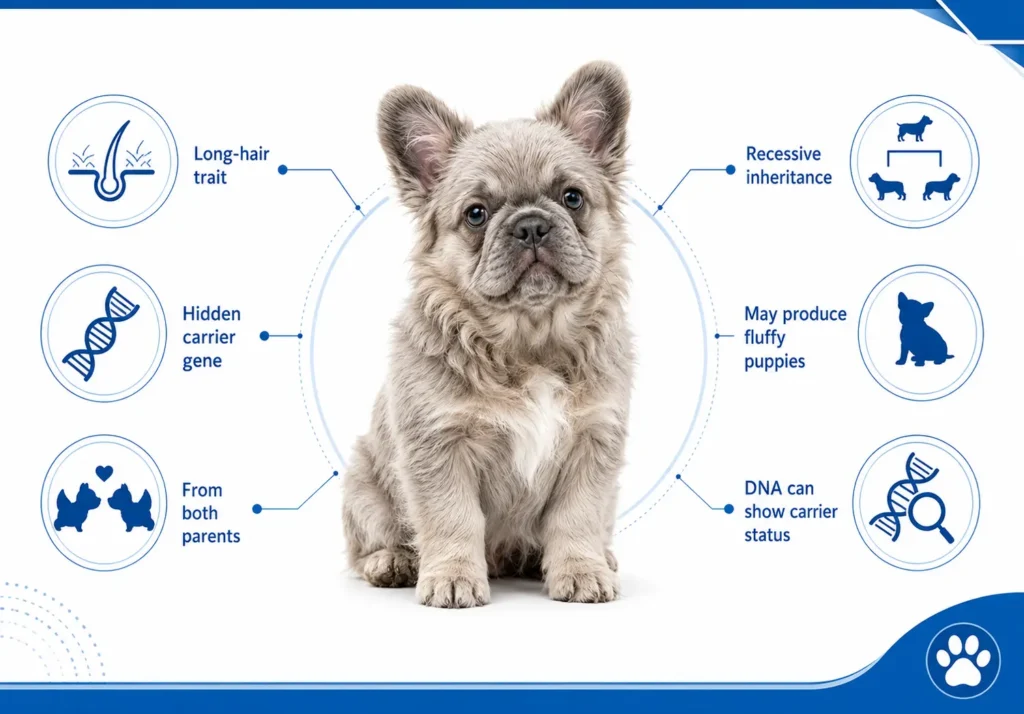
The fluffy coat starts with DNA.
Every dog gets genetic information from its mother and father. These genes help control things such as size, coat color, hair length, body shape, and loads of other features.
Hair length is one of those inherited traits.
In French Bulldogs, longer hair is linked with variants in the FGF5 gene. One known FGF5 variant called L4 has been identified in French Bulldogs.
This is where it gets fun.
Long hair usually acts as a recessive trait. That means a French Bulldog can carry a long-hair copy without looking fluffy. The dog may have a totally normal short coat. You would never guess anything from looking at it. That hidden copy can still pass to puppies.
So a smooth Frenchie may carry the fluffy trait for years without anyone noticing.
Think of each parent giving the puppy one coat card.
For a very basic example:
Real genetics can involve different variants, so don’t get stuck on this little example as if every dog fits one neat box. The main idea is easy. A dog can carry long hair without showing it.
A breeder may have several litters of smooth puppies.
Then one day — fluffy puppy. That can look strange if nobody knew the parents carried long hair. The gene did not magically appear that morning.
It may have traveled quietly through several generations. DNA testing now makes hidden coat traits much easier to spot before breeding.
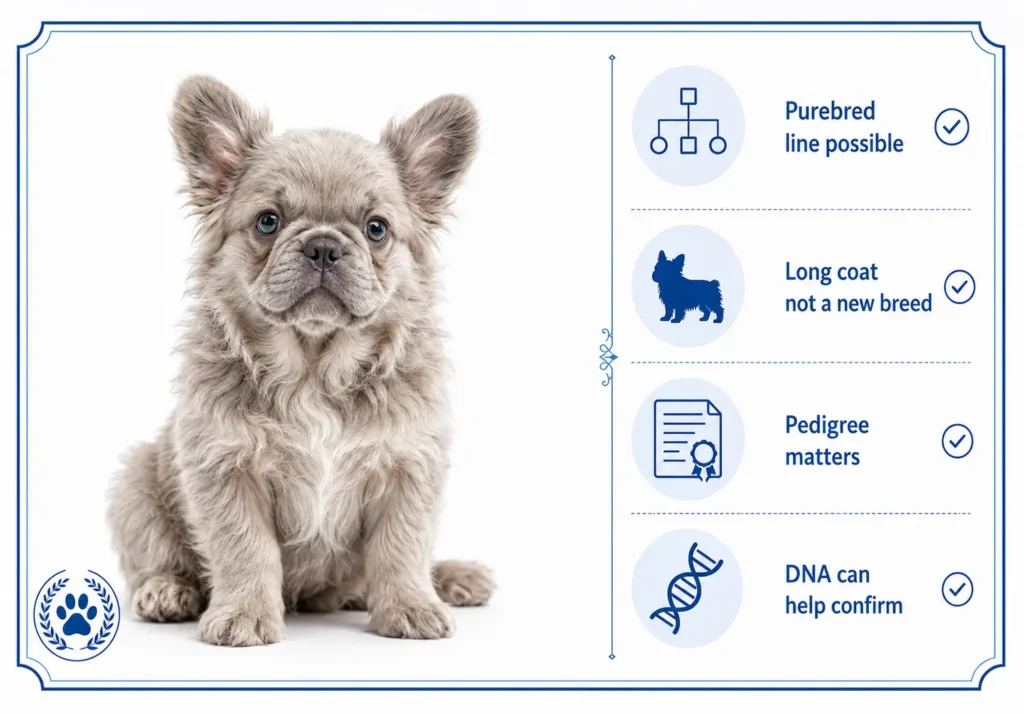
FGF5 stands for fibroblast growth factor 5. Big name. Pretty simple job to understand.
The gene plays an important role in controlling how long hair continues growing before the hair-growth cycle changes.
Variants that reduce normal FGF5 function are linked with long coats in dogs. Researchers have identified several recessive FGF5 variants that can produce long-haired dogs.
Think of FGF5 like part of the body’s stop signal for hair growth. With the usual short-coat version working normally, hair growth stops sooner. With certain recessive long-hair variants, hair can keep growing longer.
The result?
More fluff.
You often notice it most around the ears and chest. Hair may also look longer around the back legs, shoulders, and tail.
This part gets missed a lot online.
Scientists have found several FGF5 variants linked with long hair in dogs. They are sometimes grouped under names such as L1 through L5. Different breeds can carry different versions. The L4 variant has been reported in French Bulldogs.
New research continues to find additional FGF5 changes in dogs with long coats. So coat genetics is a little more complicated than saying there is one single “fluffy gene” shared by every long-haired dog.
No good reason exists to treat the long-hair gene as a personality switch.
A fluffy Frenchie can be playful.
Another may be calm.
One might follow you everywhere. Another may be stubborn enough to act like the couch belongs to him and you’re just renting space.
Temperament depends on many genes plus early handling, training, socialization, health, and daily life. Don’t buy a puppy because someone says fluffy Frenchies are naturally sweeter or smarter.
Hair length doesn’t tell you that.
Not by itself.
A coat makes a dog look bigger than it really is.
A fluffy Frenchie can look surprisingly chunky in photos because long hair adds shape around the neck and body. Underneath that coat, it should still have French Bulldog type and size based on its own genetics.
Yes.
This is probably the part that surprises people most.
Two smooth-coated French Bulldogs can produce a long-haired puppy when both parents carry compatible recessive long-hair genetics.
Neither parent needs to look fluffy.
Imagine both parents carry one hidden long-hair copy. When they produce puppies, each parent passes genetic information to each puppy. Some puppies may receive the short-coat versions.
Some may become carriers like their parents. Some may inherit the needed recessive combination and grow long hair. Each puppy gets its own combination. So one litter might have a fluffy puppy while another litter from the same parents might not.
People sometimes expect every puppy in a litter to look nearly identical.
Not really.
One puppy may have a slightly different body build. Another may have different markings.
One can be a little bigger. And if the parents carry recessive coat genes, coat length can differ too. That’s normal genetic variation at work.
Not automatically.
A fluffy coat by itself cannot tell you whether another breed exists somewhere in the recent family tree.
The important thing is that long-hair FGF5 variants are known to occur in French Bulldogs. If you want information about parentage, coat length isn’t the right test by itself. You need pedigree records and, when useful, DNA parentage testing.
This is super important.
A coat test can tell you about coat genes. It does not read the dog’s entire family history and stamps “purebred” across the page.
That’s a different question. More on that in a minute.
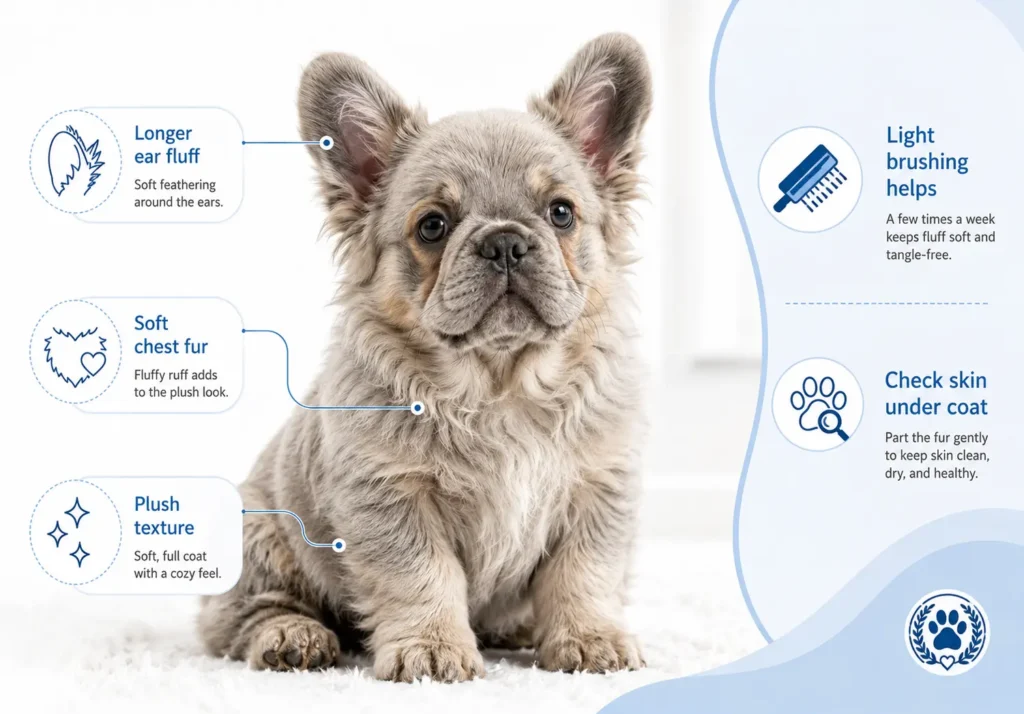
Not every fluffy Frenchie looks equally fluffy.
Some have clearly long feathers around the ears.
Others have a thicker coat over the whole body. One dog may look almost like a regular Frenchie until you notice the extra hair around its neck and chest.
Another looks like somebody turned the fluff setting all the way up.
You may notice extra hair around:
The exact look varies from dog to dog. Coat genetics do not build every strand to one exact measurement.
Not exactly.
Fluffy Frenchies still have a dog coat. The hair usually looks soft and fuller than the normal Frenchie coat. It may feel plush around the chest and ears. Some dogs have longer wispy pieces that give them the classic fluffy look.
The standard French Bulldog coat is normally described as short, smooth, close, and soft. Long coats do not match the usual breed-show standard.
Usually a bit more than a smooth Frenchie.
Longer hair catches more loose fur and dirt. Brush through the coat regularly. Pay attention behind the ears and around areas where hair rubs together.
You don’t need to turn grooming into a three-hour beauty session every morning. A few good brushing sessions each week may be enough for many dogs depending on coat thickness.
This matters more than making the coat look perfect.
French Bulldogs can deal with skin irritation and allergies. Longer hair can make redness harder to see at first. Breed health information also points to skin and ear problems among concerns in French Bulldogs. Part the coat when brushing.
Look for:
Check the facial folds too.
Fluffy hair doesn’t remove the need for normal Frenchie skin-fold care.
DNA testing is one of the easiest ways to understand coat length before breeding.
A small sample can be tested for known FGF5 variants.
The report may show whether the dog carries a tested long-hair copy or has a genetic combination linked with the long-haired look.
A coat test may help answer:
Laboratories currently offer coat-length testing that includes FGF5 variants found in French Bulldogs.
That’s useful information. But don’t let one sheet of paper throw you off the scent.
An FGF5 test does not tell you whether the dog has perfect:
A coat test is a coat test.
That’s it.
If someone waves a fluffy DNA report around and says the puppy is “100% health tested,” ask what actual health tests the parents completed.
Those are two very different things.
Parentage testing asks another question. It compares DNA markers to see whether the claimed mother and father match the puppy. That can help support family records.
A coat test cannot do that unless the test is specifically designed for parentage too.
Commercial ancestry tests compare a dog’s DNA with reference groups. They can offer useful information, but they are not the same as an official pedigree record.
Databases and methods can vary. For a puppy being sold as a purebred French Bulldog, look at the whole package.
One result alone doesn’t tell the whole story.
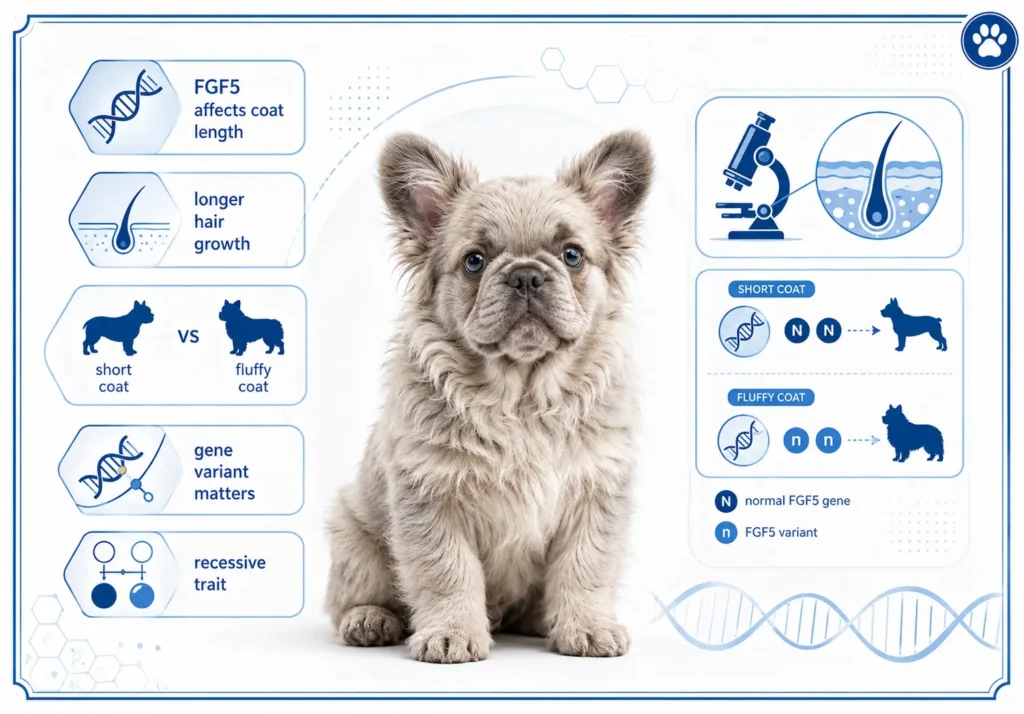
They can be.
But the fluffy coat alone cannot prove it. That difference is worth repeating.
French Bulldogs are known to carry a long-hair FGF5 variant, so a long coat is genetically possible within French Bulldog lines. Still, purebred status depends on ancestry and parentage.
A dog can have purebred parents and still show a trait outside the show standard.
The traditional French Bulldog standard asks for a short and smooth coat. Long coats are not part of the accepted show appearance and are treated as a disqualifying coat trait in major breed standards.
That does not automatically rewrite the dog’s parents.
Think about it this way.
Purebred asks:
“Who are this dog’s ancestors?”
Breed standard asks:
“How closely does this dog match the written ideal for the breed?”
Those are related questions.
They are not identical.
A registered dog can have a trait that does not fit the show standard. Registration mainly deals with records and ancestry under the rules of that registry. Show judging deals with physical traits against a written standard. And health testing is another separate thing.
Don’t mix all three together.
Most people have only seen smooth French Bulldogs. Then a fluffy one appears and looks almost like another small breed around the ears. So people assume somebody must have added another dog.
That assumption isn’t enough evidence. Known long-hair genetics exist in French Bulldogs. If purebred status matters to you, ask for proper records instead of trying to guess from a photo.
Before paying a high price, ask to see:
A responsible breeder should be able to explain where the fluffy trait comes from without turning it into some mystical rare secret.
The long-hair FGF5 trait is about hair length.
Current evidence does not support treating the fluffy coat itself as the reason French Bulldogs develop the major health problems associated with the breed.
The bigger concerns come from French Bulldog body structure and breeding choices.
French Bulldogs as a breed have increased risks for conditions including breathing trouble, eye disease, skin problems, spinal issues, and heat intolerance. Research continues to identify substantial health concerns in the breed.
French Bulldogs are brachycephalic. That means they have a shortened skull and muzzle. Some develop brachycephalic obstructive airway syndrome or BOAS.
The dog may have narrow nostrils or other airway changes that make breathing harder. BOAS remains one of the key health issues identified in French Bulldogs.
Listen to the dog at rest.
Constant struggling or harsh breathing should not be dismissed as “normal Frenchie sounds.”
A dog cools itself mainly by panting. A short airway can make cooling less efficient. That means Frenchies need extra care during warm weather whether they have short hair or a fluffy coat.
Keep walks short during hot parts of the day.
Provide water.
Use a cool indoor area.
Never leave the dog inside a parked car.
If the dog keeps scratching or licking its paws, don’t just keep changing shampoos. Find out why.
The French Bulldog has a compact body. Some individuals develop spinal and movement problems. Watch for back pain, weakness, reluctance to jump, or sudden trouble using the back legs.
A puppy’s color and coat type should never matter more than comfortable movement.
This is where buyers need to slow down. A rare coat can become a huge selling point. Some breeders may focus so heavily on producing fluffy puppies that health becomes second place.
That is the real concern.
It is not that long hair automatically creates bad health. It is that breeding only for one unusual appearance can be a bad idea if breathing, body structure, temperament, and genetic health are ignored.
Start with the parents.
Look at how they breathe.
Watch them walk.
Ask about previous health problems.
Then ask for real testing.
A useful checklist includes:
Breed health organizations encourage structured testing to help breeders make better decisions about French Bulldog health.
Don’t accept “vet checked” as the full answer.
A normal puppy check is good. It is not the same thing as health testing the breeding parents.
A fluffy carrier is usually a short-coated Frenchie that carries long-hair genetics. The dog may look completely smooth. Unless you test the DNA or already know the family genetics, you may never know by looking.
That is why carriers can keep the trait moving through generations. There is nothing weird about a recessive gene doing this. Loads of inherited traits can stay hidden until the right combination meets.
No.
A short-coated adult carrier does not suddenly wake up at age four with a long coat because the hidden gene “turned on.”
The dog’s coat type comes from its genetic combination. Normal coat thickness can change a bit with age, hormones, weather, or health. That’s different from becoming a true genetic long-haired Frenchie.
No.
Trimming changes hair length on the outside.
It does nothing to DNA.
A fluffy Frenchie that gets a short haircut still carries the same genetic coat traits. When the coat grows back, it can grow long again.
Same dog.
Same genes.
Shorter haircut.
No.
Coat length and coat color are controlled by different genes.
A dog can be fluffy and fawn.
Fluffy and brindle.
Fluffy and another color.
The FGF5 gene deals with hair length rather than deciding the full coat color pattern. This is another reason not to lump every unusual Frenchie trait together under the word rare. Each trait has its own genetics.
Long hair should be the obvious difference.
The dog should still have the general French Bulldog type rather than looking like an entirely different dog hidden under fur. You’d expect the familiar upright bat ears and compact body.
The muzzle remains short.
The head remains broad.
The coat adds fluff around those features rather than creating a new breed. Still, remember that health should win over an extreme appearance every single time.
A dog that can breathe freely and move comfortably is far more important than one with the fluffiest ears on social media.
What makes a French Bulldog fluffy?
Mostly genetics.
Certain recessive variants in the FGF5 gene are linked with long hair in dogs, and an L4 FGF5 variant has been identified in French Bulldogs.
That hidden trait can pass through smooth-coated dogs.
Two short-haired Frenchies may produce a fluffy puppy when both pass compatible long-hair genetics. DNA testing can help show whether a dog carries known coat-length variants. Just remember that a fluffy DNA result is not a complete health test and it doesn’t prove an entire family tree by itself.
A fluffy French Bulldog can come from purebred French Bulldog lines. At the same time, the long coat does not match the traditional short and smooth breed-show standard.
Most important of all, don’t let the soft coat steal all your attention. Breathing, movement, eyes, skin, spine health, and overall quality of life matter much more.
The fluff is interesting. A healthy dog is the real goal.