
Yellow vomit can look scary. It may appear as a small watery puddle or yellow foam. Some cats vomit it once and act normal. Others keep vomiting and lose interest in food.
The yellow color often comes from bile. Bile is a fluid made by the liver. It helps the body break down fat. It normally stays in the small intestine. It may enter the stomach when the stomach is empty or upset.
An empty stomach is one common cause. Still it is not the only reason. Yellow liquid can also appear because of fast eating. Hairballs can upset the stomach too. Food problems and serious health conditions may cause it as well.
The color gives one clue. Your cat’s behavior gives more. Watch its appetite. Check its energy and litter box habits. Notice if it has pain or diarrhea.
| Possible cause | Why yellow liquid may appear | Other signs | Level of concern |
| Empty stomach | Bile and stomach fluid collect when no food is present | Vomiting before breakfast or between meals | Often manageable |
| Bile vomiting | Stomach or intestines become irritated | Foam, nausea, lip licking, or poor appetite | Depends on frequency |
| Fast eating or skipped meals | Meal timing upsets the stomach | Undigested food or hunger | Often manageable |
| Hairballs | Swallowed fur irritates the stomach | Gagging, overgrooming, or hair in vomit | Usually mild unless frequent |
| Food reaction | New food or an ingredient causes digestive trouble | Diarrhea, gas, itching, or poor appetite | Needs attention if repeated |
| Liver disease or pancreatitis | Internal inflammation causes nausea | Weakness, pain, weight loss, or yellow gums | Serious |
| Emergency condition | Poison, blockage, or severe illness causes repeated vomiting | Collapse, swollen belly, blood, or breathing trouble | Emergency |
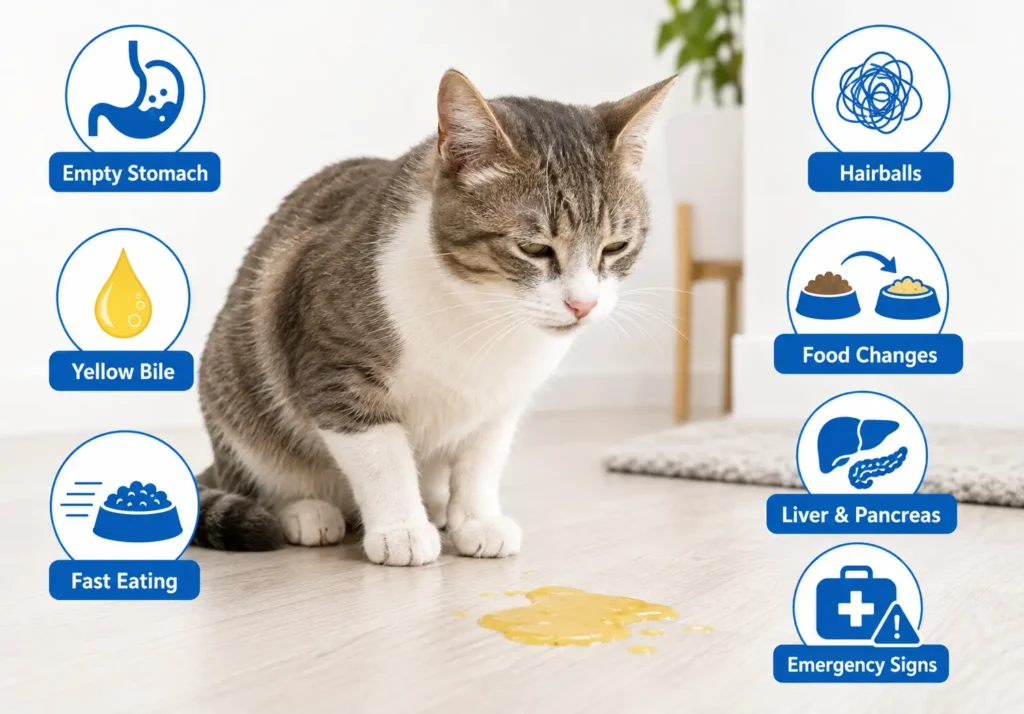
Cat vomit can look different each time. It depends on what was inside the stomach before the cat became sick.
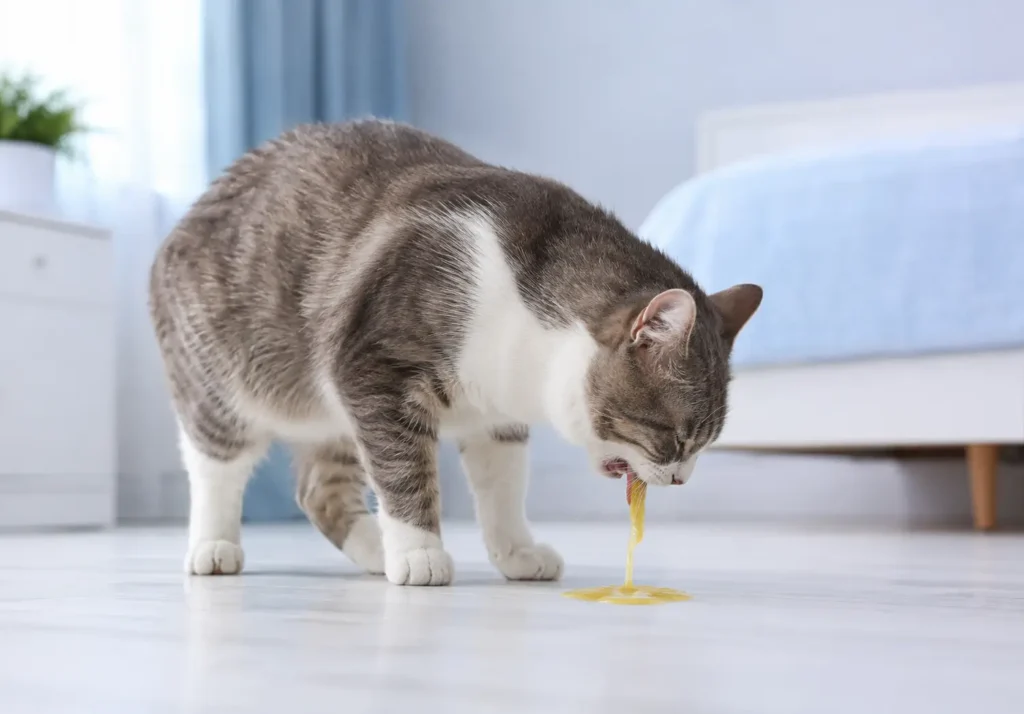
Yellow vomit often contains bile and stomach fluid. It may look thin and watery. Some yellow vomit has bubbles or white foam on top.
A cat with an empty stomach may bring up only a small amount. This often happens before breakfast or after a long gap between meals.
Yellow liquid can also appear after the cat has already vomited food. Once the stomach becomes empty there may be nothing left except bile and stomach fluid.
The liver makes bile and stores some of it in the gallbladder. The body sends bile into the small intestine when food needs to be digested.
Bile helps break down fat. It is a normal part of digestion.
The stomach does not usually hold much bile. It may move backward when the digestive system becomes irritated. Strong retching may also bring it up.
This does not always mean the liver is damaged. Many simple stomach problems can produce yellow vomit.
Yellow bile may look bright yellow. It can also appear yellow-brown or yellow-green.
A thin yellow puddle often means there was little food inside the stomach. Thick liquid may contain mucus. White bubbles may appear when air mixes with stomach fluid.
Look closely before cleaning it. You may notice hair or pieces of food. Grass can also appear. Blood needs faster attention.
Take a photo when possible. A clear picture can help your veterinarian understand what came up.
Clear liquid may be water or stomach fluid. A cat may bring it up after drinking too quickly.
White foam often appears when the stomach is empty. It can also happen with mild stomach irritation.
Brown vomit may contain partly digested food. Dark material that looks like coffee grounds may contain digested blood.
Bright red streaks may come from fresh blood. Strong retching can irritate the throat but blood should not be ignored.
Green vomit may contain bile or grass. Color alone cannot show the exact cause.
Vomiting takes effort. A cat may drool before it happens. It may lick its lips or swallow many times.
The belly muscles move during vomiting. The cat may crouch and retch before liquid comes out.
Regurgitation usually happens quickly. Food comes back up with little effort. It often looks whole and appears soon after a meal.
Yellow liquid is more likely to come from vomiting. Regurgitation usually contains food from the esophagus.
Watch the body movements during an episode. A short video may help the veterinarian tell the difference.
Meal habits can upset a cat’s stomach.
Some cats eat a full serving within seconds. They swallow large bites and take in air. Their stomach fills too quickly.
The cat may first bring up undigested food. It may retch again after the food is gone. The second puddle may contain yellow bile.
Skipping meals creates a different problem. The empty stomach can become irritated by acid and digestive fluid.
Food competition is a common reason.
A cat may live with another pet that stands near its bowl. The animals may not fight. The nervous cat can still feel pressure to finish first.
Former stray cats may also rush through meals. They once had no steady food supply. They learned to eat whenever food became available.
Long gaps between meals can make any cat very hungry. A hungry cat may swallow food without slowing down.
A cat may refuse a meal because it does not like new food. Stress can reduce appetite too.
Dental pain may make chewing uncomfortable. Fever and nausea can also cause food refusal.
Some cats approach the bowl but walk away after smelling the food. This can be a sign of nausea.
Do not assume that the cat is simply being picky. A sudden change in appetite often means something is wrong.
Nausea can stop a cat from eating. The stomach then stays empty for a long time.
Acid and bile irritate the empty stomach. The cat vomits yellow liquid and feels even more sick.
This cycle can continue if the cat receives no help.
Cats should not go for long periods without food. Overweight cats can develop a serious liver problem when they stop eating.
Divide the daily food amount into several small meals.
A cat may do better with breakfast and lunch. It can also have dinner and a small bedtime serving.
Use a slow-feeder bowl for a fast eater. Raised shapes make the cat take smaller bites.
Spread wet food across a flat plate. A thin layer takes longer to eat.
Puzzle feeders can slow down dry food. Choose an easy design at first so your cat does not become frustrated.
Feed pets in separate rooms when they compete. A quiet space can help a nervous cat relax.
An automatic feeder can provide a small meal during the night or early morning.
More meals should not mean more food.
Measure the full daily amount first. Divide that amount into smaller servings.
Read the calorie information on the food package. One cup of one food may contain more calories than another.
Treats also count. Ask everyone in the home to follow the same feeding plan.
Too much food can cause weight gain. Extra weight can make many health problems worse.
Cats clean themselves with rough tongues. Loose hair sticks to the tongue and gets swallowed.
Most hair passes through the intestines and leaves in the stool. Some hair remains in the stomach and forms a wet clump.
This clump is called a hairball. It can rub against the stomach lining and cause nausea.
A cat may vomit yellow liquid before bringing up the hairball. It may also bring up bile after repeated gagging.
A hairball often looks long and narrow. It takes this shape while passing through the esophagus.
It may be covered with yellow or brown fluid. Food can also stick to it.
The cat may cough or gag before producing the clump. Some cats make loud retching sounds.
Coughing from asthma can look similar. Frequent coughing or gagging needs a veterinary check.
Long-haired cats swallow more fur during grooming. Heavy shedding can also increase the amount of hair in the stomach.
Fleas make cats itchy. The cat may lick and bite the coat all day.
Skin allergies may cause red skin and scabs. Bald spots can appear after constant grooming.
Stress can cause overgrooming too. Some nervous cats lick one area until the hair becomes thin.
Digestive disease may slow the movement of hair. This allows more fur to collect.
Brush a long-haired cat every day when possible. A short-haired cat may need brushing once or twice each week.
Regular brushing removes loose fur before the cat swallows it.
Use flea treatment made for cats. Never use a dog product unless a veterinarian says it is safe.
Give your cat playtime and quiet hiding places. This can reduce boredom and stress.
A veterinarian may suggest a hairball diet or a cat-safe hairball product.
Do not give butter or cooking oil as a home cure. Mineral oil and human laxatives can also cause harm.
Most hairballs come out or pass through the stool. A large one may become stuck.
The cat may vomit many times and stop eating. It may become weak or hide.
A blocked cat may pass a little stool. Its belly may also feel painful.
Repeated dry retching is another warning sign. A blockage needs fast veterinary treatment.
Food can upset a cat’s stomach even when it looks fresh and healthy.
A sudden change can introduce new fat levels and proteins. It may also contain a different type of fiber.
The digestive system may not adjust right away. Vomiting and diarrhea can follow.
A food allergy or intolerance may cause repeated problems.
Changing the full diet in one day can be too much for a sensitive cat.
A switch from dry food to rich wet food may cause stomach trouble. A new treat can do the same.
Table scraps are another risk. Rich meat and sauces may contain too much fat or salt.
Onions and garlic can harm cats. Seasoned human foods should stay off the cat’s plate.
Spoiled food and trash may cause a more serious illness.
Change the food over seven to ten days when possible.
Start with mostly old food and a small amount of new food.
Use about 75 percent old food during the first part of the change. Mix in about 25 percent new food.
Move toward equal amounts after a few days.
Use mostly new food near the end of the transition. Then serve only the new food when your cat handles it well.
Some cats need a slower plan. Watch for vomiting and diarrhea. Also look for itching and food refusal.

A food allergy involves the immune system. The body treats a food ingredient like a harmful substance.
Food intolerance works differently. The digestive system may have trouble handling one ingredient.
Both can cause vomiting and diarrhea.
A food allergy may also cause itchy ears or skin. The cat may lose hair from constant licking.
Proteins are common triggers. A cat can react to something it has eaten for years.
A veterinarian may suggest an elimination diet trial.
The cat eats a selected food for several weeks. It may contain a protein the cat has never eaten.
Another choice is hydrolyzed protein. The protein is broken into very small pieces.
The cat must not eat treats or table scraps during the trial. Flavored medicine and another pet’s food can also spoil the test.
Do not keep changing foods every few days. This makes it harder to find the cause.
Yellow vomit does not always mean the liver has failed. Bile is naturally yellow.
Liver disease can still cause vomiting and poor appetite. Pancreatitis can cause similar signs.
Both conditions need a proper veterinary examination.
The liver helps the body process nutrients. It also removes waste and makes bile.
A sick liver may cause nausea and food refusal. The cat may lose weight and become weak.
Some cats drink more water. Vomiting may happen more than once.
Jaundice is an important warning sign. It makes the gums and eyes look yellow.
The inner ears or skin may also turn yellow. This is different from yellow vomit.
Yellow body tissue needs fast veterinary attention.
Fatty liver disease is also called hepatic lipidosis.
It can happen when a cat stops eating. The body sends stored fat to the liver for energy.
Too much fat builds up inside the liver. The organ cannot work normally.
Overweight cats face a greater risk. Stress and illness may start the loss of appetite.
Signs include vomiting and fast weight loss. Drooling and weakness can also occur.
A cat with fatty liver disease may develop yellow gums or eyes.
The pancreas sits near the stomach and intestines. It helps digest food and control blood sugar.
Pancreatitis means that the pancreas has become inflamed.
Cats with pancreatitis may hide and sleep more. Many stop eating.
Some vomit yellow liquid. Others may not vomit at all.
Weakness and dehydration can appear. A cat may also have diarrhea or belly pain.
The signs are often quiet. A sick cat may only seem less active than usual.
The liver and pancreas sit close to the small intestine.
Inflammation can affect more than one organ at the same time.
Some cats have inflammation in the liver area and pancreas. The intestines may also become irritated.
This group of problems is sometimes called triaditis.
Signs include poor appetite and weight loss. Vomiting and diarrhea may occur too.
Testing helps the veterinarian find which organs are involved.
The veterinarian may examine the cat and feel its belly.
Blood tests can check liver values and blood sugar. They also show changes in blood cells and body salts.
A special blood test may help find pancreatitis.
Urine tests show more about hydration and organ health.
An ultrasound can look at the pancreas and liver. It can also check the gallbladder and intestines.
Treatment may include fluids and pain medicine. The cat may also need anti-nausea medicine and nutrition support.
One small episode may not be an emergency when an adult cat acts normal.
Repeated vomiting can cause fast water loss. It may also change important body salts.
Serious causes include poisoning and intestinal blockage. Organ disease can also cause repeated yellow vomit.
Get urgent veterinary help if your cat vomits many times within a few hours.
A cat that cannot keep water down also needs fast care.
Blood in the vomit is a warning sign. Dark material that looks like coffee grounds may be digested blood.
A hard or swollen belly can point to a blockage.
Weakness and collapse are serious. Breathing trouble is an emergency.
Check the gums. Pale or blue gums need quick care. Yellow gums may point to liver or blood problems.
Food refusal also matters. Contact a veterinarian when your cat stops eating.
Cats may swallow string and ribbon. Hair ties and plastic can also become stuck.
A blockage prevents food and water from moving through the intestines.
The cat may vomit yellow liquid once the stomach becomes empty.
It may hide and become weak. Little or no stool may appear in the litter box.
A partial blockage can cause signs that come and go. A short period of improvement does not mean the object has passed.
Never pull string from the mouth or anus. It may be caught inside the intestines.
Common dangers include lilies and human pain medicine.
Antifreeze can poison cats. Cleaners and insecticides can also cause harm.
Some essential oils are unsafe. Dog flea treatments may contain ingredients that are toxic to cats.
A poisoned cat may vomit and drool. It may shake or walk in a strange way.
Trouble breathing and collapse need emergency care.
Do not use hydrogen peroxide to make a cat vomit. It is not a safe home method for cats.
Bring the product package or plant name to the veterinary clinic.
Write down when the first episode happened.
Count how many times your cat vomited. Note how much time passed between episodes.
Take a photo of the yellow liquid. Look for foam and hair. Check for food or blood.
Tell the veterinarian about any recent food changes. Mention new treats and missed meals.
Report access to medicine and plants. Include cleaners and pest products.
Share changes in thirst and urination. Stool changes are useful too.
Mention weight loss and weak behavior. Tell the veterinarian if your cat has been hiding.
A video may help show vomiting or regurgitation. Do not delay urgent care just to record one.
Yellow cat vomit often contains bile and stomach fluid. It may appear when the stomach stays empty for too long.
Fast eating and missed meals can upset digestion. Hairballs may irritate the stomach as well.
Food changes and food reactions can cause repeated vomiting. More serious causes include liver disease and pancreatitis.
Watch more than the color. Check your cat’s appetite and energy. Notice its weight and litter box habits.
One mild episode may pass without a problem. Repeated yellow vomiting needs veterinary care. Fast help becomes important when the cat has pain or weakness. Blood and food refusal also need quick attention.