

Aussiedoodle separation anxiety can be difficult for both dogs and owners. Aussiedoodles are often intelligent dogs and active dogs with a very strong family attachment. Their two parent breeds are the Australian Shepherd and the Poodle. Both are known as smart dogs and highly trainable dogs.
These dogs usually enjoy regular human contact and plenty of mental activity. The Australian Shepherd often brings loyalty and high energy. The Poodle adds a people-oriented nature and the mind of an active learner.
This mix can create a wonderful loving companion. It can also make some Aussiedoodles uncomfortable when they are left alone for long periods.
A little barking does not always mean anxiety. A young dog may show a normal puppy protest. However genuine separation anxiety causes strong distress during owner separation.
The dog may show barking and howling and pacing and panting and drooling. Some dogs begin scratching doors or leave behind damaged windows and damaged furniture. Even house-trained dogs may show indoor urination or indoor defecation.
In severe cases there may be frantic escape attempts and physical injuries.
Still not every dog that starts chewing shoes or showing window barking has anxiety. Boredom and lack of exercise and incomplete house training and outside noises can create similar problems. Medical issues can affect dog behavior too.
A camera recording is one of the most useful tools. It shows what happens after the owner departs. Many anxious dogs begin showing distress within the first ten minutes.
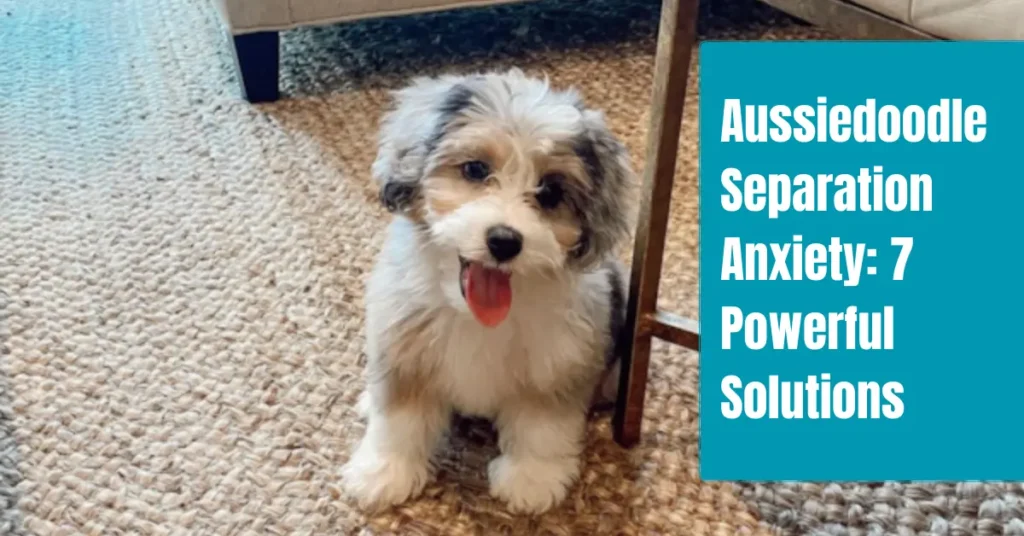
There is no single cause behind anxiety in Aussiedoodles.
Their dog personality may play a role. The dog may inherit strong loyalty and alertness from Australian Shepherd traits. It may also inherit the Poodle’s people-focused nature and quick learning ability.
This does not mean every dog will develop anxious behavior. It does mean some dogs become deeply involved in family life and struggle when independence training never happens.
A sudden routine change can act as an anxiety trigger. A dog may get used to having the owner at home every day. Then a new work schedule or school schedule suddenly leaves the dog several hours alone with no preparation.
A moving home experience can create stress too. The dog faces new sounds and new smells and new surroundings. A sensitive dog may need extra time to adjust.
A major household change can also matter.
A family member loss or pet loss may affect the dog. A new baby or another changed routine may also create uncertainty. Poor independence training is another common cause. A dog that practices constant owner following during puppy behavior may not learn how to settle without direct contact.
Short and safe periods alone during puppyhood training may reduce the future anxiety risk. Previous experiences matter as well. A rescue dog may have an unknown history. Another dog may have experienced excessive alone time before reaching full emotional readiness.
Genetics and individual temperament can influence behavior. Yet breed tendencies never decide everything. Early handling and socialization and training still shape the final result. Owners should also avoid the revenge misconception.
A dog does not create a damaged door because it feels angry. Destructive behavior usually comes from distress or panic. Punishment after returning home can cause increased anxiety because the dog cannot connect the correction with behavior that happened earlier.

The clearest separation anxiety signs appear when the dog is alone or when a specific person leaves.
Some Aussiedoodles show intense vocal behavior. They may begin barking or whining or howling soon after the owner’s departure. True separation-related barking often appears with another sign such as pacing or destruction or indoor elimination.
Destructive behavior may focus on exits.
You might find the dog scratching doors or chewing window frames or leaving damaged walls close to exit points. This often looks different from normal puppy chewing because it appears mainly during owner absence.
Another common sign is persistent pacing along a repeated path. A dog may also show heavy panting in a cool room or excessive drooling and salivation. Other possible signs include trembling and restlessness and refusing food or ignoring a favorite treat.
Some dogs show indoor urination or indoor defecation despite normal house training. More severe cases may include a frantic crate escape or room escape.
Many anxious dogs show constant owner following and unusual pre-departure behavior. They may stand near the owner all morning and later show extreme excitement at the owner ‘s return. You may also notice the dog standing near the door or hovering near the door with an inability to settle.
Symptoms appear with different intensity.
One dog may show only a short barking period. Another may experience prolonged distress.
A dog camera helps separate true anxiety from boredom. Record at least thirty to sixty minutes after leaving. Look for subtle signs such as lip licking and repeated door checking before louder symptoms begin.
A veterinarian should examine sudden behavior changes. Pain and digestive problems and urinary issues and age-related changes may look like behavioral anxiety.
There is no exact Aussiedoodle separation anxiety age.
Separation anxiety development can begin during puppyhood or adolescence or adulthood. Some puppies struggle soon after entering a new home. They have recently left their mother dog and littermates and may depend heavily on the new family for comfort and safety dependence.
Some mild crying is normal during the adjustment period. It does not always become a long-term disorder.
This stage is still the best time to begin independence training.
The first months of life are important for social development. Puppies need safe exposure and positive exposure to different people and sounds and environments. They should also practice resting alone for short periods. An adolescent Aussiedoodle may develop problems after routine changes. This stage often includes increased energy and stronger attention-seeking behavior.
Adult dogs can also develop anxiety after moving house or changing owners or experiencing other household changes.
Older dogs and senior dogs may show sudden distress after years of comfort when left alone. This should lead to a veterinary check because physical illness or cognitive changes may be involved. The best approach is early prevention followed by extra support whenever life brings changing routines.
The first step is understanding the problem severity.
A dog with mild discomfort may improve through a structured routine and gradual alone-time practice. A dog showing self-injury or severe panic needs help from a veterinarian or qualified behavior professional.
Aussiedoodles are active dogs that often need daily walks and play and training. An under-exercised dog may experience more settling difficulty.
Both the Australian Shepherd and the Poodle come from energetic breeds and intelligent breeds. They need regular mental stimulation too. Helpful activities include sniffing walks and fetch and obedience practice and food puzzles and scent games.
These reduce unused energy and support boredom reduction. Still exercise alone does not fix genuine separation anxiety. The dog must also develop a safer emotional response to being alone. Work below the panic threshold. Begin with a short absence of only a few seconds. Return through a quiet return while the dog remains calm.
Do not move from two calm minutes to one hour in one step. If you see panting or pacing or barking then the exercise creates excessive difficulty.
Practice common departure signals without leaving.
Food-stuffed toys may help in mild cases and build a positive association with alone time.
A dog showing food refusal may be experiencing severe anxiety. Use reward-based training and other humane methods. Severe cases may need prescription medication alongside behavior modification.
Only a veterinarian should provide veterinarian-only medication. Medication can support reduced panic during gradual desensitization but it does not replace training.
Good Aussiedoodle alone training begins with the owner at home.
Increase the challenge only when the previous level shows calm separation. The goal is to create repeated calm experiences and safe separation. It is not to test the dog’s panic tolerance.
A mat exercise can help too.
Give a long-lasting treat while the dog stays on the mat. Increase owner movement over time while the relaxed dog remains in place. Use realistic training times. A dog that succeeds only during late-night training may still struggle during morning departure.
Try a varied absence length.
After a five-minute session try a two-minute session rather than always increasing time. Some unpredictability can stop the dog from expecting every absence to become harder. Practice punishment avoidance after barking or destruction. Correction after the owner returns can worsen the emotional problem.
Crate training can help some Aussiedoodles with separation anxiety.
It may make others feel worse.
A dog that already sees the crate as a comfortable sleeping area may rest there during short absences. Good positive crate training can include meals and treats and calm naps inside the crate.
Never use crate punishment. The dog should show voluntary crate entry. Use owner observation to study at-home crate behavior before leaving. A crate is not suitable when the dog shows heavy panting or excessive drooling or nonstop barking or frantic escape attempts.
These signs point to confinement distress.
Some dogs experience both separation anxiety and confinement anxiety. Closing the door may cause increased panic.
Aussiedoodle barking can happen for several reasons.
Barking when left alone may come from separation anxiety when it begins soon after owner departure and appears with pacing or panting or drooling or destruction.
It may also come from boredom.
Aussiedoodles need enough mental stimulation and have strong activity needs. A dog may react to outside noises or visible movement. Alert barking may occur when the dog hears neighbors or vehicles or other animals. Frustration can also lead to window barking when the dog sees something but faces blocked access.
Use a dog camera to study the barking pattern.
If the dog reacts only to visual triggers then visual blocking and background noise may help. If the dog shows immediate distress when the owner leaves then anxiety becomes more likely. Exercise and enrichment may reduce boredom barking. They will not solve panic-based barking by themselves. Avoid anti-bark devices and other punishment devices when fear is involved. These tools may silence the dog without improving emotional safety.
Aussiedoodle destruction during home alone time may come from boredom or puppy chewing or anxiety.
Dogs with separation anxiety often show stronger object damage and intense chewing during owner absence. They may also show barking and pacing and house soiling.
Contact a veterinarian if the dog creates damaged doors or an injured mouth or injured paws. Severe escape behavior can become a medical emergency.
Good Aussiedoodle prevention tips begin with teaching independence through early training before crisis prevention becomes necessary.
Even a social dog should practice resting in another room. Do not allow constant puppy following throughout the day. Build a predictable routine for meals and exercise and rest.
Make sure the puppy gets enough sleep. An overtired puppy may show more reactive behavior and stronger settling problems. Use puzzle feeding and scent games to provide meaningful mental work.
Practice short absences even when you have no need to leave. Arrange a pet sitter or dog walker when the absence will exceed the dog’s comfortable absence length. Use video review for honest progress tracking. Seek professional help early when you see panic or self-injury.
Aussiedoodle separation anxiety can be difficult because these are smart dogs and active dogs with a close family bond.
The first step is identifying the real cause.
Barking and chewing do not automatically confirm an anxiety diagnosis. Use a dog recording to see whether the animal reaches relaxation or moves into panic after departure.
Begin early independence training with short separations and a gradual increase. Combine physical exercise and mental stimulation. Use reward-based methods and punishment avoidance.
A secure crate only helps when the dog feels calm inside. A dog with confinement panic needs another safe setup. Mild cases may improve through consistent training.
Severe cases may require a veterinarian and qualified behavior professional. Medication may support panic reduction when anxiety blocks learning. Expect gradual progress and occasional setbacks. A patient calm training plan gives the dog the best chance to develop safe alone time.