Petsay
July 4, 2026
By Haseeb Rehman
Mini Bernedoodle potty training should start the same day your puppy comes home. I always suggest starting with a clear potty routine from the first day because young dogs learn faster when life feels simple and predictable.
Take your puppy to the same potty spot after waking up and after eating and after drinking. Also take your puppy out after playtime and after naps and before bedtime. This simple habit helps your puppy understand where potty should happen.
The real key is timing. Young puppies have weak bladder control and they cannot wait for too long. During the first few weeks you should take the puppy out often. This makes accident prevention much easier.
When your puppy goes in the right place you should reward right away. Use a happy voice and give a small treat. Fast reward timing helps the puppy connect the treat with the right potty behavior.
Do not punish accidents. If there is an accident inside, clean it with an enzyme cleaner for good smell removal. Then improve the schedule instead of blaming the puppy. Most accidents happen because the puppy got too much freedom too soon or the owner missed signs or the puppy stayed inside too long.
A good routine should include house training and consistency and supervision and positive reinforcement. A crate routine and meal schedule can also help because they make potty times easier to predict.

Mini Bernedoodle crate training works best when the crate feels safe. The crate should not feel like crate punishment. It should feel like a quiet bedroom where the puppy can rest and sleep and relax.
Start slowly. Place the crate in a family space where the dog can hear normal home life. Keep the door open first. Add a soft bed and a safe chew toy and a few treats. Let the puppy explore the crate without pressure.
You can feed meals inside crates to build a good connection. This creates positive associations with the crate. It also teaches the puppy that the crate brings comfort and food and peace.
Keep short crate time in the beginning. Let the puppy enter the crate and eat treats and come out. Then slowly increase time. A tired puppy that has gone potty will usually settle better.
Do not use the crate for long isolation. Mini Bernedoodles are people-loving dogs and too much alone time can lead to barking and whining and separation stress. The crate should support travel safety and calm behavior and puppy rest.
A good crate plan includes a safe space and a simple crate cue and a steady nap schedule. At night a bedtime crate can help the puppy rest. With positive reinforcement and confinement training the crate can also support separation anxiety prevention.
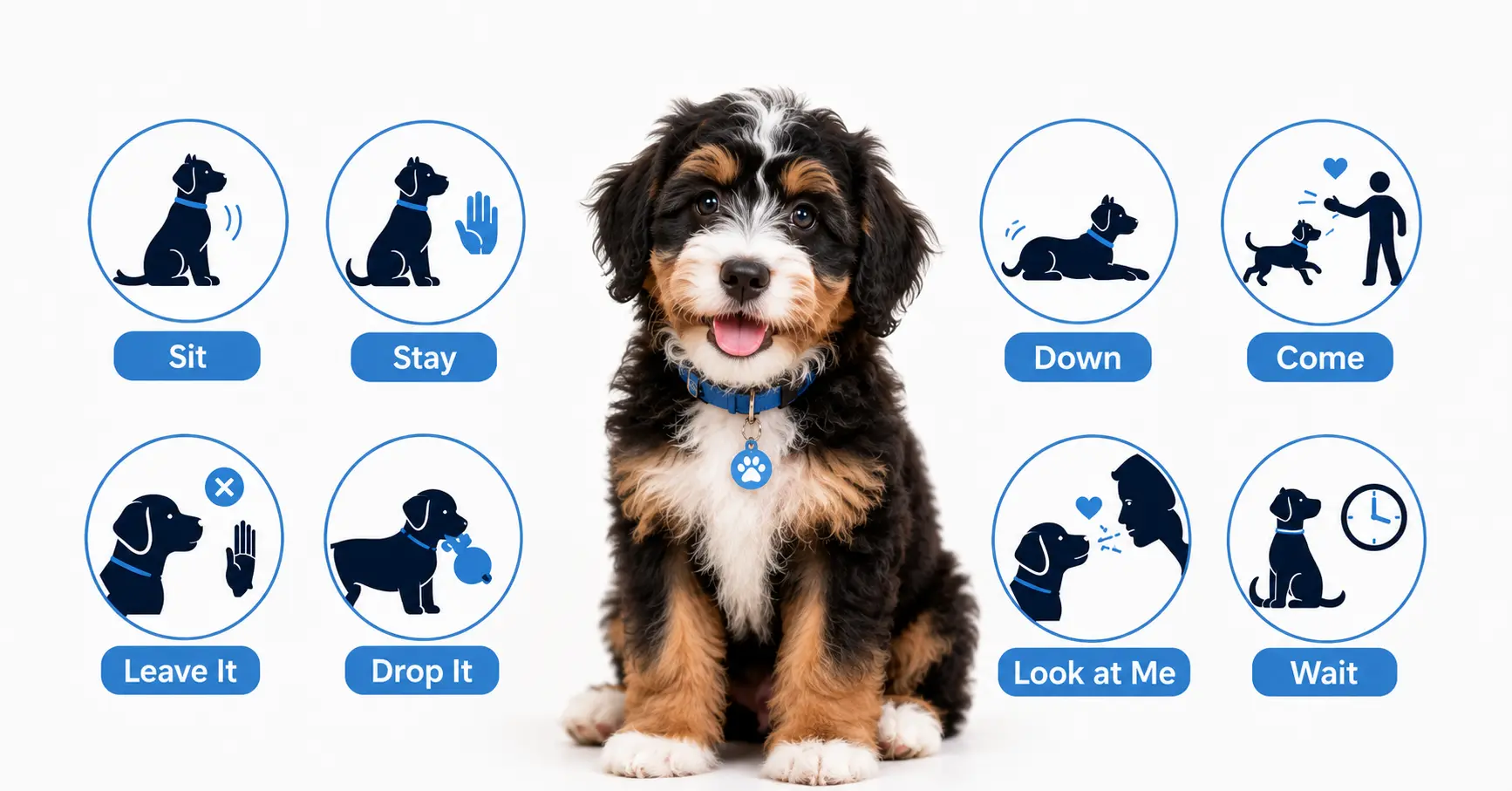
Mini Bernedoodle basic commands help your dog in daily life. Start with simple cues like sit and stay and down and come. Then teach, leave it and drop it and look at me and wait.
These commands help with dog safety and make your dog easier to manage at home and manage outside. You should teach one command at a time. Keep each short session easy. For many puppies five minutes is enough.
Say the cue one time. Then guide behavior and reward. Try not to repeat commands again and again because the puppy may learn to ignore commands.
The sit command is a good place to begin. Hold a treat near your nose and move the treat upward. When the head goes up the bottom goes down. Then say yes and reward.
The come command matters a lot. Use a happy voice and make recall training fun. Never call your puppy for punishment. Good punishment avoidance keeps the word positive.
The leave it command helps with unsafe items. The drop it command helps when your puppy already has something in mouth. These cues are useful for shoes and socks and food wrappers and toys and outdoor objects.
Strong obedience training also includes recall and reward markers and eye contact and impulse control. You can use treat reward and praise and even clicker training. The real secret is consistency.

Mini Bernedoodle leash training should begin with indoors training before real outside walking. Let your puppy wear a collar or harness for short periods. Then attach the leash and let the puppy walk calmly.
At first you do not need a strict heel. You only need polite walking. The goal is a loose leash and movement without pulling. Start in a quiet area. Hold a treat by side and reward walking near the owner. If your puppy pulls then stop moving. When the leash becomes loose you can walk forward again. This teaches that pulling stops walking.
Do not yank leash. Mini Bernedoodles can be sensitive dogs and harsh leash correction may create a nervous puppy or an excited puppy. Use treats and praise and direction changes and short walks.
If your dog starts leash biting then redirect with toy or redirect with treat. If the puppy jumps at people then create distance and reward calm sitting. If the puppy gets scared then let the dog watch from a safe distance.
Good leash work includes loose-leash walking and leash manners and a clear walk cue. Your puppy should learn the reward zone near your side. With practice your dog can handle outdoor distractions and offer a polite greeting.

Mini Bernedoodle socialization means teaching your puppy to feel safe in normal life. This includes people and children and other dogs and cats. It also includes sounds and surfaces and cars and grooming tools and vet handling and new places.
Socialization does not mean pushing your puppy into scary situations. It means gentle exposure and positive exposure. Let the puppy notice something new and stay calm and get a reward.
The primary socialization time is during the first three months of life. During this stage puppy socialization classes can help if the puppies are healthy and vaccinated appropriately and parasite-free.
Start small. Let your puppy hear doorbells and vacuum sounds and traffic sounds from a safe distance. Let the puppy see children playing without forcing contact. Let your dog walk on grass and tile and carpet and wood floors and safe outdoor surfaces.
Invite calm visitors and let them give treats. Show the puppy hats and umbrellas and bikes and strollers and cars slowly.
Good socialization builds confidence. Poor socialization can create fear and barking and hiding and reactivity and nervous behavior. Focus on safe exposure and new people and friendly dogs and grooming handling and car rides and vet visits. This also helps with sound desensitization and fear prevention.



Exercise Needs
Active Explorer
Health Issues
Strong & Resilient
Grooming Needs
Fluffy Maintenance
Training Needs
Quick Learner
Shedding Level
Light Shedding
Friendliness
People Lover
Playfulness
Forever Fun
Energy Level
Always On-the-Go
Apartment Living
Compact Friendly
Cold Weather Tolerance
Mild Chiller
Warm Weather Tolerance
Summer Ready
First-Time Owner Suitability
Beginner Friendly
Good with Kids
Family Favorite
Good with Cats
Feline Friendly
Good with Other Dogs
Pack Buddy
First-Time Owner Suitability
Beginner Friendly
Mini Bernedoodles are often smart dogs because they come from a Poodle and Bernese Mountain Dog mix. The Poodle intelligence side can bring quick learning. The Bernese Mountain Dogs side can bring loyal dogs and people-focused dogs traits.
This can make a Mini Bernedoodle a trainable dog. But a smart puppy still needs rules. Smart dogs learn good habits fast and they also learn bad habits fast.
If jumping gets attention the puppy may jump more. If barking gets a reaction the puppy may bark again. If pulling helps the dog move forward the dog may pull harder next time.
Mini Bernedoodles often do well with positive training methods and treats and short lessons. Use food rewards and praise and play rewards and clear rules.
They may enjoy trick training and obedience training and puzzle toys and fetch. Some also like agility-style games and scent games. These activities support trainability and mental stimulation and problem-solving.
For best results use food motivation and clicker training and obedience cues and reward-based training. Teach impulse control and keep strong engagement so your puppy wants to listen.
Mini Bernedoodle behavior problems often happen when the puppy has a lack of structure or not enough exercise or weak socialization or missing training. Most problems improve with a better routine.
Common issues include chewing and jumping and barking and whining. Some puppies show leash pulling and potty accidents and crate crying and nipping. Some may develop separation anxiety or counter surfing or stealing socks and stealing shoes.
Chewing is normal during teething. Give safe chew toys and keep shoes away and wires away and small items away. If the puppy does wrong chewing then redirect to chew toy.
Jumping often happens because puppies want attention. Reward four paws on the floor and ask for a seat before greetings.
Barking can happen from boredom and fear and excitement and alert behavior. Do not only say no. First find a reason. A bored dog may need mental games. A scared puppy may need slow socialization.
Crate crying can happen when the puppy is not tired or needs potty or has not crate slowly learned. Make sure the puppy has gone potty and had exercise before crate time.
Mini Bernedoodles are social dogs and some struggle with alone time. Practice short alone-time sessions and reward calm behavior. If the dog panics or drools or destroys things or cannot settle then speak with a vet or certified trainer.
Useful behavior tools include puppy biting support and managing demand barking and fear barking and crate whining. You also need impulse control and calm behavior and redirection and management. A certified dog trainer can help if the problem keeps growing.
Mini Bernedoodle basic commands are the first step toward a safe, calm and well-behaved dog. Start with sitting down, coming, leaving it, dropping it, looking at me and waiting. Teach one command at a time and keep training short. Use treats, praise and a happy voice so your puppy enjoys learning. With daily practice patience and consistency your Mini Bernedoodle will listen better and feel more confident in everyday life.