Petsay
July 11, 2026
By Haseeb Rehman
A Mini Bernedoodle and a Mini Goldendoodle can look very similar at first. Both are small-to-medium Poodle mixes with soft coats and friendly personalities. Yet their parent breeds create clear differences in their energy levels and behavior patterns.
A Mini Bernedoodle usually comes from a Bernese Mountain Dog and a Miniature Poodle. A Mini Goldendoodle usually comes from a Golden Retriever and a Miniature Poodle. Both are crossbred dogs rather than standardized pure breeds. This means their adult size and coat variation and temperament variation can be hard to predict.
The dog generation also matters. An F1 dog has one parent from each breed. An F1B dog is usually crossed back with a Poodle. A multigenerational dog may have doodle parents from several breeding lines. The parent breed percentage can affect coat texture and shedding and body size.
From my experience studying both mixes the Mini Bernedoodle often suits people who prefer calmer dogs and slightly reserved dogs. The Mini Goldendoodle often suits families who enjoy outgoing dogs and energetic dogs. Both can become wonderful family companions when they come from health-tested parents and receive early socialization and consistent training.
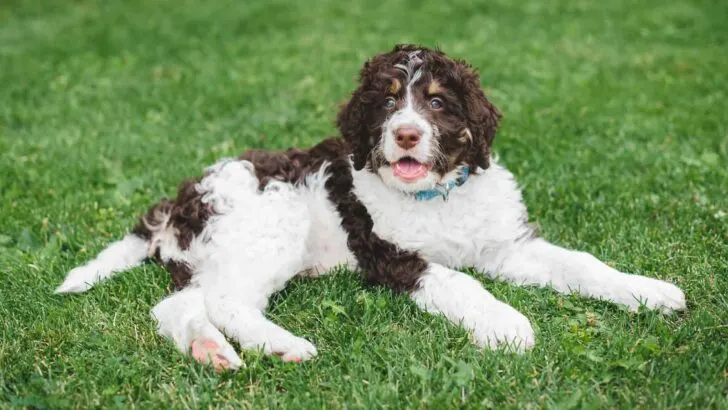
Smart low shedding family friendly companion dog
Mini Bernedoodles are generally healthy but they need regular vet care good food and daily exercise to stay in good shape
They became popular in the United States in the early 2000s as a designer crossbreed.
Mini Bernedoodle
14 to 17 years
Children dogs families seniors and other pets
They need regular brushing and grooming to keep their coat clean healthy and free from tangles
High
Seasonal
Designer / Hybrid CrossBreed
Some Mini Bernedoodles may have different coat patterns and can sometimes show unique markings from both parent breeds
Bernese Mountain Dog crossed with Miniature Poodle
Easy to train socialization early basic commands and positive reward based training works best
A good breed comparison should begin with size because these dogs can grow differently.
Mini Bernedoodle size and Mini Goldendoodle size depend heavily on parent breed influence. The breeder’s breeding program also affects adult weight and adult height and body shape.
Their dog appearance can change through puppyhood. Coat type and coat color may also develop differently as the dog matures. These physical differences are not always obvious in young puppies.
A full-grown Mini Bernedoodle often weighs around 20 to 45 pounds. Some may stand close to 22 inches tall. The Bernese Mountain Dog parent is much larger than the Miniature Poodle parent. This can make adult size difficult to predict.
The mini label and medium label are not used in the same way by every breeding program. One breeder may call a 40-pound dog mini while another may call it medium. A Mini Bernedoodle often has a sturdy body with a broad chest and strong legs. Some have a compact frame. Others inherit a taller frame or heavier frame from the Bernese side.
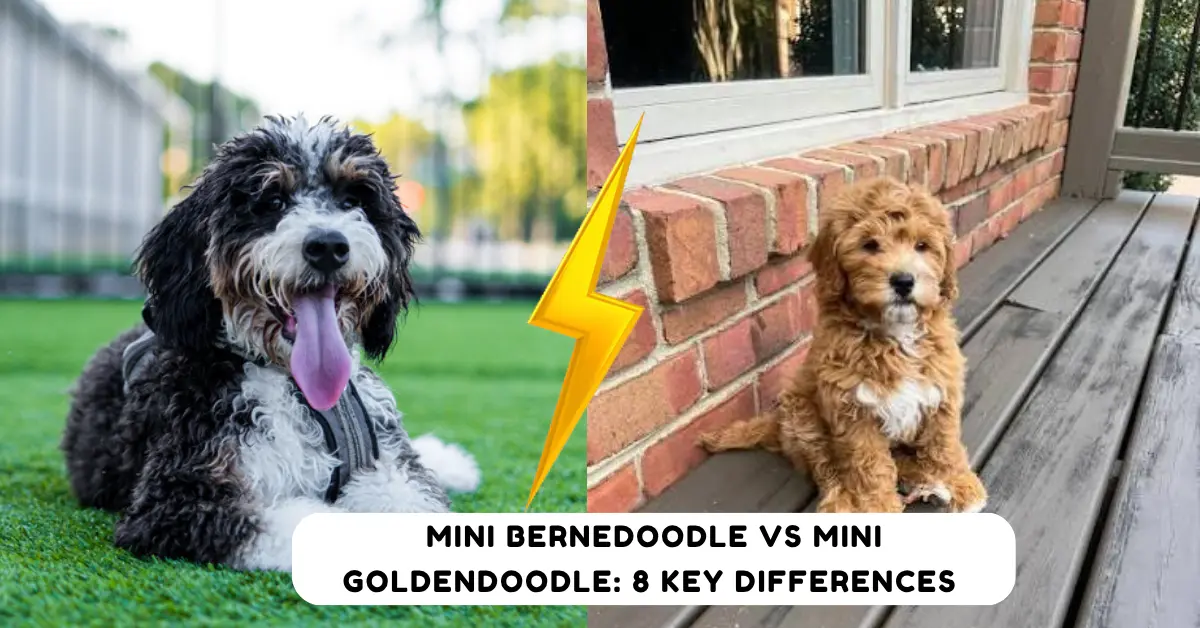
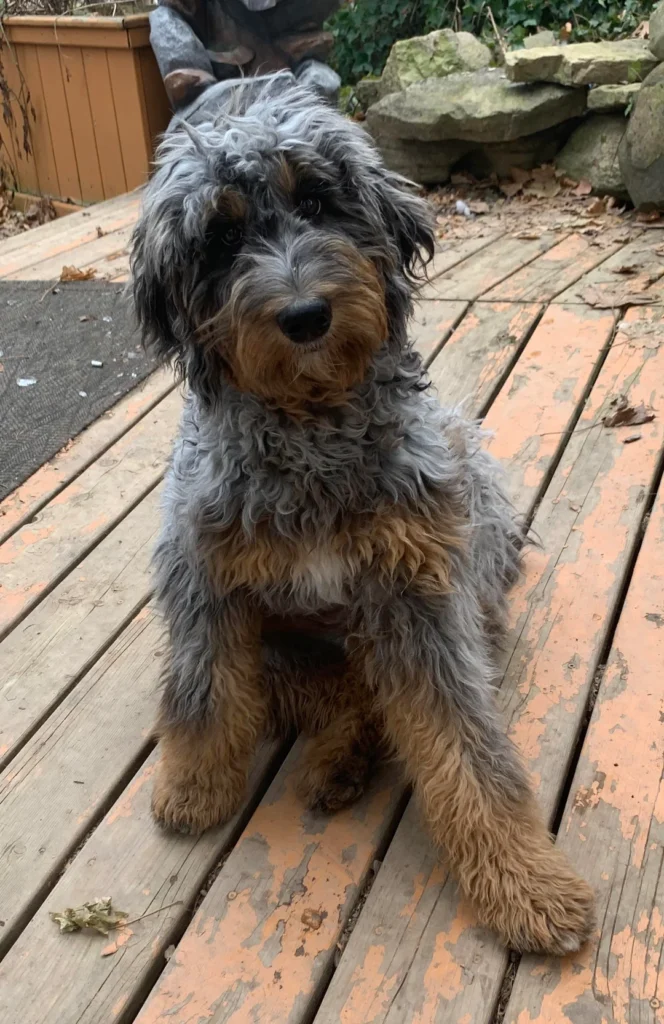
The coat may be a straight coat or loose wavy coat or curly coat. Some develop a fleece-like coat while others have a thick shaggy coat. Common shades include a black coat and white coat and brown coat and cream coat and sable coat.
The classic tri-color pattern often includes black and white with rust markings. This is one of the most popular Mini Bernedoodle looks. Owners should also expect possible coat color fading or coat color change as the puppy becomes a mature dog.
Mini Goldendoodles often weigh around 15 to 35 pounds. Many stand between 13 to 16 inches tall. Some larger minis can reach 40 pounds or more. This depends on the size of the Golden Retriever parent and Poodle parent.
The Mini Goldendoodle usually has a lighter body and a more athletic body than the Mini Bernedoodle. Many have a soft teddy-bear face with floppy ears and a longer muzzle.
Their coat may have wavy fleece or tight curls or loose curls. Some inherit straight hair or retriever-like hair. Popular colors include a cream coat and gold coat and apricot coat and red coat. A Mini Goldendoodle may also have a brown coat or black coat or parti-colored coat.
The Mini Bernedoodle appearance is usually heavier and more rugged.
It may have a heavier dog build with a rugged appearance and bold coat patches. Many also show traditional Bernese markings. The Mini Goldendoodle appearance is usually lighter. It often has a sportier build with a golden coat or apricot coat and a more even coat color.
There can still be major litter variation. Puppies from the same litter may show inherited coat differences and body shape differences. This creates an unpredictable appearance in both mixes.
A fair temperament comparison should look beyond whether a dog appears cute or friendly.
The biggest personality differences often involve affection and loyalty and gentleness and sociability and energy. Stranger behavior can also differ. So can family attachment and training sensitivity. Every dog has an individual temperament. Parent personality and early experiences matter greatly.
The Mini Bernedoodle temperament is often gentle and loyal. Many become an affectionate dog and a loyal dog and a gentle dog that forms a close family bond.
Strong owner attachment is common.
The Bernese heritage may create a calmer personality and a more thoughtful personality. Some Mini Bernedoodles are cautious around strangers and take more time to adjust to new places. They may need extra adjustment time before feeling safe. A well-exercised Mini Bernedoodle is often calm indoors. It still has regular exercise needs.
Some become loyal to one person while others stay loyal to family members equally. They can be a playful dog without demanding constant action. Their moderate activity level often suits calmer homes. Many are sensitive to harsh correction. Some also show slight stubbornness and create mild training challenges.
They may show watchful behavior around unfamiliar people. A Mini Bernedoodle can also have a goofy personality or clown-like personality. These are common Bernese Mountain Dog traits. The Poodle intelligence may add quick learning and alertness.
Good early socialization is important. A poorly socialized dog may show shy behavior or nervous behavior instead of a healthy reserved personality.
The Mini Goldendoodle temperament is usually bright and social.
This mix often becomes a friendly dog and a social dog. The Golden Retriever personality adds warmth and affection. The dog often enjoys people interaction. Miniature Poodle intelligence also adds quick thinking and alertness.
Many Mini Goldendoodles are outgoing with visitors and highly affectionate. They tend to be playful dogs and cheerful dogs. Most are eager to please and social with dogs. They often become excited by new people and new places. Their enthusiastic greeting can make them a fun social companion. The same excitement can cause jumping behavior and overexcitement when owners begin late training.
A Mini Goldendoodle often wants to remain involved in family life. Long isolation may create separation discomfort. Some develop barking or destructive habits when left for long periods alone without careful independence training.
Meeting the parent dogs can help you understand the likely inherited temperament and possible puppy temperament.




Exercise Needs
Active Explorer
Health Issues
Strong & Resilient
Grooming Needs
Fluffy Maintenance
Training Needs
Quick Learner
Shedding Level
Light Shedding
Friendliness
People Lover
Playfulness
Forever Fun
Energy Level
Always On-the-Go
Apartment Living
Compact Friendly
Cold Weather Tolerance
Mild Chiller
Warm Weather Tolerance
Summer Ready
First-Time Owner Suitability
Beginner Friendly
Good with Kids
Family Favorite
Good with Cats
Feline Friendly
Good with Other Dogs
Pack Buddy
First-Time Owner Suitability
Beginner Friendly
Most healthy adult Mini Bernedoodles need around 45 to 90 minutes of total daily activity.
This may include walks and fetch and training and scent games. Their moderate energy level often supports good indoor settling once their needs are met. A practical routine can include two daily walks and gentle hiking and tug games. Many also enjoy swimming and sniffing walks.
Puzzle toys and short training sessions provide useful brain work. The Bernese Mountain Dog parent often brings a need for moderate daily exercise and relaxed outdoor activities. A Mini Bernedoodle may not demand constant high-speed activity. Yet too little activity can lead to boredom and destructive behavior. Too little exercise without enough mental stimulation can also create restlessness.
Mini Goldendoodle exercise needs are usually slightly higher. Many have moderate-to-high energy and need around 60 to 90 minutes of daily activity.
The exact amount depends on age and size and health.
Good choices include brisk walks and running games and fetch. Many also enjoy swimming, agility and hiking. Scent work and obedience practice can help use mental energy. Both the Golden Retriever and Poodle come from lines of active dogs and intelligent dogs. This can create a mix that needs more lively exercise.
Young Goldendoodles may enjoy long play periods. Some have difficulty relaxing unless owners include calm behavior training in the daily routine.
Mini Goldendoodle energy is usually higher.
It is often the more energetic dog of the two. Mini Bernedoodle energy is often easier to manage because many have a natural off-switch. A Mini Bernedoodle may enjoy a long walk and then take a quiet rest.
Both still need regular activity. The key difference appears in how quickly each dog begins settling after exercise. Calling the Bernedoodle lazy would be an active dog misunderstanding. It is usually a lazy dog misconception rather than a true breed trait.
Mini Bernedoodle training can be very rewarding.
These dogs often show quick learning but may also have an independent side or stubborn side. They usually respond best to positive training and reward-based training. Use short sessions and consistent training. Add varied training and maintain calm training.
Harsh correction can upset a sensitive Bernedoodle. It may lead to training shutdown or avoidance behavior. Use food rewards and praise and toys instead. During puppy training some dogs need more repetition for house training and leash manners. A clear daily routine can help create a reliable companion.
Important skills include name response and recall and sit and stay and leave it. Owners should also practice loose-leash walking and calm greetings. The dog should learn to remain comfortable alone and develop good grooming tolerance.
Mini Goldendoodle training is often easier for first-time owners. These dogs usually have strong motivation and enjoy human attention. They respond well to food rewards and play rewards.
A Mini Goldendoodle is often a quick learner and an intelligent dog. It is usually a people-focused dog that is eager to please. Many are food motivated and play motivated. Their main challenge is often excitement rather than stubbornness.
Common problems include guest jumping and pulling toward dogs. They may also lose attention in busy places. This loss of focus can improve when owners reward calm behavior during puppyhood training. Mini Goldendoodles often perform well in obedience and rally and agility and scent work. Some may also enjoy therapy-dog preparation and trick training and retrieval games.
The grooming comparison is very close because both mixes require regular care. Their shedding differences depend on coat inheritance. Many owners choose doodle mixes because they want a low-shedding dog. Yet neither mix is always a non-shedding dog or a truly hypoallergenic dog.
No honest breeder guarantee can promise this for every puppy. Coat genetics control shedding and texture. Both require regular brushing and professional grooming and ongoing coat maintenance.
Mini Bernedoodle grooming can take a lot of time.
Mini Goldendoodle grooming also requires regular coat care.
Guides from sources such as Love of Puppies often stress that low shedding does not mean low grooming.
The Mini Bernedoodle often suits people who want a calmer dog with a sturdy build and deep family loyalty. The Mini Goldendoodle often suits people who want a brighter and more outgoing companion with higher energy and a strong desire to please. Neither dog is automatically better.
The right choice depends on how much exercise and grooming and training you can provide every day. Parent health and puppy temperament matter more than a trendy coat or generation label. Spend time learning about the parent dogs before choosing a puppy. That step often tells you more than the words mini or doodle ever can.