Petsay
July 13, 2026
By Haseeb Rehman
Mini Bernedoodle separation anxiety can turn everyday departures into a stressful experience for both the dog and the owner. Mini Bernedoodles are affectionate dogs and intelligent dogs that often build strong family relationships. Their parent breeds are the Bernese Mountain Dog and Miniature Poodle. Both breeds are known for forming close human bonds.
This strong attachment can make a Mini Bernedoodle a wonderful companion. Problems may begin when the dog struggles with owners leaving home. Some dogs experience separation-related distress that goes far beyond simple boredom or occasional barking.
A dog with genuine separation anxiety may experience real panic when left alone. You may notice persistent barking or howling. Other signs include destructive behavior and house soiling and pacing and drooling and escape attempts.
Not every case of unwanted behavior comes from anxiety. Medical causes and other behavioral causes can produce similar problems. Guidance from the ASPCA also makes this distinction important.
One of the common mistakes I see among dog owners is waiting too long before teaching independence. They suddenly expect their dog to remain several hours alone without preparation. Good alone-time training should begin with gradual training. The goal is to teach the dog that owner separation is part of normal daily life and that short periods apart can become safe separation.

Smart low shedding family friendly companion dog
Mini Bernedoodles are generally healthy but they need regular vet care good food and daily exercise to stay in good shape
They became popular in the United States in the early 2000s as a designer crossbreed.
Mini Bernedoodle
14 to 17 years
Children dogs families seniors and other pets
They need regular brushing and grooming to keep their coat clean healthy and free from tangles
High
Seasonal
Designer / Hybrid CrossBreed
Some Mini Bernedoodles may have different coat patterns and can sometimes show unique markings from both parent breeds
Bernese Mountain Dog crossed with Miniature Poodle
Easy to train socialization early basic commands and positive reward based training works best
There is no single answer for how much alone time a Mini Bernedoodle can handle.
Every dog is different. Dog age and dog health and training history all matter. A young puppy needs frequent toilet breaks and regular feeding and close supervision. Expecting a puppy to stay alone for an entire working day is unrealistic.
An adult Mini Bernedoodle with good independence training may manage longer periods of staying home. Yet physical ability and emotional comfort are not the same thing.
Some relaxed dogs can stay comfortable for several hours. Others show distress soon after the owner ‘s departure. This is why I would not treat four hours or six hours as a fixed time guarantee.
Watch the individual behavior of your dog instead.
A home camera can make dog monitoring much easier. After leaving home, check whether your dog is lying down or sleeping or playing with toys. Compare this with a dog that starts immediate pacing or barking or scratching doors.
Actual dog behavior often tells you more than clock time. Owners with long working hours may need help from a trusted family member or pet sitter or dog walker. These practical solutions can prevent repeated panic during long absences and reduce serious separation distress.
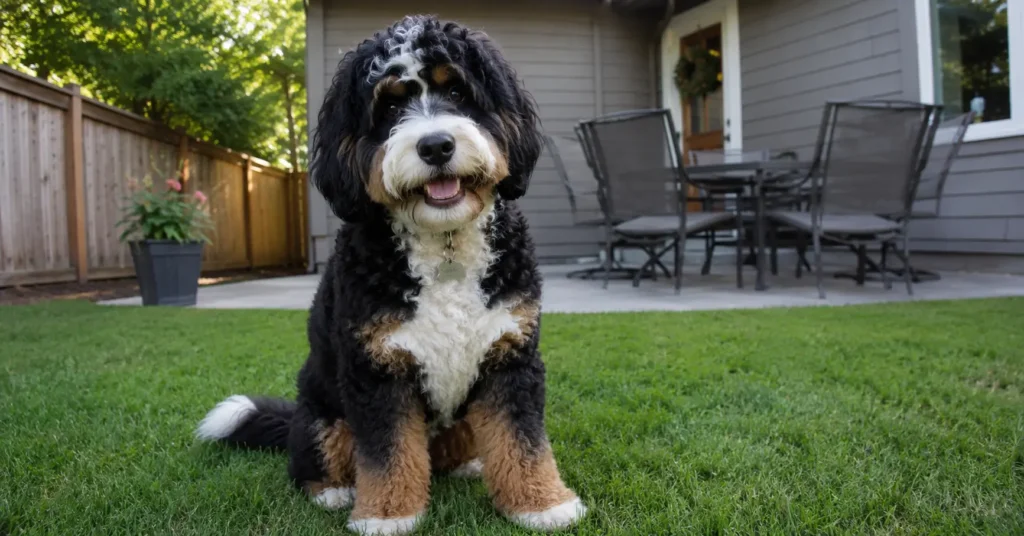
There is no single explanation for separation anxiety causes. Mini Bernedoodles are companion dogs that can develop a strong family attachment. However close attachment alone does not guarantee anxiety development.
Sudden routine changes are common anxiety triggers. A dog may become accustomed to having its owner at home every day. A sudden work schedule change creates a new routine that some dogs find difficult.
Moving house may cause environmental stress. Major family changes can also affect sensitive dogs. The family member loss or other major lifestyle changes may create uncertainty.
Individual temperament and previous experiences matter too.
A dog that never experienced alone-time learning during puppyhood may struggle with sudden separation later. Genetics and inherited temperament can also influence behavior. This makes responsible breeding and meeting the parent dogs useful parts of puppy selection.
Most importantly genuine separation anxiety is not revenge behavior.
A dog showing destructive behavior or door destruction is not trying to punish its owner. Owner punishment can actually increase fear. Separation-related behaviors develop because of dog distress.
Current research and veterinary guidance support gradual behavior modification and punishment avoidance. Research available through PMC also discusses separation-related behavior as a genuine behavioral concern rather than deliberate misbehavior.
The separation anxiety signs in Mini Bernedoodles can look different from one dog to another. Some are extremely vocal dogs. They may begin barking or whining or howling immediately after the owner’s departure.
Others show destructive behavior.
You may find damage near possible exit points such as doors and windows. The dog may start scratching or chewing because it wants to follow the owner. Even house-trained dogs may show indoor urination or indoor defecation. Other symptoms include pacing and panting and drooling and trembling and restlessness. Some dogs show food refusal when home alone.
In severe cases the dog may make frantic escape attempts that lead to dog injuries.
Look for patterns such as persistent barking and persistent howling. Watch for destructive chewing and heavy panting without physical exercise. Excessive drooling and constant pacing and refusing food can also indicate distress.
Some dogs show intense owner following and departure anxiety before the person even leaves. Others display extreme excitement after the owner returns.
Still a single behavior does not confirm an anxiety diagnosis.
A bored Mini Bernedoodle may cause household destruction. Incomplete house training may explain puppy accidents. A dog may bark at outside noises or people or other animals. Medical problems can cause behavioral changes too.
A dog recording can help owners and veterinary professionals with behavior monitoring. It allows them to see symptom severity during owner absence and identify genuine separation-related behavior.
Mini Bernedoodle separation anxiety and other separation-related problems can appear at different ages.
Some puppies show difficulty being alone soon after arriving in their new homes. A young Mini Bernedoodle has recently left its mother dog and littermates. Suddenly the puppy enters a new environment and starts developing a strong puppy attachment to its new family.
Problems can develop when the puppy receives constant human contact without opportunities to practice independence and safe separation.
This is why early alone-time training matters.
Begin with small training steps and short periods apart. A baby gate can separate the puppy from the nearby owner without creating complete isolation. The next step may involve leaving the room briefly. Use a gradual duration increase while watching the puppy’s puppy comfort.
Adolescent dogs and adult dogs can develop anxiety too. Work schedule changes or a different home environment or altered family routine may act as anxiety triggers.
Older dogs with sudden behavioral changes may need veterinary attention because some health conditions can affect dog behavior.
Good prevention focuses on early socialization and predictable routines and gradual independence training. How to Help a Mini Bernedoodle With Separation Anxiety Helping an Anxious Mini Bernedoodle requires owner patience.
Start by understanding the problem severity. Mild separation difficulty may improve with gradual training and better daily routines. Severe panic often requires professional help. Provide enough physical exercise and mental stimulation.
A dog with unused energy may have more difficulty with dog settling. Daily walks and sniffing activities and puzzle toys and obedience training provide useful healthy outlets. However exercise does not cure genuine separation anxiety. The most important strategy is often gradual desensitization.
Begin with a short absence that allows panic prevention. For some dogs this may mean only a few seconds. Make a calm return. Use repeated exercise and a gradual duration increase when you have a relaxed dog.
If your dog can manage two minutes comfortably do not suddenly leave for two hours.
Dogs with pre-departure anxiety may react when you pick up keys or put on shoes or grab a work bag. These objects can predict a long absence. Use departure practice without actually leaving. Pick up your keys before sitting down. Put on your shoes before walking around the house. Repetition can support fear reduction.
Use calm departures and calm arrivals. Provide safe enrichment when appropriate. Food puzzles and long-lasting activities and other dog-safe activities may build positive associations with alone time.
In severe cases speak with a veterinarian or qualified behavior professional. Treatment may involve structured behavior modification and sometimes veterinary medication.

Good Mini Bernedoodle training can help a dog learn to stay home alone. Do not begin successful alone training by immediately leaving for several hours.
Create a daily routine with short independence periods.
A dog does not need to practice constant owner following. Encourage independent relaxation on a dog bed while you remain a nearby owner. You can also use a baby gate. Practice leaving the room before the dog experiences dog distress. Use a gradual distance increase followed by a gradual time increase.
Keep the training process simple. First create a comfortable area for your calm dog. Practice normal room movement without encouraging constant following behavior.
Next, leave for a few seconds.
Continue gradual training until you can practice leaving the house for extremely short periods. Use a home camera for behavior monitoring.
Allow increased alone time only when you continue seeing relaxed behavior. The slow training process can frustrate a new Mini Bernedoodle owner. Yet moving from five comfortable minutes directly to an hour-long absence often creates problems.
Work below the dog’s panic threshold. This usually creates more productive training and fewer stressful situations. Practice punishment avoidance after returning home. Delayed punishment does not improve dog understanding and may cause increased anxiety.
Successful independence training takes time.




Exercise Needs
Active Explorer
Health Issues
Strong & Resilient
Grooming Needs
Fluffy Maintenance
Training Needs
Quick Learner
Shedding Level
Light Shedding
Friendliness
People Lover
Playfulness
Forever Fun
Energy Level
Always On-the-Go
Apartment Living
Compact Friendly
Cold Weather Tolerance
Mild Chiller
Warm Weather Tolerance
Summer Ready
First-Time Owner Suitability
Beginner Friendly
Good with Kids
Family Favorite
Good with Cats
Feline Friendly
Good with Other Dogs
Pack Buddy
First-Time Owner Suitability
Beginner Friendly
Crate training can help some Mini Bernedoodles with separation anxiety.
It can also make some anxious dogs feel worse. A dog that already views the crate as a comfortable resting area may relax there during short absences. Build positive associations by providing dog meals and dog treats and safe enrichment inside the crate. Encourage voluntary crate entry and voluntary behavior.
Never use crate punishment.
A dog with confinement anxiety may experience dog panic inside a locked crate. Watch for warning signs such as heavy panting and excessive drooling and persistent barking and frantic escape attempts. A panicking dog may suffer teeth injuries or nail injuries during escape behavior.
Forcing longer crate sessions can cause worsening anxiety. A puppy-proofed room or another secure area with a baby gate may work better.
The ASPCA explains that crates can help certain dogs while creating additional stress for others. Good dog monitoring should focus on individual dog behavior rather than assuming crating is always suitable. Think of a crate as a management tool and possible safe space. It is not a separation anxiety cure.
There is no fixed timeline for recovering from Mini Bernedoodle separation anxiety. Dogs with mild problems may show improvement within weeks. A dog with severe separation anxiety may require several months of consistent behavior modification.
A dog may comfortably manage 20 minutes during one week and struggle after 10 minutes on another day.
Routine changes and dog health and the environment can affect progress. Several recovery factors matter. These include anxiety severity and training history and owner consistency. Existing behavioral problems or medical problems can also affect the process.
Professional treatment may be necessary for serious cases. Do not focus only on quick recovery. The real goal is safe separation. Use progress tracking and a home camera. Record the dog’s relaxed duration and increase difficulty through small training steps.
If you see repeated panic then use a reduced duration and return to an easier training level. Separation anxiety is a recognized behavioral problem. Treatment often involves systematic desensitization and additional veterinary support when needed.
Mini Bernedoodle separation anxiety can become a challenging behavior because these affectionate dogs and intelligent dogs often enjoy close family contact.
However dog owners should learn the difference between clinginess and boredom and true separation anxiety. Use careful behavior observation and a home camera when possible. Focus on teaching independence through short training sessions and comfortable training sessions. Build gradual alone time. Provide appropriate exercise and mental stimulation. Never punish panic-related behavior.
Use crate training only when the individual dog views it as a comfortable crate and safe resting place. For severe separation problems seek professional help. A veterinarian can investigate medical problems while a qualified behavior professional can create a structured treatment plan for serious separation-related distress.
There is no instant cure or universal training timeline. Patient training and consistent training give your Mini Bernedoodle the opportunity to develop an important skill for family life. With the right approach, safe alone time and greater dog independence can become realistic goals.