
Yes. Mini Aussiedoodles do shed. Most of them shed less than an Australian Shepherd. Still no breeder can honestly promise that every Mini Aussiedoodle will have a completely non-shedding coat.
A Mini Aussiedoodle is usually a mix of a Miniature Poodle and an Australian Shepherd or a smaller Australian Shepherd-type parent. These dogs can inherit coat traits from either side.
The Poodle parent normally has curly hair that grows for a long time. Loose hair often stays trapped inside the curls instead of falling onto the floor. The Australian Shepherd has a weather-resistant double coat. It releases more loose hair and may shed heavily during certain parts of the year. Australian Shepherds commonly shed and need regular brushing to control their undercoat.
A Mini Aussiedoodle may inherit a curly coat or a wavy coat or a straighter coat. This is why two puppies from the same litter can have different shedding levels.
One puppy may leave almost no visible hair on the couch. Another may leave hair on clothing and bedding. A third may not drop much hair but may collect loose fur inside its coat. That trapped fur can form painful mats when the owner does not brush it out.
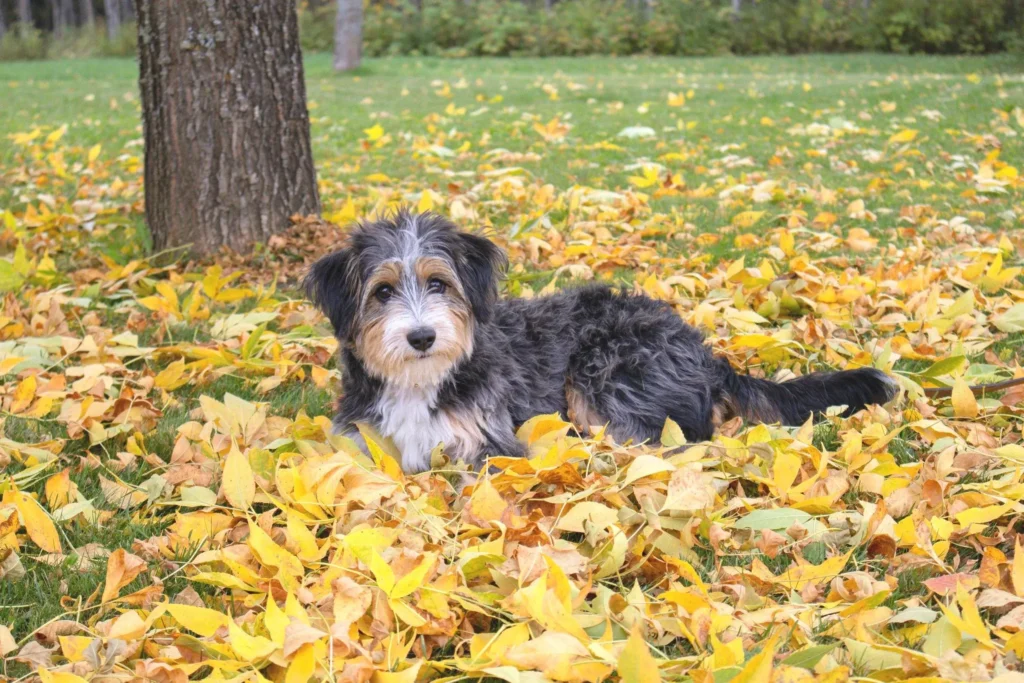
The main coat facts are simple:
A low-shedding coat is not the same as an easy coat. In my experience with doodle-style coats the dogs that leave the least hair around the house often need the most hands-on grooming.
The table below shows how common coat types may affect daily care.
| Mini Aussiedoodle Coat Type | Common Appearance | Possible Shedding Level | Grooming Difficulty |
| Curly coat | Tight curls similar to a Poodle | Low | High because curls mat easily |
| Wavy fleece coat | Soft waves with a fluffy look | Low to moderate | Moderate to high |
| Loose wavy coat | Open waves with less curl | Moderate | Moderate |
| Straight coat | Flatter hair similar to an Australian Shepherd | Moderate to high | Moderate |
| Double coat | Outer hair with a soft undercoat | Moderate with heavier seasonal shedding | High during shedding seasons |
| Combination coat | Different textures across the body | Unpredictable | Depends on thickness and curl |
Mini Aussiedoodle coat types are not always easy to predict when the dog is a young puppy.
A puppy may look curly at eight weeks and become much looser as it grows. Another puppy may begin with a soft wavy coat and develop thick curls around the neck and legs.
The final coat depends on the genes inherited from both parents. It also depends on the generation of the cross.
An F1 Mini Aussiedoodle usually has one Poodle parent and one Australian Shepherd-type parent. It may show a more even mix of both coats.
An F1B Mini Aussiedoodle is often produced by breeding an Aussiedoodle back to a Poodle. This may increase the chance of curls and lower visible shedding. It still does not create a guarantee. Genetics do not divide into perfect percentages inside every puppy.
A multigenerational Mini Aussiedoodle may also have a curly or wavy coat. The result depends on the coats and genes of the specific parents.
The three most common coat descriptions are curly and wavy and straight.
A curly coat looks most like a Poodle coat. The hair forms tight or loose curls. This type often catches dead hair close to the skin. Owners may see less hair on furniture. They must remove trapped hair through careful brushing and combing.
A wavy coat is very common in doodle mixes. It may feel soft and loose. Some people call it a fleece coat. It can still mat behind the ears and under the collar and inside the legs.
A straight coat may show more traits from the Australian Shepherd side. It often drops more loose hair. It may also contain a dense undercoat.
Australian Shepherds have a medium-length double coat. Regular weekly brushing supports the coat. More brushing may be needed when undercoat shedding increases.
Coat texture can vary on one dog too.
The body may look wavy while the ears appear curly. The tail may carry straighter feathering. Hair around the face may feel softer than hair across the back.
Owners should judge the dog in front of them. Do not follow a grooming routine only because another Mini Aussiedoodle uses it.
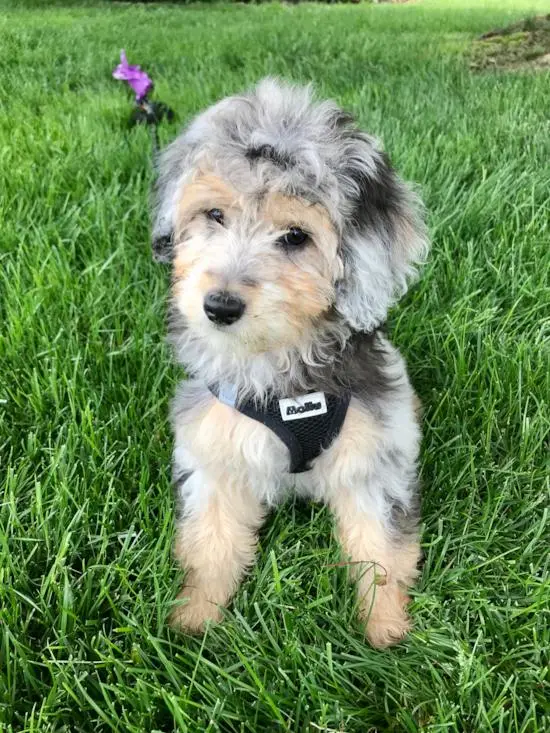
How much Mini Aussiedoodles shed depends mostly on coat genetics.
A curly Mini Aussiedoodle may release very little visible hair. You may not find large piles under the furniture. Loose hair still leaves the follicles. The curls can hold that hair inside the coat until brushing removes it.
A wavy Mini Aussiedoodle may shed a small or moderate amount. Hair may collect on blankets or inside the brush.
A straighter Mini Aussiedoodle may shed more often. This becomes more likely when the dog inherits a double coat from the Australian Shepherd side.
Poodles have below-average shedding. Their longer hair-growth cycle helps keep hair in place for more time. Their curls can also hold dead hair instead of dropping it quickly. This can fool new owners.
They may believe their dog never sheds because the floor stays clean. Then the groomer finds thick mats close to the skin. The loose hair never disappeared. It became trapped and tangled with growing hair.
A healthy coat goes through a natural growth cycle. Old hair eventually loosens. The amount you notice depends on how the coat releases it.
Brush the dog carefully and look at the hair inside the brush. Check its bed after several days. Look at dark clothes after holding the dog. These clues show the real shedding level better than a breeder’s general claim.
A puppy has a softer puppy coat. It may appear easy to brush. During the change to an adult coat the soft puppy hair can mix with thicker new growth. This period may create more tangles and extra loose hair.
The adult coat may become curlier or straighter than expected. Owners often need to change brushes and increase grooming during this stage.
A Mini Aussiedoodle that sheds very little can still leave small hairs around the home. No living dog keeps every hair forever.
The better promise is low shedding rather than zero shedding.

Seasonal shedding in Mini Aussiedoodles is more common in dogs with a noticeable undercoat.
Double-coated dogs normally have two coat layers. The outer layer gives protection from weather and dirt. The soft undercoat helps with insulation.
Australian Shepherd-type coats may release more undercoat once or twice each year. Miniature American Shepherds have similar double coats and often experience heavier shedding seasons. Spring shedding can remove part of the dense winter undercoat. Autumn changes may prepare the coat for cooler weather.
Indoor life can make the pattern less clear. Heating and air conditioning and artificial lighting can affect the coat cycle. Some dogs shed smaller amounts throughout the year rather than having one large seasonal change.
Curly-coated Mini Aussiedoodles may show less obvious seasonal shedding. The loose undercoat may stay trapped beneath curls.
This can become a grooming problem.
The coat may feel thick or packed near the skin. A normal brush may slide over the top without reaching the loose undercoat.
During a heavier shedding period you may notice more hair in the comb. Small tangles may appear faster. The coat may look dull or uneven. Increase brushing during these times. Work gently in small sections. Make sure the tool reaches close to the skin without scraping it.
Do not shave a double-coated dog only because the weather feels hot. A double coat plays a role in insulation and skin protection. Regular bathing and brushing can remove dead undercoats while keeping the protective outer coat. A professional groomer can help identify whether your Mini Aussiedoodle has a true undercoat. This is useful when the coat contains both curls and dense soft hair.
Watch for unusual shedding too.
Seasonal shedding should not normally leave bald patches or irritated skin. Sudden heavy coat loss may point to parasites or allergies or another health problem.
Mini Aussiedoodle grooming needs can be high even when shedding stays low.
A curly or thick wavy coat may need brushing several times each week. A long full coat may need daily attention.
Poodles require intensive coat care. When their coats stay long they need complete brushing down to the skin to prevent mats near the roots. Most Mini Aussiedoodle owners also use professional grooming. The exact appointment schedule depends on coat length and home maintenance.
A short practical trim may last longer and feel easier to brush. A long fluffy style needs more frequent appointments and much more home care.
Many owners plan professional grooming about every four to eight weeks. A dog with fast-growing tight curls may need shorter gaps. A dog in a simple short trim may manage a longer gap when the coat remains healthy.
Professional grooming may include bathing and drying and brushing and clipping. The groomer may also trim nails and clean the outer ear area.
Bathing frequency depends on lifestyle.
A dog that swims or plays in mud may need more baths. A mostly indoor dog may need fewer. Use dog shampoo rather than human shampoo. Human skin and dog skin have different needs. Harsh products may dry the skin and increase itching.
Dry the coat completely after a bath. Damp thick hair can tighten existing knots. Moisture can also remain close to the skin. The ears need special care because hair and moisture may reduce airflow. Check for smell and redness and discharge. Do not push cotton swabs deep into the ear canal.
Nails also need regular trimming. Long nails can change how a dog stands and walks.
Start grooming while the puppy is young.
Touch the paws for one second. Give a treat. Lift an ear. Reward calm behavior. Brush a small section and stop.
Short positive practice builds trust.
A puppy that learns grooming slowly may become much easier to handle as an adult. Waiting until the coat is badly matted can create a painful first grooming experience.
Brushing and preventing coat mats should become part of the normal weekly routine.
Mats form when loose hair twists together with attached hair. Friction makes the problem worse.
Common matting areas include behind the ears and under the collar and inside the front legs. The rear legs and tail and chest may also tangle.
VCA notes that long and curly coats often need frequent brushing. Grooming tools can remove loose undercoat and tangled clumps during seasonal shedding.
Use the right tools:
I like the line-brushing method for thick doodle coats.
Begin near a lower part of the body. Lift a small section of hair. Brush the thin line beneath it. Move upward one small section at a time. Do not drag the brush hard across a large knot. Hold the hair close to the skin so pulling does not hurt.
After brushing use the comb.
A finished coat should allow the comb to move from the ends toward the skin without stopping. Check the hidden areas rather than only the back.
Never cut a tight mat with regular scissors.
Dog skin can become pulled up inside the mat. It becomes easy to cut the skin by mistake.
Severe mats should be handled by a professional groomer or veterinarian. Trying to save every inch of hair can cause pain. Matting can block airflow and trap moisture. It may lead to skin irritation or infection. Prevention is safer and kinder than painful removal.
A short haircut does not mean failure. It can be the best choice for an active family dog. The dog cares more about comfortable skin than a long teddy-bear look.
Are Mini Aussiedoodles hypoallergenic? Not completely.
No dog breed is truly free from allergens. People may react to proteins found in dog dander and saliva and urine. Hair can carry these allergens through the home.
A low-shedding dog may spread less loose hair in some homes. That does not mean the dog produces no allergen.
The American Kennel Club states that no dog breed is totally hypoallergenic. Some breeds may work better for certain people but reactions vary between individual dogs and individual people.
A Mini Aussiedoodle may be easier for some allergy sufferers when it inherits a low-shedding Poodle-like coat. Another Mini Aussiedoodle from the same litter may cause a stronger reaction.
Coat type alone cannot give a safe answer.
A person may react more to saliva than hair. A dog that licks hands and furniture may still spread allergens even when it barely sheds.
Allergy labels used in advertising can create false confidence.
Before bringing a Mini Aussiedoodle home spend time with the specific dog when possible. A brief visit is not a perfect medical test. It may still show whether an obvious reaction begins.
People with serious allergies should speak with a medical professional before getting any dog.
Home management may reduce exposure. Regular cleaning can remove hair and dander. Wash dog bedding often. Use a vacuum with suitable filtration. Keep the dog out of the allergic person’s bedroom.
Bathing may help some dogs but too much bathing can dry the skin. Dry irritated skin may create more flakes. Ask a veterinarian about a safe schedule.
Regular grooming should happen in a well-ventilated place. A person with strong allergies may prefer another family member or professional groomer to handle brushing.
Do not buy a puppy based only on the word hypoallergenic.
Choose with realistic expectations.
The first is genetics. A stronger Poodle-style coat often means lower visible shedding. A stronger Australian Shepherd-style coat may release more hair.
The second is coat structure. Loose curls may catch falling hair. Straight outer hair may release it around the home.
The third is age. Puppy coat changes can cause a temporary rise in loose hair and matting.
The fourth season. Dogs with an undercoat may shed more during seasonal coat changes.
Health matters too.
A healthy coat usually looks smooth and has a normal shine. Sudden dullness or patchy hair loss may signal a problem. Allergic skin disease and other skin conditions can cause itching and excessive shedding.
Parasites may also cause scratching and coat damage. Fleas and mites can lead to broken hair or thinning areas. Nutrition supports the skin and coat from inside the body. A complete balanced diet helps provide protein and fats and other nutrients used by the skin and hair.
Do not begin random supplements without professional advice. Too much of a nutrient can create problems rather than fixing the coat. Stress may increase coat loss in some dogs. A nervous dog can drop more loose hair during travel or veterinary visits or major household changes.
Hormonal conditions and infections may also affect the coat.
Contact a veterinarian when you notice sudden heavy shedding or bald patches. Red skin and sores and a bad smell also need attention. Frequent scratching or licking should not be ignored. Grooming habits change how much loose hair appears around the house.
Regular brushing catches hair before it reaches carpets and clothing. It also helps spread natural skin oils across the coat. Poor brushing does not stop shedding. It only allows loose hair to collect inside the coat or around the home.
The dog’s lifestyle matters as well.
A dog that swims often may develop tangles when the owner does not dry and brush it. A dog that runs through weeds may collect burrs and debris. A long coat rubbing under a harness can mat across the chest and armpits.
Check the coat after outdoor trips.
A few minutes of care can prevent a much larger knot later.
Mini Aussiedoodles usually fall somewhere between the low-shedding Poodle and the regularly shedding Australian Shepherd.
Some shed very little. Others shed a moderate amount. Dogs with straighter hair or a heavier undercoat may shed more throughout the year. A curly coat may keep the home cleaner. It usually brings more grooming work.
Brush your Mini Aussiedoodle to the skin. Use a metal comb to check your work. Pay attention to the ears and collar area and legs and tail. Plan for professional grooming when the coat grows long or thick.
Do not trust a promise that every Mini Aussiedoodle is non-shedding or fully hypoallergenic. Coat genetics remain unpredictable in mixed-breed dogs. Choose the dog based on its real coat and your ability to care for it. A clean, healthy and comfortable coat matters much more than keeping a perfect fluffy style.