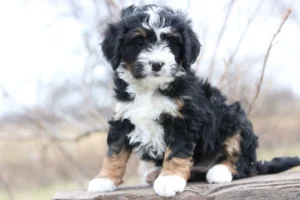

Yes. Many Mini Bernedoodles are good with other dogs. They often enjoy company and play and family life. A well-matched dog friend can become a walking partner or a playmate or even a quiet sleeping buddy.
Still every Mini Bernedoodle has its own personality.
A Mini Bernedoodle comes from a Bernese Mountain Dog and a Miniature Poodle. Bernese Mountain Dogs are often calm and good-natured. Many get along well with people and other animals. Miniature Poodles are smart and active. Early socialization can help them become more comfortable around other dogs.
These parent traits can give a Mini Bernedoodle a friendly nature. Yet genetics never give a full promise. Early experiences and health and training also shape behavior.
Some Mini Bernedoodles run toward every dog with excitement. Others prefer one or two close dog friends. A shy dog may need extra space. An adult dog may become less interested in wild group play as it grows.
Being good with dogs does not mean your Mini Bernedoodle must play with every dog it sees. A polite dog can walk past another dog without greeting. That is also a strong social skill.
The best result is not nonstop play. The real goal is calm behavior and safe communication.
| Behavior Around Another Dog | Possible Meaning | What the Owner Should Do |
| Loose body and curved approach | Friendly interest | Allow a short calm greeting |
| Play bow | Invitation to play | Watch for balanced play |
| Looking away | Polite communication | Give both dogs space |
| Taking short play breaks | Healthy self-control | Let them continue if both return |
| Hiding behind the owner | Fear or uncertainty | Increase distance |
| Stiff body and hard stare | Tension or warning | Calmly separate the dogs |
| Mounting again and again | Stress or overexcitement | Stop play and offer a break |
| Guarding food or toys | Resource conflict | Remove shared valuables |
| One dog always chasing | Unbalanced play | Interrupt and reset the session |
| Resting near each other | Growing comfort | Keep the environment peaceful |
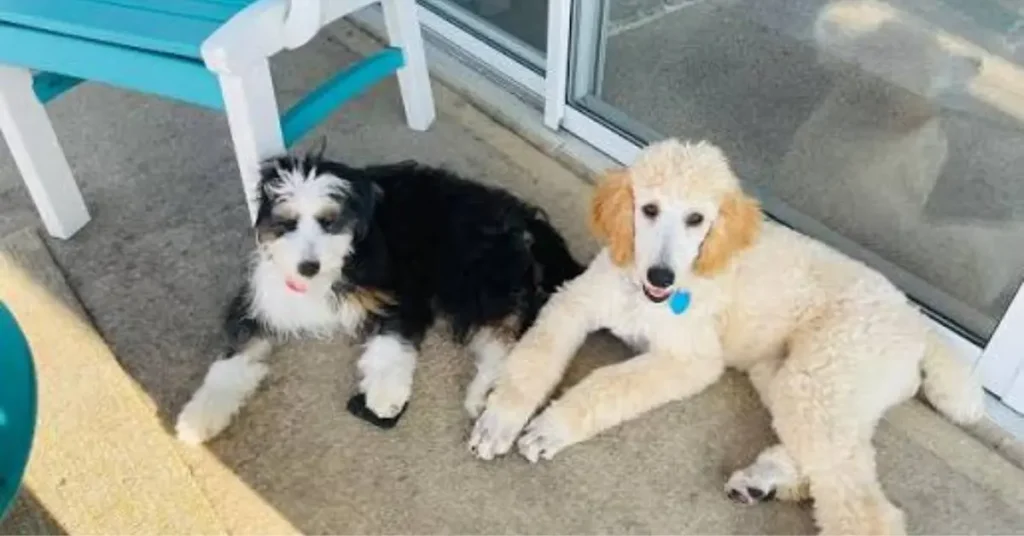
Mini Bernedoodle temperament around other dogs may look playful and curious. Many want to meet new dogs. They may wag their tails and bounce forward or offer a play bow.
A play bow happens when a dog lowers its front body while keeping its rear end up. It commonly invites another dog to play. The full body still matters. A loose face and soft movement usually look friendlier than a stiff body and fixed stare.
The Bernese Mountain Dog side may add a calmer social style. Berners are known for a good-natured temperament. They often do well with other animals after proper introductions.
The Miniature Poodle side may add more speed and excitement. Poodles are highly intelligent and active. They often need exercise and brain work. A bored Mini Bernedoodle may bother another dog because it has nothing better to do.
A smaller Mini Bernedoodle may feel nervous around a large and fast dog. A larger Mini Bernedoodle may accidentally overwhelm a tiny dog during play. A size difference does not always make friendship impossible. Owners just need to watch movement and strength more carefully.
Age matters too.
A puppy may jump on an older dog or bite its ears during play. The puppy is not always being mean. It may simply have poor manners. The adult dog may walk away or growl to request space.
A growl is useful communication. It tells you that a dog feels uncomfortable. Punishing the growl may remove the warning without removing the bad feeling. This can make future conflict harder to predict.
Owners should step in before the adult dog becomes angry. Give the older dog a quiet area. Do not expect it to babysit an energetic puppy all day.
Some Mini Bernedoodles are dog social. They enjoy the most friendly dogs. Some become dog selective. They enjoy a few dogs but dislike others. Others may be dog tolerant. They can remain calm near other dogs but do not want close play.
All three patterns can be normal. Social success does not require a dog to love every stranger. AKC guidance notes that dogs can fall along a range from social to selective or uncomfortable around other dogs.
Introducing a Mini Bernedoodle to a new dog should happen in a calm place. Do not bring the new dog straight into the living room and hope they solve everything.
The resident dog may view the house as its personal space. Food bowls and toys and beds can also create competition.
A first meeting on neutral territory often feels easier. A quiet walking path is usually better than a small room or crowded dog park. Blue Cross recommends meeting on neutral ground and using a walk to reduce the intensity of the introduction.
Use two adults when possible. Each adult should handle one dog. Keep the leashes loose. A tight leash may add frustration or tension. Start with enough distance for both dogs to walk and take treats.
Follow these steps:
Short meetings often work better than one long session. End while both dogs still feel comfortable. Waiting until one becomes tired and annoyed can damage a good start.
Avoid placing the dogs face to face while holding their collars. This removes their ability to move naturally. It can also make them feel trapped.
A dog hiding behind you or turning away is asking for space. Respect that choice. Forcing contact does not build confidence.
When introducing a puppy to an older dog make sure the adult has a safe break area. Baby gates can let both dogs see each other without constant contact. Blue Cross also recommends removing food and toys at first and supervising puppy and adult-dog play so it does not become too rough.

Mini Bernedoodle socialization needs begin during puppyhood. Yet socialization does not mean placing the puppy in the middle of a group of unknown dogs.
Good socialization teaches a puppy that the world feels safe. It includes calm exposure to different people and dogs and sounds and surfaces and places.
The American Veterinary Society of Animal Behavior supports early puppy socialization and recommends positive reinforcement through treats and praise and play.
Choose healthy and well-behaved dogs for early meetings. A calm adult dog can teach better social lessons than a group of wild puppies.
The other dog should have a known health and vaccination history. Ask your veterinarian when and where your puppy can safely socialize based on local disease risk.
Do not judge a puppy class only by how much free play it offers. A useful class also teaches puppies to focus on their owners while other dogs remain nearby.
Your Mini Bernedoodle should learn that seeing another dog does not always mean playtime. This lesson matters on walks. A puppy that greets every dog may later bark or pull when a greeting is not allowed. Practice calm observation. Let the puppy see another dog from a comfortable distance. Reward eye contact with you. Walk away before excitement becomes too strong.
Adolescent dogs may become more sensitive or more excited. An adult dog may also change its preferences. Respect those changes.
Some Mini Bernedoodles enjoy well-managed group play. Others become overwhelmed by crowds or rude dogs. One frightening event can create a lasting problem.
Carefully chosen playmates often give a better experience. A fenced yard with one known dog feels easier to control than a busy public park.
Monitor puppy play closely. Puppies should learn how to greet and play without placing their teeth and paws all over dogs that do not welcome it. Adult dogs may correct rude behavior but owners should not let a puppy keep bothering a tired dog.
Play style and energy around other dogs can decide whether two dogs enjoy each other.
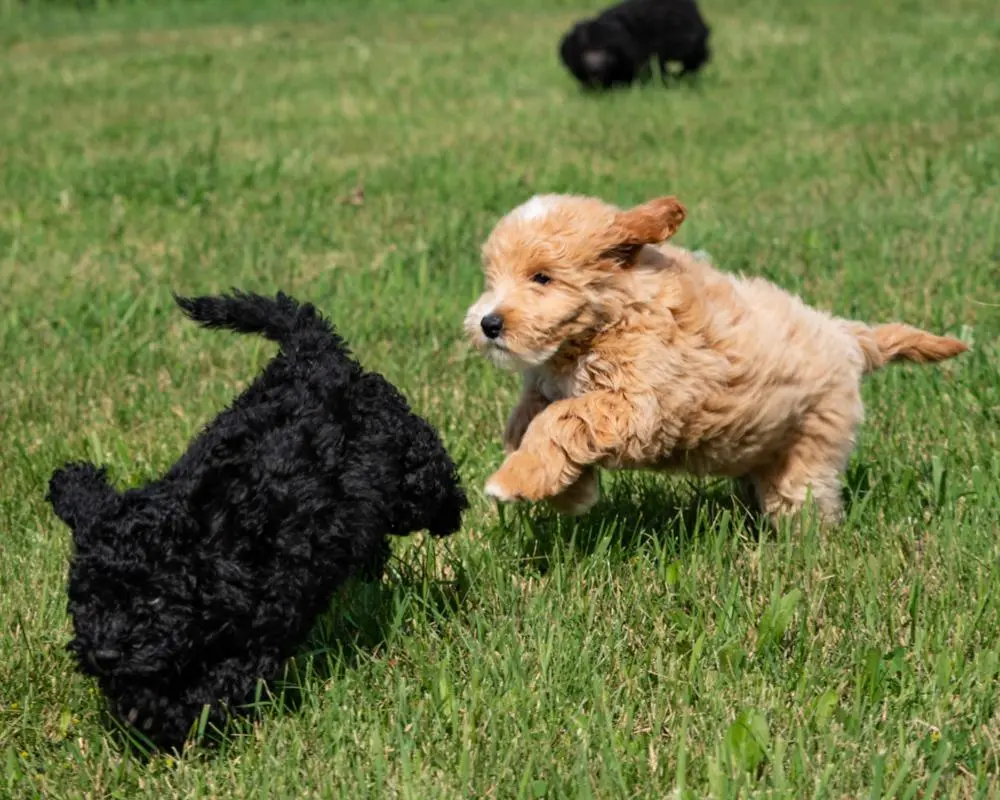
Mini Bernedoodles often have a bouncy play style. They may chase and wrestle and use their front paws. Some love running. Others prefer gentle body contact. A good match does not always need the same breed. It needs a similar comfort level and energy level.
A young Mini Bernedoodle may annoy a slow senior dog. A very rough dog may scare a small and gentle Mini Bernedoodle.
One dog may chase and then become the dog being chased. One may roll over and then get back up. Both dogs should pause at times. They should also choose to return.
Play should look loose rather than stiff.
Growling can happen during play. A play growl often comes with bouncing movement or a play bow. A serious growl may come with a hard stare and a stiff body. Look at the full picture instead of judging the sound alone.
Call the more active dog away for a few seconds. Watch the other dog. When the second dog comes forward to restart play it probably still feels comfortable. When it walks away or hides it needs a longer break.
Stop play when one dog repeatedly pins or corners the other.
Repeated mounting can also signal overexcitement or stress. Interrupt it calmly. Ask both dogs to sniff the ground or rest in separate areas.
High energy does not always mean healthy play. A dog can become so excited that it stops noticing the other dog’s signals.
Mini Bernedoodles need enough sleep and daily enrichment. An overtired puppy may become rough and unable to stop.
Give the dog regular walks and sniffing and short training games. This reduces the chance that every dog meeting turns into wild wrestling.
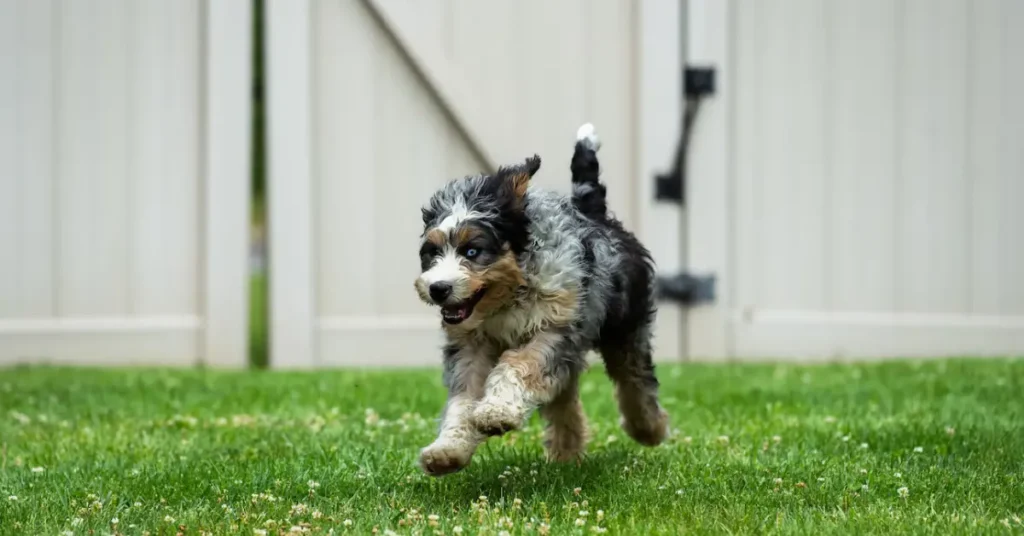
The signs Mini Bernedoodles get along with dogs are often simple.
Dogs do not need to cuddle or share one bed. Calm distance can show a healthy relationship. Watch how both animals behave during normal home life. One good play session does not tell the full story.
Positive signs and warning signs include:
Subtle discomfort can be missed. Conflict may then appear to come from nowhere even though the dogs showed smaller signals first. Watch posture and face and movement instead of waiting for barking or biting.
A peaceful multi-dog relationship includes independence.
The dogs should be able to enjoy separate walks or beds or play sessions. A dog that cannot function without the other may not have a balanced bond.
Preventing jealousy and resource guarding starts with good home management.
Dogs may compete over food or toys or beds or attention. This behavior is often called resource guarding when a dog tries to protect something it values.
Warning signs may include stiffening over an item or showing the whites of the eyes. A dog may also stare or growl or lift its lips. Do not grab the item or challenge the dog.
Physical confrontation can increase aggression and create a bite risk. Growling and snapping should always be taken seriously. Feed the dogs in separate spaces. Close a door or use crates or gates. Pick the bowls up after meals.
Dogs that share ordinary toys may still fight over a special bone or stuffed food toy. Each dog needs its own bed and resting area. Do not let one dog push the other away from every comfortable place.
Human attention can also become a resource.
One dog may squeeze between you and the other dog. It may bark or push or stare. Avoid creating a competition. Reward both dogs for calm behavior. You can pet one dog while giving the other a simple task on a mat.
Take separate short walks. Train one dog while the other rests behind a gate. Individual attention builds confidence and keeps each relationship strong.
Never punish a dog for growling around food or toys. The growl gives a warning. Instead separate the dogs and contact a qualified trainer or veterinary behavior professional when guarding continues.
Prevention works best. Early training and careful management can stop resource guarding from becoming a strong pattern.
Creating a peaceful multi-dog home takes more than putting two friendly dogs in one house.
Both dogs need space and structure.
Keep the daily routine predictable. Feed and walk and rest at similar times. Dogs often settle better when they know what happens next.
Use baby gates even after the dogs become friends. A gate is not a punishment. It gives each dog time to sleep and chew and eat without pressure.
Manage exciting events.
Visitors and doorbells and backyard activity can raise energy. Separate the dogs before opening the front door. Bring them out after the room becomes calm.
Train both dogs alone before training them together. A dog may sit perfectly by itself but lose focus when its friend stands nearby. Build the skill in an easy setting first.
Reward-based training should guide the whole home. AVSAB recommends reward-based methods for teaching normal skills and changing unwanted behavior. Avoid treating one dog as the boss.
The old idea that owners must create a strict dog hierarchy can cause unnecessary conflict. Meet each dog’s needs and manage valuable resources fairly.
Fair does not always mean identical.
A young dog may need more training. A senior dog may need more sleep. One dog may eat a different diet or need a shorter walk.
Watch for behavior changes.
Pain or illness can make a friendly dog less patient. Contact your veterinarian when a dog suddenly growls or avoids its companion.
Ask for professional help when the dogs fight or when one dog lives in fear. Choose a qualified reward-based trainer with multi-dog experience. Serious aggression may require a veterinary behaviorist.
Do not keep placing the dogs together to “work it out.” Repeated conflict can become more dangerous.
A peaceful home may include permanent rules. The dogs may always eat separately. Special toys may only appear behind gates. Those rules do not mean the home has failed. They keep everyone safe.
Many Mini Bernedoodles can live happily with other dogs.
Their Bernese Mountain Dog side may bring a good-natured social style. Their Miniature Poodle side may add energy and intelligence. Early positive experiences can help these traits grow in a healthy direction.
Start every new relationship slowly.
Use neutral ground and parallel walks. Keep food and special toys away during early meetings. Give both dogs separate beds and quiet breaks. Learn to read body language. Loose movement and play bows and natural breaks usually show comfort. Stiff posture and hard staring and resource guarding need quick action.
Do not force your Mini Bernedoodle to love every dog. A calm walk past another dog is a social success. One trusted playmate may be better than ten wild strangers.
The best multi-dog home feels safe and peaceful. Both dogs can play when they want and walk away when they need space.