

Yes. Aussiedoodles do calm down with age. Most of them stay playful and active. They simply learn how to control their energy better.
A young Aussiedoodle may run through the house and jump on furniture. It may bark for attention or grab clothes during play. This can feel like the dog will never settle.
The good news is that age-related maturity usually brings better behavior. Many dogs show early improvement between 12 to 18 months. A more settled adult pattern often appears between 18 to 24 months.
An Aussiedoodle comes from an Australian Shepherd and a Poodle. Both parent breeds are smart and active. This creates an active breed mix that often needs more than a basic walk.
Age helps the brain develop. Still age does not solve everything by itself. A dog also needs balanced exercise and training and enough sleep. A steady routine helps too.
A calm Aussiedoodle is not always a low-energy dog. I may still love running and playing. The big change is better energy regulation. The dog can enjoy activity and then rest when the fun ends.

The age Aussiedoodles start calming down is different for every dog.
Some puppies begin showing better focus near 10 to 12 months. They may still have wild moments. Yet the wild behavior may not last as long.
Many owners notice clearer changes between 12 to 18 months. The dog may take longer naps. It may chew fewer household items. It may also recover faster after guests arrive. The biggest change often appears between 18 to 24 months. At this age many dogs develop stronger adult maturity and better self-control. This timeline can still change.
Genetics play a large role in energy and behavior.
A dog that takes after the Australian Shepherd traits may have a strong work drive. It may watch movement and become excited by children or bikes.
A dog with more Poodle traits may also stay active. Poodles often enjoy games and learning and attention from their owners.
Neither parent breed is known for being lazy. This means an Aussiedoodle may remain an active companion even as an adult.
Aussiedoodles come in different sizes. A smaller dog may reach small dog maturity sooner. A medium dog may take a little longer. A larger Standard Aussiedoodle may follow a large dog maturity timeline.
Body growth and emotional development do not always finish together. Your dog may look fully grown but still behave like a teenager.
A puppy that practices calm behavior every day may settle earlier. A puppy that receives attention for barking may continue that habit. This becomes part of its training history.
Dogs repeat behavior that works. If jumping brings attention then the dog keeps jumping. If quiet sitting brings attention then the dog starts offering that instead.
A noisy home environment can keep a dog excited. Visitors and loud play and constant movement may make relaxation harder. A quiet daily pattern supports calmness.
Aussiedoodles often do well when they know what will happen next. A clear schedule can reduce repetitive barking and restless behavior.
Do not wait for one birthday. Watch for these small changes:
Progress is not always smooth. A dog may have one calm week and then become wild again. Schedule changes or travel or visitors can create temporary setbacks. Judge progress over several weeks.
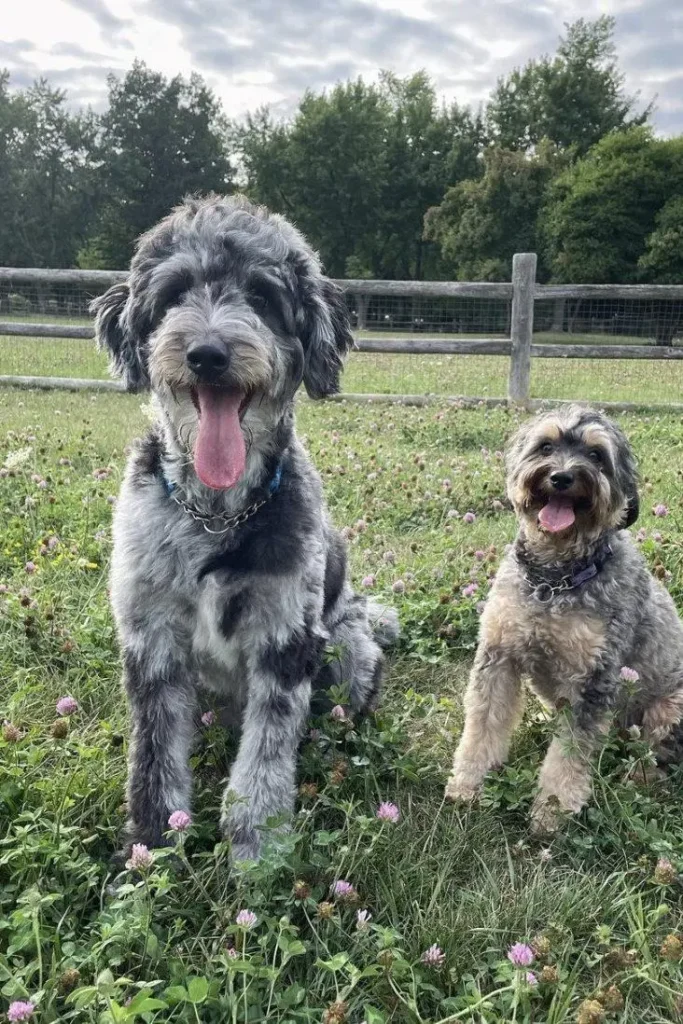
Understanding the Aussiedoodle puppy energy stages can make early life less stressful. Each stage brings different behavior. Your puppy is not trying to be difficult. Its brain and body are still developing.
During eight to sixteen weeks a puppy moves between intense play and deep sleep.
It may run for five minutes and then fall asleep under a chair.
The puppy notices new sounds and new smells. Everything feels interesting.
At this age the dog has very little impulse control. It may bite hands or jump on people or chase moving feet.
Use short lessons. Teach easy skills such as:
The puppy also needs frequent toilet breaks and safe chewing.
Do not expect perfect control. Reward small wins.
During four to six months the puppy grows stronger and more confident.
Teething often increases mouthing and chewing. The puppy may begin sock stealing or sleeve grabbing.
Moving clothes feel exciting. Socks also carry the owner’s smell.
Give the puppy safe chewing choices. Keep socks and shoes away.
This is a good time to teach:
Use positive reinforcement. Reward the puppy after the correct behavior.
Avoid long lessons. Short practice works better for a young brain.
The period from six to twelve months often feels hard. The dog enters adolescence. It may look almost grown but still act like a puppy.
A dog that had good recall may develop unreliable recall. It may ignore the owner because a smell or another dog feels more exciting. This does not mean the dog forgot everything.
The young dog is building confidence. It is also becoming more independent. Use a long line in safe outdoor spaces. This protects the dog while recall improves. Use baby gates at home. They can prevent access to shoes and trash and unsafe rooms.
Keep using consistent training. Do not increase punishment. Reduce the difficulty and improve the reward.
During twelve to eighteen months many dogs begin showing true emotional progress. The Aussiedoodle may still get excited. Yet it often returns to calm more quickly.
You may notice faster settling after walks or visitors. The dog may rest without being told. It may also stop looking for trouble every few minutes.
This stage is important for building adult habits. Do not stop training because the dog looks grown.
During eighteen to twenty-four months many Aussiedoodles develop a better off switch.
The dog can enjoy a long walk and then sleep at home. It may still have working breed energy. That is normal. The goal is not to remove the dog’s energy. The goal is control. A mature dog should know when to play and when to rest.
Understanding how exercise affects Aussiedoodle behavior helps owners avoid two mistakes. The first mistake is giving too little activity. The second is giving too much exciting activity.
Too little exercise may lead to:
The dog has energy and no useful outlet. Still more exercise is not always the answer. A dog that runs hard every day may become a very fit dog. It may then need even more exercise to feel tired.
The type of activity matters.
Sniffing walks are useful because they work the body and brain.
A fast walk may move the legs. A sniff walk also gives information.
Let the dog stop and smell safe areas. This can create a more satisfied dog than rushing around the same block.
One long activity may not support calm behavior. Try a morning walk and a midday sniff break and an evening game.
This creates better activity balance.
Useful options include:
Puppies need gentler exercise. A growing puppy should not complete long runs on hard surfaces. Its body is still in physical development.
Mental stimulation for a calmer Aussiedoodle is just as important as physical exercise. Aussiedoodles often have a bored brain when they receive only walks.
The Australian Shepherd intelligence may create a strong need for jobs. The Poodle intelligence may add fast learning and problem-solving skills. A clever dog with nothing to do may invent its own games. That can include opening cupboards or stealing objects or barking at windows.
Food puzzles turn meals into brain work.
Start with an easy puzzle. Show the dog how it works.
A hard puzzle may create barking or biting. Use simple tasks for frustration prevention.
Indoor scent games can work in one room.
Hide a few pieces of food in easy places. Let the dog search.
Over time you can use harder hiding spots.
A meal search is a simple way to add enrichment without extra treats.
Sleep and overtired Aussiedoodle behavior are closely linked. A tired dog may not look tired. It may look wild. Owners often think the dog needs another walk. The dog may actually need sleep.
A sleep diary can show hidden problems.
The best training tips to help Aussiedoodles settle focus on teaching calm behavior. Use reward-based training and humane management. Avoid harsh methods. Physical punishment avoidance and psychological punishment avoidance protect trust. Also avoid electronic collar methods and prong collar tools and choke chain corrections.
Use a small treat when the dog rests.
Place it between the dog’s paws. Use a soft voice.
Do not turn the moment into a game.
This helps reward calm choices.
Place a mat on the floor.
Reward the dog for looking at it. Then reward one paw.
Slowly work toward four paws and a down position.
Build time through duration building.
The mat cue can help during meals or guest visits.
Use short waits before food or doors or toys.
Start with one second.
Long waits may be too hard for a young dog.
This develops self-control.
Most Aussiedoodles are simply young and active. Still there are times when high energy may need professional help. Contact a veterinarian if behavior changes suddenly.
Watch for:
These signs may have medical causes.
A veterinary examination can check for pain or hormonal problems or neurological problems. A qualified reward-based trainer can help with routine and impulse control. A veterinary behaviorist may help with severe anxiety or aggression.
Keep a behavior record before the appointment. Write down food and sleep and exercise and triggers. A safe video can also support the professional assessment. Early help often prevents the problem from becoming stronger.
Aussiedoodles do calm down with age. Many show better control between 12 to 18 months. A stronger settled adult pattern often appears between 18 to 24 months.
Your dog may remain a playful adult. That is normal. The goal is not to create a lazy dog. The goal is adult self-control and calm recovery after activity. Use balanced exercise and mental stimulation. Protect sleep and follow a clear daily structure.
Teach short waits and a mat cue. Reward quiet choices. Good management and training consistency help your Aussiedoodle learn when to play and when to rest.