Petsay
September 21, 2026
By Haseeb Rehman
The American Bulldog is the kind of dog that can look serious from across the yard and then act like a goofy family clown five minutes later. That mix of strength and affection is a big part of the breed’s appeal. These dogs were shaped by real work. Their ancestors helped farmers guard property and livestock and handle demanding jobs in the American South. That background still shows today in their strong body confidence and need for activity.
Before bringing one home it helps to look past the big head and muscular body. An American Bulldog needs training, socialization exercise and clear rules. A bored dog with this much strength can find its own entertainment and that may mean chewing, digging barking or rearranging your furniture.
Their short coat is fairly easy to care for but their overall needs are not tiny. They can be loving family dogs when owners give them enough exercise attention and guidance. Current veterinary sources also point to joint skin and breathing concerns that owners should understand before choosing the breed.
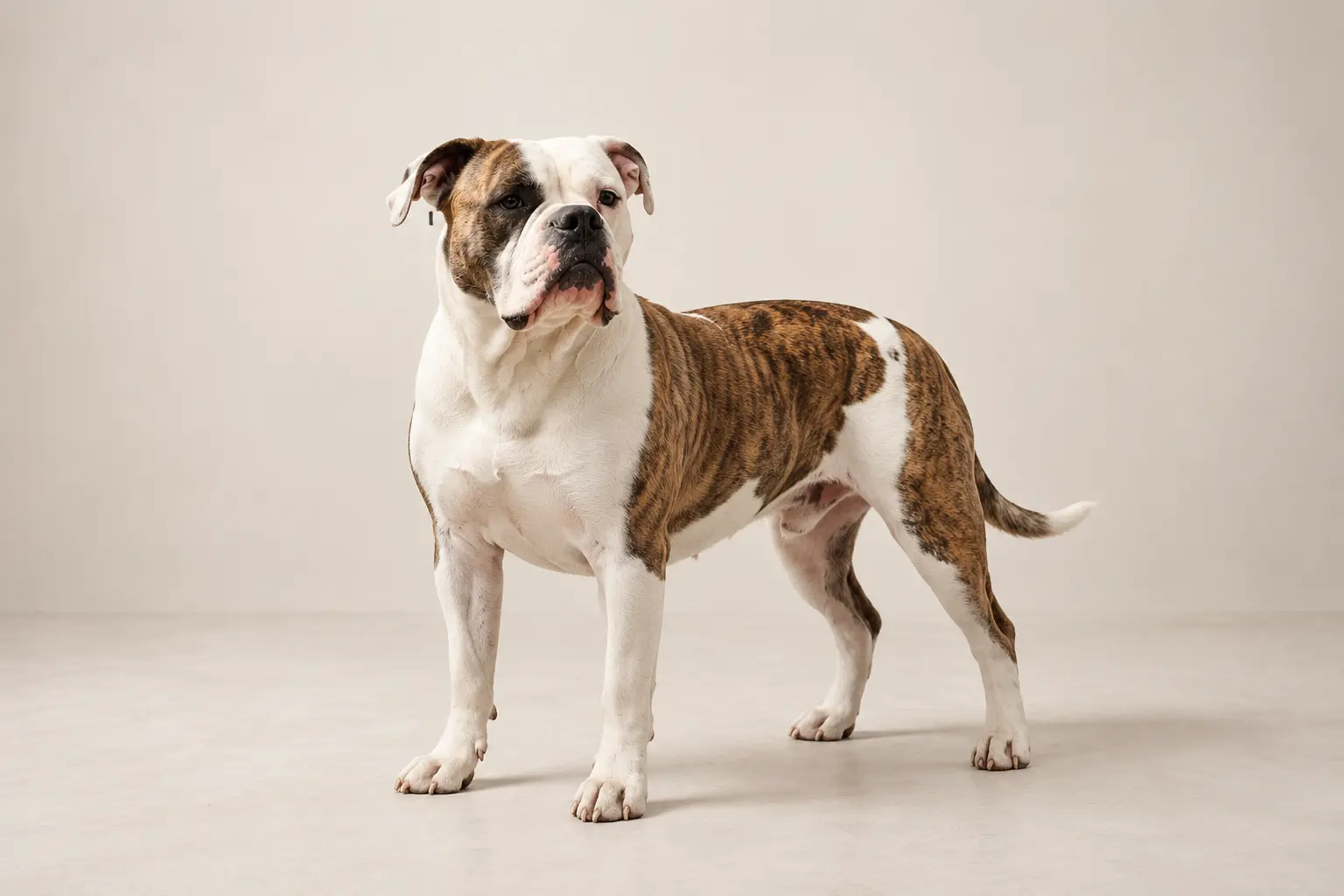
Male: 22–28 inches (55–71 cm)
Female: 20–26 inches (50–58 cm)
Male: 70–135 pounds (32–60 kg)
Females: 60–105 pounds (27–46 kg)
10-12 to 13 years
|
Feature |
What American Owners Should Know |
|
Size |
Large strong working dog |
|
Height |
Often around 20–25 inches |
|
Weight |
Commonly around 60–100 pounds |
|
Coat |
Short and fairly easy to maintain |
|
Energy |
Moderate to high |
|
Exercise |
Regular daily activity is needed |
|
Personality |
Loyal playful protective and confident |
|
Training |
Early consistent training works best |
|
Lifespan |
Often around 10–12 years |
The story starts with working Bulldogs brought to America by immigrants. Sources place bulldog-type dogs in the American colonies as early as the 17th century. In the American South these dogs became useful farm animals rather than simply show dogs. Farmers and ranchers valued them for jobs involving livestock property and protection.
Their connection to the Old English Bulldog is important. The original working Bulldog in England was used to drive and catch cattle and guard property. After bull-baiting was banned in England in 1835 the old working type became rare there. Working-class immigrants had already carried their dogs to the American South where those dogs continued doing practical farm work.
Life on farms helped preserve traits such as strength, courage, endurance and a willingness to work. These dogs were used as stock dogs, catch dogs and farm guardians. Their ability to handle feral pigs also helped the type survive in parts of the South.
After World War II the breed was close to extinction. John D. Johnson began rebuilding the population with help from Alan Scott and other breeders. Different working lines developed over time and the Johnson and Scott types became the best-known examples. The United Kennel Club recognized the American Bulldog on January 1 1999. The breed entered the American Kennel Club Foundation Stock Service in November 2019.
That history still matters. You can see it in the breed’s athletic body and its strong desire to have a job. A modern American Bulldog may sleep on the living-room floor but the working-dog wiring has not simply vanished.
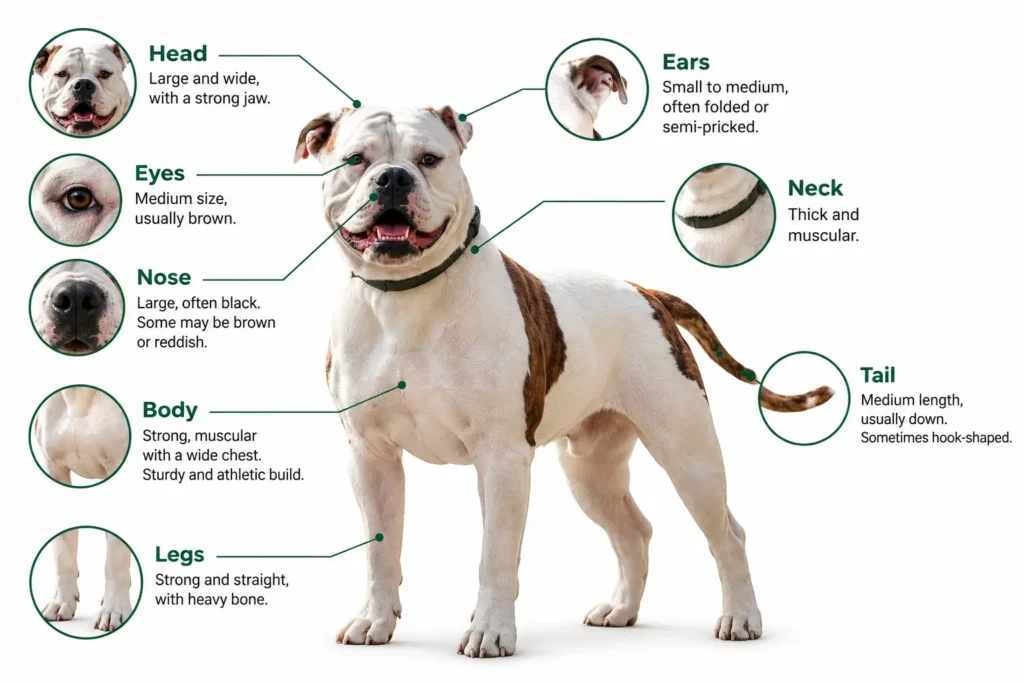
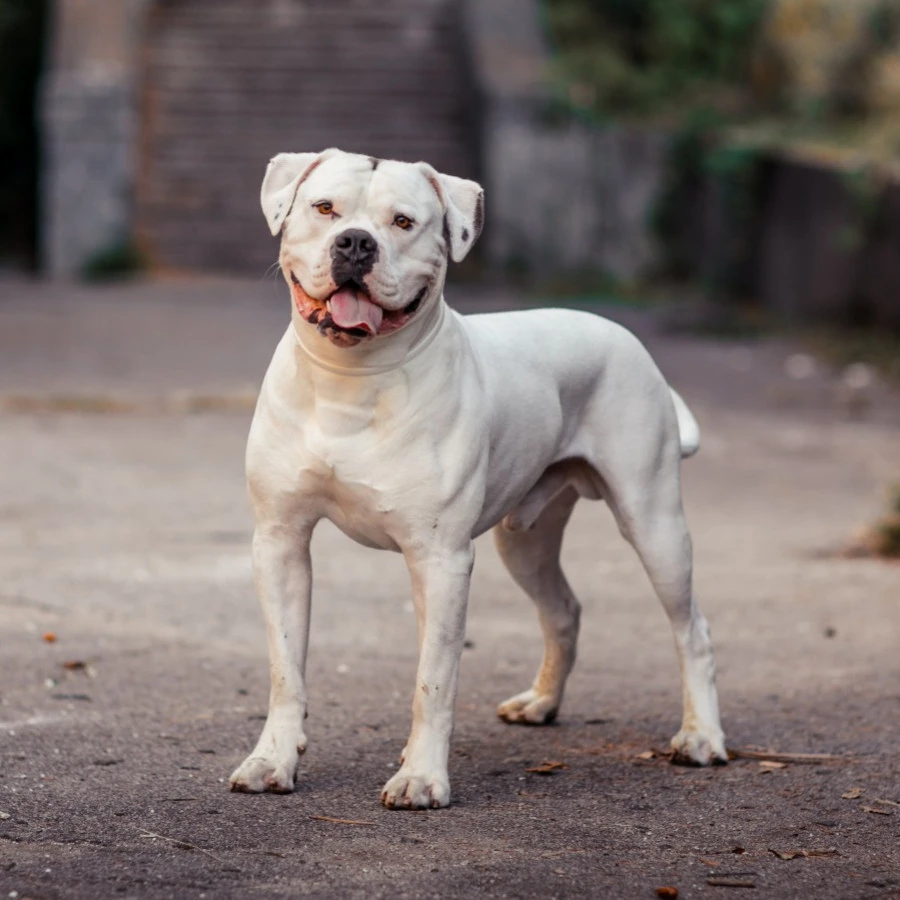
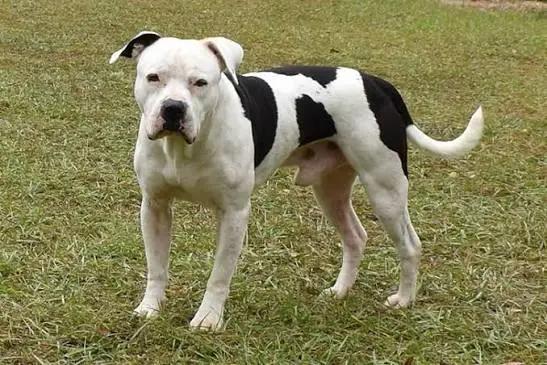
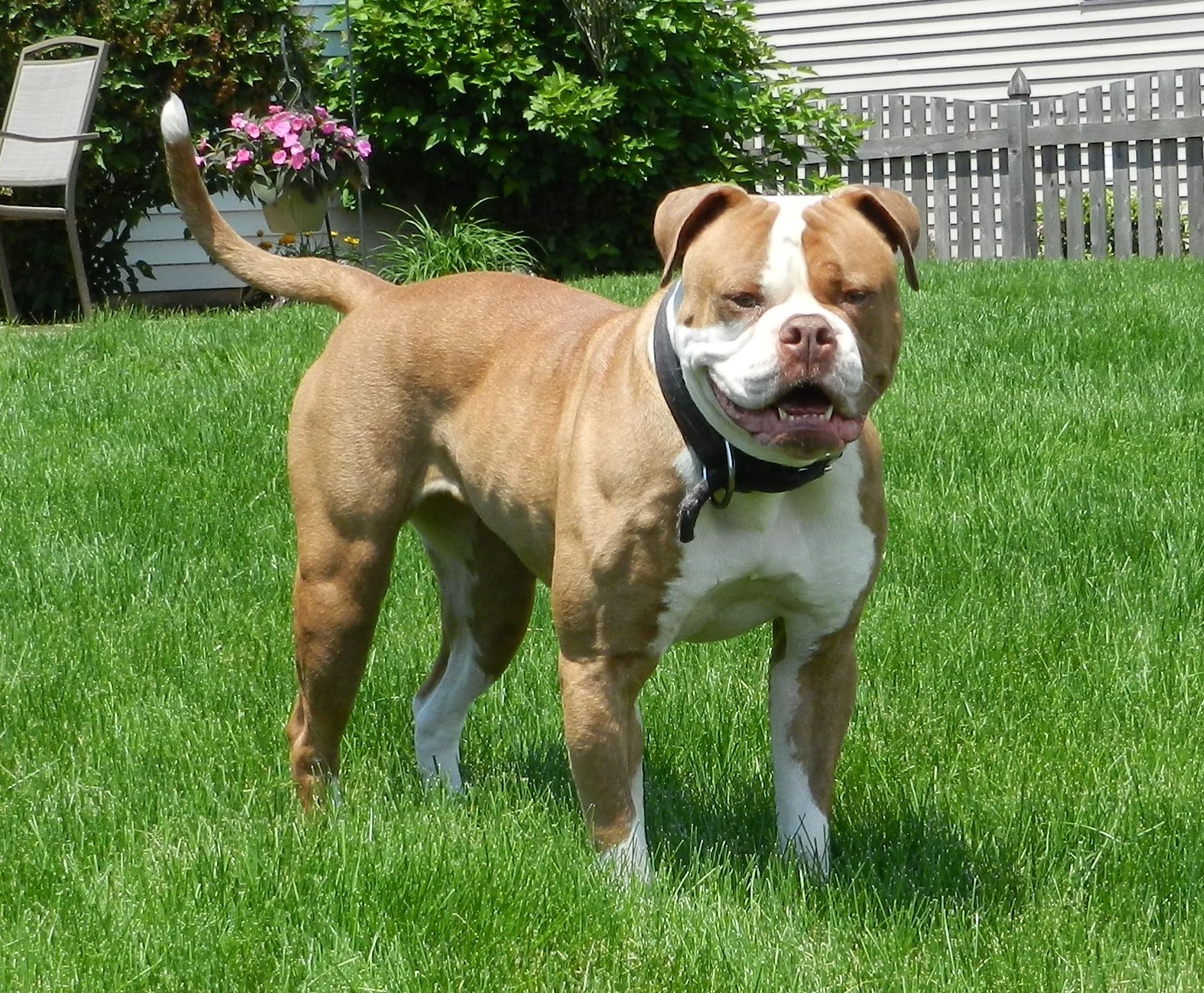
An adult American Bulldog has a strong athletic shape that makes its working history easy to see. The body should look powerful without being so heavy that movement becomes difficult. A broad head, muscular neck deep chest, strong legs and powerful jaws give the dog its familiar look.
Size can vary between dogs and bloodlines. Veterinary breed information commonly places adults around 20 to 25 inches tall and roughly 60 to 100 pounds while the UKC standard gives a wider working range depending on type. Males are usually larger and heavier than females.
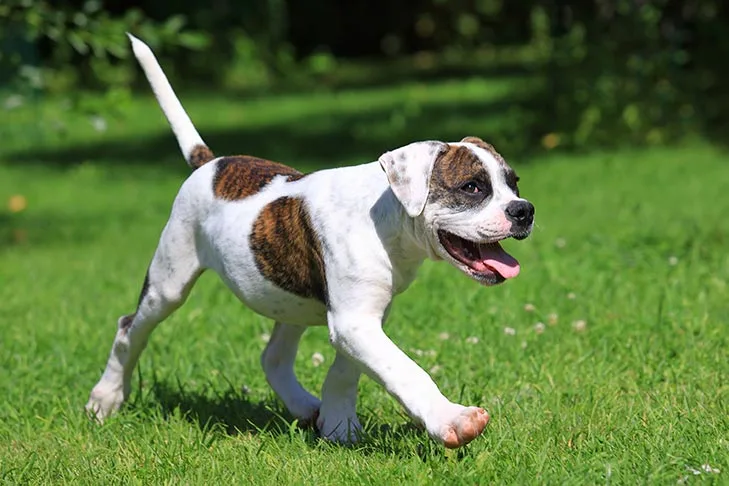
The coat is short and close to the body. White is common and colored markings may include black brown red brindle or tan. The exact accepted colors and markings can depend on the registry standard being used. The American Kennel Club currently lists white with black brindle tan brown and red markings.
Exercise Needs
High Daily Walks
Health Issues
Medium Risk Joints Skin
Grooming Needs
Low Weekly Brush
Training Needs
Early Firm Training
Shedding Level
Medium Shedder
Friendliness
People Lover
Playfulness
Forever Fun
Energy Level
Always On-the-Go
Apartment Living
Compact Friendly
Cold Weather Tolerance
Mild Chiller
Warm Weather Tolerance
Summer Ready
First-Time Owner Suitability
Beginner Friendly
Good with Kids
Family Favorite
Good with Cats
Feline Friendly
Good with Other Dogs
Pack Buddy
First-Time Social Suitability
Beginner Friendly
Calling an American Bulldog simply aggressive misses a lot of the picture. A properly trained and socialized dog can be friendly, affectionate , playful and very connected to its family. At the same time its protective instincts and physical strength mean the owner needs to take training seriously.
Young American Bulldogs may act reserved around unfamiliar people. The UKC standard describes the breed as confident and notes that young dogs can be somewhat standoffish with strangers. Early socialization helps them learn that new people, places , dogs and situations do not automatically mean danger.
Families with children should focus on supervision and good manners. A large excited dog can knock over a small child without meaning to. Children also need to learn not to climb on dogs, pull ears or disturb a dog while eating or resting.
Other pets require more care. Some American Bulldogs can live successfully with other animals but individual behavior varies. Careful introductions and training are important. A sturdy leash and secure fencing can also be useful because working dogs may have a strong interest in chasing movement.
Training should begin early. A young American Bulldog grows into a strong adult faster than many new owners expect. Teaching leash manners coming when called basic obedience and calm behavior should start during puppyhood.
Positive reinforcement works well because it rewards the behavior you want to see again. Keep sessions short and clear. Praise good behavior and use food rewards when appropriate. The goal is not to overpower the dog. The goal is to build a dog that understands what you expect.
Early socialization is just as important. Introduce puppies to safe new people sounds surfaces environments and friendly dogs in a controlled way. Veterinary guidance recommends early socialization because it can help puppies become more confident and well-mannered adults.
Some common challenges include jumping on people pulling on the leash chewing digging barking and ignoring a command when something more exciting appears. Consistent rules make these problems easier to manage.
One simple rule helps a lot: everyone in the home should follow the same rules. If jumping is allowed by one person and punished by another the dog gets mixed signals.
60 to 90 minutes per day for a very active American Bulldog
How to Split the Time
2 walks a day
(20–35 minutes)
Playtime (fetch, tug, running)
15 to 30 minutes
Mental games or training
15 to 25 minutes
Tug rope game
10 to 15 minutes



A good diet helps your American Bulldog stay strong and active without gaining too much weight. The food should give your dog enough protein and other nutrients for healthy muscles and growth. Puppy adults and older dogs do not all need the same food so choose food that fits your dog’s age.
Puppies need food that supports slow and steady growth. Large-breed puppy food can be a good choice while they are growing. The goal is to help their bones and body develop properly without making them grow too fast.
Portion size matters too. Even a strong muscular American Bulldog can become overweight. Extra weight can put more stress on the hips elbows and other joints. Check your dog’s body shape and adjust food portions when needed.
Most adult American Bulldogs can do well with two meals a day. Puppies may need smaller meals more often. The right amount depends on the dog’s age, size , activity level and body condition so your veterinarian can help you choose the right portion.
Try not to make table scraps a normal part of every meal. Treats are fine in small amounts but they should not replace regular balanced food. If your dog needs a supplement for joint skin or another health problem ask your veterinarian before adding it to the diet.
American Bulldogs are sturdy dogs but sturdy does not mean problem-free. Their size and body structure can put pressure on the hips, elbows and other joints. Hip dysplasia and elbow dysplasia are recognized concerns and responsible breeding programs can use health screening to reduce inherited risks.
Skin problems can also appear. Ichthyosis is a genetic skin condition that can cause flaky itchy skin. Some dogs may also deal with allergies or recurring skin irritation. Veterinary sources recommend paying attention to changes in the coat and skin rather than treating every problem as simple dryness.
Neuronal Ceroid Lipofuscinosis is another inherited condition associated with the breed. It is a progressive neurological disorder that can affect coordination and vision and may lead to serious neurological problems. Genetic screening can help responsible breeders make informed breeding decisions.
Heat deserves attention too. Dogs with flatter facial structures can have greater breathing and heat-management challenges. Avoid hard exercise during the hottest part of the day and provide shade fresh water and a cool place to rest.
The average lifespan is commonly given as about 10 to 12 years. Regular veterinary examinations, weight control dental care exercise and appropriate nutrition can all play a part in keeping an individual dog healthy.
The short coat makes grooming fairly simple. Weekly brushing can remove loose hair and help keep the coat clean. Baths are usually needed when the dog becomes dirty rather than on a strict weekly schedule. Regular nail trimming ear care and dental care should also be part of the routine.
Grooming is also a good chance to check the dog. Look for cuts lumps bumps fleas ticks irritated skin or changes around the ears. You are already touching the dog so a quick health check does not have to feel like a big event.
Exercise is where new owners sometimes underestimate this breed. American Bulldogs are athletes. Healthy adults may enjoy walks hikes fetch tug games, training exercises and other activities. Puppies are different. Their growing bones and joints need lower-impact exercise rather than hard running or repeated jumping.
A bored adult can become creative. And with a powerful dog creative can mean a chewed shoe or a hole in the yard.
The right owner is usually someone who enjoys an active dog and is ready to put time into training. Experience with large strong dogs can help. So can patience. This is not the type of dog that should simply be left in a yard and expected to entertain itself.
An American Bulldog may fit well with an active family that enjoys walks outdoor time and structured play. A home with secure outdoor space can be useful but indoor family interaction still matters. Veterinary guidance also points out that the breed may struggle in a very low-activity home without enough outlets for physical energy.
Before choosing one ask yourself a few honest questions:
There are plenty of good things to enjoy. The breed can be loyal affectionate funny athletic and deeply attached to its people. But the same strength that makes it impressive also creates responsibility. A 90-pound dog that ignores a command is a very different problem from a 15-pound dog doing the same thing.
The American Bulldog has a story that runs from old working Bulldogs to farms in the American South and finally into modern family homes. That history explains much of what owners see today: strength, energy , confidence loyalty and a strong desire to stay involved.
The breed can be a loving family companion but it needs more than food and a backyard. Good socialization regular exercise, clear training sensible nutrition and routine health care give this powerful dog a much better chance to become the friendly companion most families want.